
Your Gut and Your Brain Are Talking Constantly
There's a two-way communication highway between your gut and your brain called the gut-brain axis. Through this network of nerves, hormones, and immune signals, what happens in your digestive tract can influence how you think and feel.
At the center of this connection is your gut microbiome — the trillions of bacteria that live in your intestines. Research published in journals including Cell Host & Microbe has shown that the makeup of those bacteria is closely tied to brain chemistry, including the production of neurotransmitters like serotonin.
Here's a striking fact: roughly 90 percent of your body's serotonin — often called the "feel-good" chemical — is produced in your gut, not your brain.
Where Fiber Comes In
Fiber is what feeds the beneficial bacteria in your gut. When you eat fiber-rich foods like beans, oats, vegetables, and fruit, those bacteria ferment the fiber and produce compounds called short-chain fatty acids. Research suggests these compounds may help reduce inflammation, support the gut lining, and influence brain function.
A 2022 study published in Nutritional Neuroscience found that higher dietary fiber intake was associated with lower rates of depression and anxiety in a large population of adults. It's important to note that this type of study shows an association — it can't prove that fiber directly causes better mood. But the signal was notable enough to prompt further investigation.
Researchers at the Harvard T.H. Chan School of Public Health have also pointed to diet quality, including fiber intake, as a factor worth studying in mental health outcomes, particularly as interest in nutritional psychiatry continues to grow.
What "Emerging Research" Really Means
It's worth being clear: this science is promising but still early. Most studies in this space are observational, meaning they look at patterns across large groups of people but can't pin down cause and effect. Factors like overall diet quality, physical activity, and socioeconomic status can all influence both what people eat and how they feel — and those variables are hard to fully untangle.
Animal studies have shown more direct effects of fiber on brain chemistry, but animal findings don't always translate to humans. Clinical trials testing whether adding fiber to the diet measurably improves mood in people are ongoing. The bottom line from researchers: the connection is biologically plausible and worth taking seriously, but it's too early to call fiber a treatment for depression or anxiety.
Foods That Can Help You Get More Fiber
The average American gets about half the daily fiber that nutrition guidelines recommend. The goal for most adults is 25 to 38 grams per day, depending on age and sex.
Some of the richest sources include:
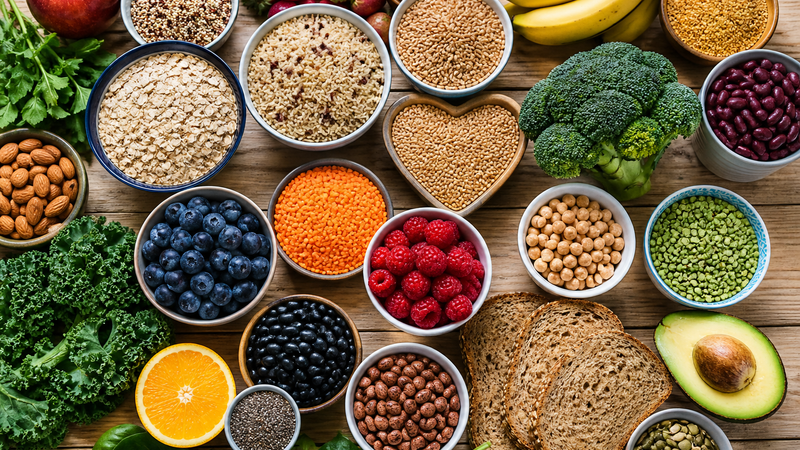
- Legumes — lentils, black beans, chickpeas
- Whole grains — oats, barley, quinoa, whole wheat bread
- Vegetables — broccoli, Brussels sprouts, artichokes, carrots
- Fruits — raspberries, pears, apples (with the skin), bananas
- Nuts and seeds — almonds, chia seeds, flaxseed
Small swaps add up fast. Swapping white rice for brown rice, adding a handful of lentils to soup, or starting the morning with oatmeal instead of a refined cereal can meaningfully raise your daily intake.
This Is Not a Replacement for Mental Health Care
If you are dealing with depression, anxiety, or any mental health condition, please talk with your doctor or a mental health professional. Dietary changes may support overall wellbeing, but they are not a substitute for evidence-based treatment.
That said, eating more whole, fiber-rich foods is a low-risk step that supports your physical health in well-established ways — from better blood sugar control to a healthier heart — and may carry mental health benefits too. That's a reasonable reason to give your plate a second look.
The Bottom Line
The link between dietary fiber and mood is still being worked out by researchers, but the biology behind it is real and the early evidence is intriguing. Feeding your gut microbiome with more fiber-rich whole foods is one of the simplest, lowest-risk things you can do for your overall health — and it just might lift your spirits along the way. Talk with your doctor about your diet, especially if mood or mental health is a concern.
