

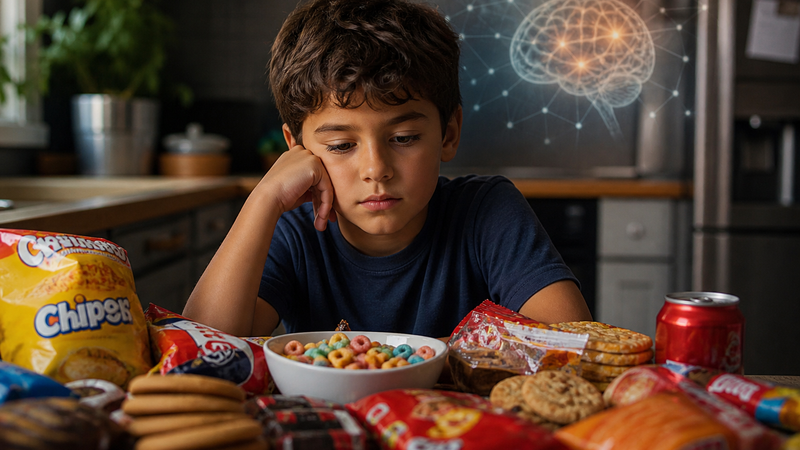
Junk Food and Your Kid's Brain: What New Brain Scans Are Showing
Neuroimaging research is raising new questions about what happens inside a child's developing brain when ultra-processed foods become a diet staple.
You already know junk food isn't great for kids. But new brain imaging research suggests the impact may go deeper than cavities and weight gain. Scientists are now using neuroimaging tools to look at what happens inside a child's developing brain when ultra-processed foods become a regular part of the diet — and the early findings are worth paying attention to.
What Are Ultra-Processed Foods, Exactly?
Ultra-processed foods are industrial formulations that go far beyond basic cooking. Think packaged chips, sugary cereals, fast food, flavored yogurts, chicken nuggets, and soft drinks — foods that contain ingredients you wouldn't find in a home kitchen, like emulsifiers, artificial flavors, and added color.
These foods now make up a significant share of what many American children eat. According to research published in JAMA, ultra-processed foods account for roughly 67 percent of the calories consumed by children and adolescents in the United States.
What the Brain Scans Are Revealing
Researchers have begun using neuroimaging — including MRI-based techniques — to explore whether diet quality is associated with differences in brain structure and function in children and adolescents.
Some of this work draws on the Adolescent Brain Cognitive Development (ABCD) Study, one of the largest long-term studies of brain development in the United States, which is tracking more than 10,000 children starting around age nine. Early analyses from this dataset have looked at associations between diet patterns and measures of brain structure, including cortical thickness and white matter integrity.
Preliminary findings suggest that children with diets higher in ultra-processed foods may show differences in certain brain regions involved in impulse control, attention, and emotional regulation. It is important to note that this research is still early-stage and largely observational, meaning it shows associations — not proof of cause and effect.
The Gut-Brain Connection May Play a Role
One emerging theory is that ultra-processed diets affect the brain partly through the gut. The trillions of microbes living in the digestive system — collectively called the gut microbiome — communicate directly with the brain through what scientists call the gut-brain axis.
Ultra-processed foods tend to be low in fiber and high in additives that research suggests may disrupt the balance of gut bacteria. Some researchers believe this disruption could influence brain chemistry, inflammation, and even mood and behavior in children, though the science here is still developing.
What This Means for Behavior and Learning
Several studies have found associations between high ultra-processed food intake in children and increased rates of attention difficulties, hyperactivity, and lower scores on measures of cognitive function. A study published in the journal Nutritional Neuroscience found that children with higher consumption of ultra-processed foods showed associations with greater behavioral problems.
Again, these are associations. Family stress, sleep, screen time, and many other factors also shape a child's attention and behavior. Diet is one piece of a complex picture — but it may be an important and actionable one.
What Parents Can Do Right Now
The good news is that diet is one of the most modifiable factors in a child's life, and you don't have to overhaul everything at once.
- Swap one ultra-processed snack per day for a whole-food option — fruit, nuts, cheese, or cut vegetables with hummus
- Cook simple meals at home more often, even if it's just a few nights a week — home cooking naturally reduces ultra-processed ingredients
- Read ingredient lists rather than just nutrition labels; a long list of unfamiliar additives is a red flag
- Add fiber-rich foods like beans, whole grains, and vegetables to support a healthy gut microbiome
- Don't aim for perfection — consistent small changes over time matter more than an all-or-nothing approach
If you have concerns about your child's diet, attention, or behavior, talk with your pediatrician. A registered dietitian who works with children can also help you build a practical eating plan your family will actually follow.
The Bottom Line
Neuroimaging research is still in early stages, but the signal is consistent: diets heavy in ultra-processed foods may be linked to differences in how children's brains develop and function. This isn't about fear — it's about an opportunity. The foods we put on the table every day may be one of the most powerful tools we have to support our children's growing brains. Small, steady changes to what your family eats are worth making.
