

A Cancer We Thought We Had Under Control
For about two decades, colorectal cancer rates in the United States were trending in the right direction. Better screening, earlier detection, and improved treatments were making a real difference.
Then the trend reversed. According to data tracked by the American Cancer Society and published in peer-reviewed research, colorectal cancer rates have been rising again — particularly among adults younger than 55. That shift has researchers paying close attention.
What the Numbers Actually Show
Colorectal cancer remains the second leading cause of cancer death in the United States when men and women are combined. While overall rates in older adults have continued to decline — largely thanks to colonoscopy screening — rates in younger adults have been climbing steadily since the mid-1990s.
Research published in the Journal of the National Cancer Institute and tracked by the American Cancer Society shows that adults born around 1990 have roughly double the risk of colon cancer and four times the risk of rectal cancer compared to adults born around 1950. These are significant shifts that researchers describe as a generational pattern, not random noise.
Importantly, many younger adults are diagnosed at later stages because they are not yet at the age when routine screening is recommended — meaning symptoms can go unnoticed longer.
The Honest Answer: Scientists Aren't Sure Why
Here's the part that may surprise you: researchers do not yet have a definitive explanation for why this is happening. That's not a failure of science — it's an honest reflection of where the evidence stands right now.
Several factors are under investigation. Changes in diet over recent decades, including higher consumption of processed foods and red meat and lower fiber intake, are considered possible contributors. Rising rates of obesity and type 2 diabetes — both of which are linked to increased colorectal cancer risk — are also being studied. Shifts in the gut microbiome, the community of bacteria living in the digestive tract, are another area of active research.
Some scientists are also looking at sedentary behavior, alcohol use, and antibiotic exposure early in life as potential factors. But at this point, no single cause has been confirmed. Most experts believe the rise is likely driven by a combination of lifestyle and environmental changes over time.
What This Means for Screening
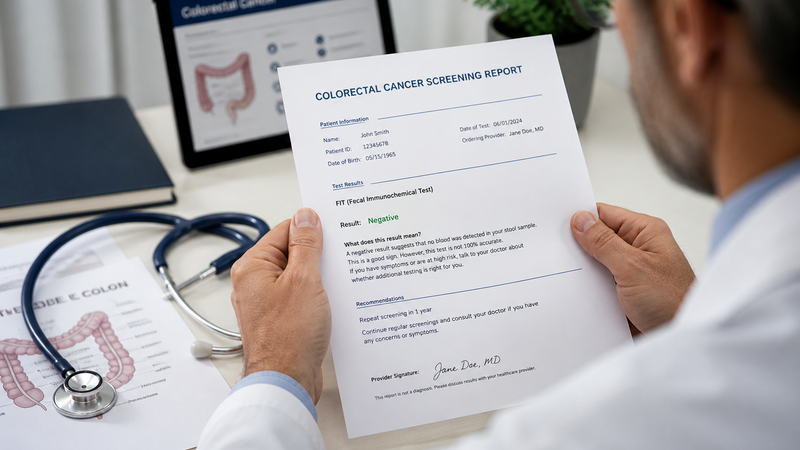
In response to the rising rates in younger adults, the American Cancer Society updated its guidelines in 2018 to recommend that people at average risk begin colorectal cancer screening at age 45, down from the previous recommendation of 50. The U.S. Preventive Services Task Force followed with a similar update in 2021.
Screening options include colonoscopy, stool-based tests, and other methods. The right choice depends on your personal health history, risk factors, and what you and your doctor decide together. If you have a family history of colorectal cancer or polyps, your doctor may recommend starting screening earlier.
The key point: screening works. When colorectal cancer is caught early, the survival rates are significantly better. Don't put off that conversation with your doctor.
Signs That Deserve Attention
Many colorectal cancers cause no symptoms in their early stages, which is exactly why screening matters so much. But there are warning signs worth knowing.
Talk to your doctor if you notice any of the following:
- Blood in your stool or rectal bleeding
- A change in bowel habits that lasts more than a few days, such as diarrhea, constipation, or narrowing of the stool
- Persistent abdominal discomfort, cramping, or pain
- A feeling that your bowel doesn't empty completely
- Unexplained weight loss or fatigue
These symptoms can have many causes, most of them not cancer. But they are always worth reporting to your doctor promptly rather than waiting to see if they go away on their own.
What You Can Do Right Now
While researchers work to untangle the causes, there are evidence-based steps you can take to support your digestive health and reduce known risk factors.
- Get screened. If you are 45 or older and haven't started colorectal cancer screening, talk to your doctor about your options.
- Eat more fiber. Diets rich in fruits, vegetables, whole grains, and legumes are consistently linked to lower colorectal cancer risk.
- Limit processed and red meat. Major health organizations, including the World Health Organization, classify processed meats as a known risk factor for colorectal cancer.
- Stay active. Regular physical activity is associated with reduced risk. Even moderate movement — like a daily walk — counts.
- Maintain a healthy weight. Obesity is a recognized risk factor. Small, sustainable changes to diet and activity add up over time.
- Limit alcohol. Alcohol consumption is linked to increased colorectal cancer risk, and health organizations generally recommend limiting intake.
- Know your family history. If a first-degree relative has had colorectal cancer or polyps, let your doctor know. You may need earlier or more frequent screening.
The Bottom Line
Colorectal cancer rates are rising in younger adults, and scientists are still working to understand exactly why. What we do know is that screening saves lives, and catching this cancer early makes a real difference in outcomes. If you are 45 or older — or younger with a family history — talk to your doctor about getting screened. Don't wait for symptoms to show up first.
