

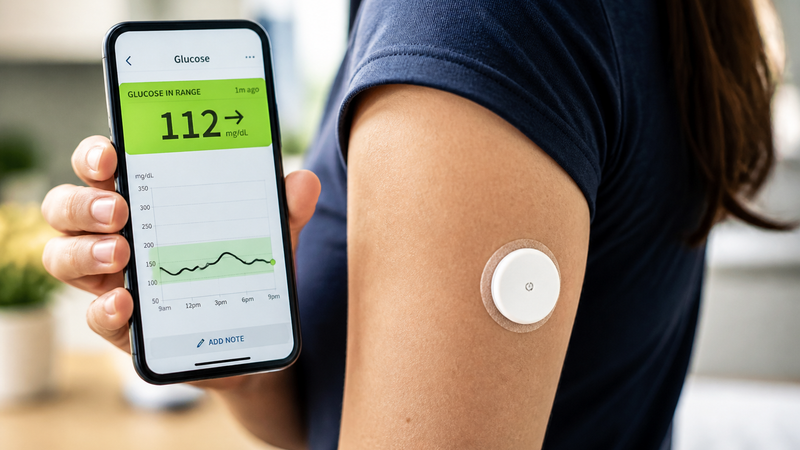
Should You Wear a Glucose Monitor Even If You Don't Have Diabetes?
Continuous glucose monitors are showing up on the arms of athletes, biohackers, and wellness enthusiasts — but does the science back the trend?
You don't have to have diabetes to be wearing a glucose monitor these days. These small sensors, once reserved for people managing serious blood sugar conditions, are now being marketed to anyone who wants to "optimize" their metabolism. But is this a genuinely useful health tool, or an expensive gadget looking for a problem to solve? Here's what the research actually says.
What Is a Continuous Glucose Monitor, Exactly?
A continuous glucose monitor, or CGM, is a small wearable device — typically a coin-sized sensor that sticks to your upper arm or abdomen — that measures the glucose level in your body's fluid every few minutes throughout the day and night.
Until recently, CGMs were primarily prescribed to people with type 1 or type 2 diabetes to help them manage their condition and avoid dangerous blood sugar swings. Now, companies like Dexterity, Levels, and others are marketing CGMs directly to healthy consumers as a wellness and performance tool.
What Does Blood Sugar Have to Do With How You Feel?
Blood sugar, or glucose, is your body's primary fuel source. After you eat, your glucose level rises. Your pancreas releases insulin to move that glucose into your cells. Then levels come back down.
Large or frequent spikes in blood sugar — over years and decades — are linked to weight gain, fatigue, inflammation, and a higher risk of type 2 diabetes and cardiovascular disease. The appeal of CGMs for healthy people is the idea that you can watch these spikes in real time and adjust your diet and habits to keep them smoother.
That part makes intuitive sense. But the question scientists are asking is: does wearing a CGM actually lead to better health outcomes in people who don't already have a metabolic condition?
What the Research Says — and Where It Falls Short
Studies on CGM use in people without diabetes are still early and limited in size. Most of the existing research has focused on people with prediabetes or metabolic syndrome, not on generally healthy adults.
A 2023 review published in the journal JAMA Internal Medicine raised important questions about CGM use in healthy populations, noting that glucose readings in people without diabetes are often within normal range and that the clinical benefit of acting on small fluctuations is not yet established.
Some smaller studies have suggested that CGM feedback may help people make short-term changes to their diet — eating more fiber, reducing refined carbohydrates, timing meals differently. But researchers caution that it's not yet clear whether those changes translate into long-term health improvements in people who start out metabolically healthy.
One limitation worth knowing: CGMs measure glucose in interstitial fluid, not directly in the blood. That means readings can lag slightly behind actual blood glucose and may occasionally produce false signals that prompt unnecessary worry.
Who Might Actually Benefit
There are groups of people for whom CGM use outside a formal diabetes diagnosis may make more sense. People with prediabetes, a strong family history of type 2 diabetes, or those working with a doctor to understand insulin resistance may get real, actionable information from monitoring their glucose patterns.
Some athletes have also used CGMs to understand how fueling strategies affect their performance and recovery, though again the research here is early.
If you are already eating well, exercising regularly, and have no known metabolic concerns, the value of a CGM is less clear — at least based on current evidence.
The Cost and Practical Reality
CGMs are not cheap. Without insurance coverage — which typically requires a diabetes diagnosis — a monthly supply of sensors can run $100 to $200 or more. Some subscription wellness programs bundle the sensor with app access and coaching at an even higher price.
Insurance coverage for CGMs in people without diabetes is rare, which means this is largely an out-of-pocket expense. That's a real consideration when the evidence for benefit in healthy adults is still developing.
There is also the question of what to do with the data. Watching your glucose numbers spike after a bowl of pasta and then not knowing whether that spike is meaningful or not can create anxiety without providing clarity. Working with a physician or registered dietitian who understands how to interpret CGM data is important if you decide to try one.
Natural Ways to Support Healthy Blood Sugar — No Device Required
Whether or not you use a CGM, there are well-established, evidence-backed habits that help keep blood sugar in a healthy range.
- Take a short walk after meals. Even 10 minutes of light movement after eating helps your muscles use glucose more efficiently, blunting post-meal spikes.
- Add fiber to every meal. Vegetables, legumes, and whole grains slow the absorption of sugar into the bloodstream.
- Prioritize protein and healthy fat at breakfast. Starting the day with a high-carb, low-protein meal tends to set up bigger blood sugar swings throughout the day.
- Reduce refined carbohydrates and added sugars. White bread, sugary drinks, and ultra-processed snacks drive the sharpest glucose spikes.
- Get enough sleep. Even one night of poor sleep can impair insulin sensitivity the next day, according to research published in journals including Diabetes Care.
- Manage stress. Chronic stress raises cortisol, which raises blood sugar. Practices like deep breathing, yoga, and regular movement help keep cortisol in check.
The Bottom Line
Continuous glucose monitors are a genuinely useful tool for people managing diabetes or prediabetes. For healthy adults without a metabolic condition, the science is still catching up to the marketing. If you're curious about your blood sugar patterns, the most important first step is talking with your doctor — especially if you have risk factors like a family history of diabetes, excess weight around the midsection, or low energy that isn't explained by other causes. In the meantime, the habits that keep blood sugar steady don't require a sensor. They require a walk after dinner, a vegetable on your plate, and a good night's sleep.
