

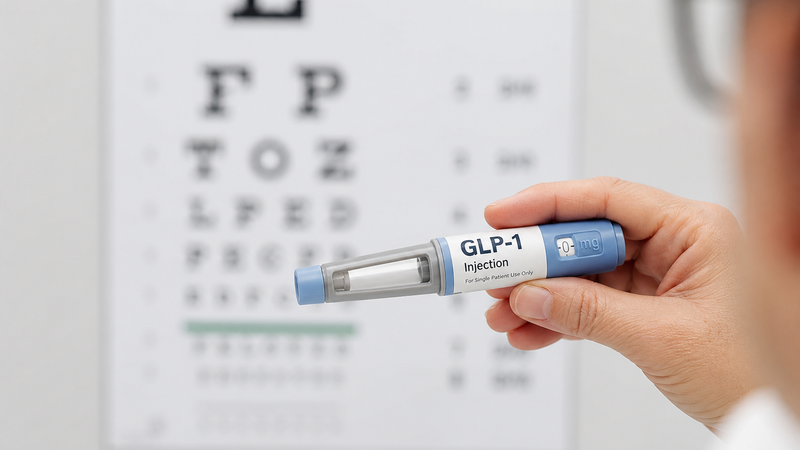
FDA Orders New Blindness Warning on GLP-1 Drugs: What Patients Should Know
The FDA has updated safety labels on popular GLP-1 medications to include a warning about a rare but serious eye condition linked to sudden vision loss.
If you or someone you love is taking a GLP-1 drug like semaglutide or tirzepatide, there is new safety information you need to hear. The FDA has ordered manufacturers to update warning labels on this class of medications after reports of a rare but serious eye condition that can cause sudden, severe vision loss.
These drugs — sold under brand names like Ozempic, Wegovy, Mounjaro, and Zepbound — are now among the most widely prescribed medications in the country. That makes this new warning worth understanding clearly.
What the FDA Found
The FDA is requiring that labeling for GLP-1 receptor agonists include a new warning about a condition called nonarteritic anterior ischemic optic neuropathy, or NAION. It is a form of damage to the optic nerve caused by reduced blood flow, and it can result in sudden, painless vision loss in one eye.
NAION is considered rare in the general population. The FDA's action was prompted by published research and reports submitted through its safety monitoring systems suggesting a possible link between GLP-1 drug use and an increased risk of this condition.
It is important to note that the FDA is not saying these drugs cause NAION in every user, or even in most users. The agency is flagging a potential association that warrants awareness — and that is exactly what updated warning labels are designed to do.
What the Research Shows — and What It Doesn't
A study published in JAMA Ophthalmology in 2024 examined patients with type 2 diabetes and found that those using semaglutide had a higher rate of NAION compared to those taking other diabetes medications. A separate analysis looked at patients using semaglutide for obesity and found a similar pattern.
However, these were observational studies, meaning they identified an association, not a proven cause-and-effect relationship. The studies could not fully account for other factors — such as underlying cardiovascular disease or diabetes itself — that are also known risk factors for NAION.
The research is early, and more investigation is underway. The FDA's decision to update labels reflects a precautionary and appropriate step given the seriousness of sudden vision loss, even if the absolute risk appears to be low.
Who May Be at Higher Risk
NAION tends to occur more often in people who already have certain risk factors, including a history of sleep apnea, high blood pressure, diabetes, cardiovascular disease, or a structurally small optic nerve. If any of these apply to you and you are taking a GLP-1 medication, that is a conversation worth having with your doctor.
Age is also a factor. NAION is more common in adults over 50, which overlaps with a large portion of the population now using these drugs for diabetes management or weight loss.
What Symptoms to Watch For
The key warning sign is sudden, painless vision loss or a significant change in vision in one eye. Other symptoms can include blurred vision or a dark spot in your field of vision that appears without warning.
If you experience any sudden change in vision while taking a GLP-1 medication — or at any time — seek medical attention right away. NAION is a medical emergency. Early evaluation matters.
What This Means for People Currently Taking These Drugs
The FDA is not pulling these medications from the market, and this warning does not mean you should stop taking your medication on your own. GLP-1 drugs have demonstrated meaningful benefits for blood sugar control, weight management, and cardiovascular outcomes in large, well-designed trials.
What this does mean is that you should talk with your prescribing doctor at your next appointment — or sooner if you have concerns. Ask about your personal risk factors, what symptoms to watch for, and whether any changes to your care plan make sense for you. Your eye doctor is also a good person to loop in, especially if you have not had a recent vision exam.
The Bottom Line
The FDA has added a new warning to GLP-1 medications like semaglutide and tirzepatide about a rare but serious eye condition that can cause sudden vision loss. The evidence is based on early observational research and shows an association, not a confirmed cause-and-effect link. These are not reasons to panic, but they are reasons to stay informed, know the warning signs, and have an open conversation with your doctor about your individual situation.
