

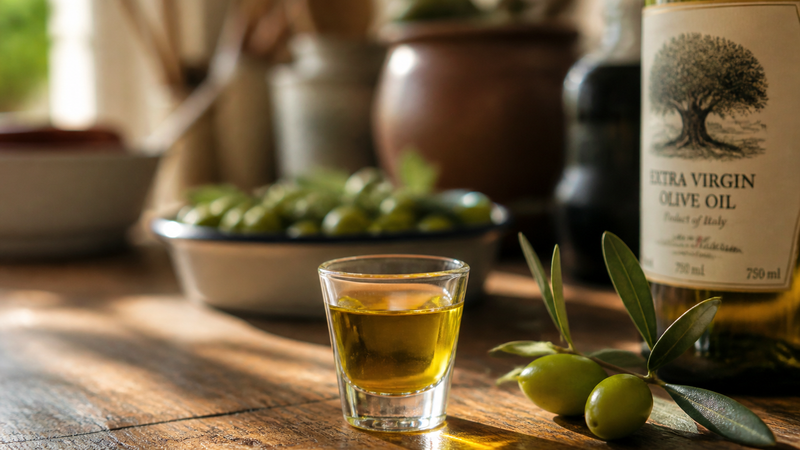
Olive Oil Shots Are Trending — But Do They Actually Help Your Health?
Social media is full of people downing spoonfuls of olive oil every morning — but is it a wellness habit worth adopting, or just another trend?
You have probably seen it on your feed: someone tilting back a shot glass of olive oil before breakfast and crediting it for glowing skin, better digestion, and a longer life. It sounds extreme. But olive oil is one of the most studied foods in nutrition science, and some of what those fans are saying is not completely wrong. Here is what the research actually shows — and what it does not.
Why Olive Oil Has Such a Strong Reputation
Extra virgin olive oil is a cornerstone of the Mediterranean diet, which has been studied extensively for its links to heart health, reduced inflammation, and lower rates of chronic disease. The oil is rich in monounsaturated fats and contains a compound called oleocanthal, which research published in journals including Nutrients and The American Journal of Clinical Nutrition has associated with anti-inflammatory effects.
A landmark study called the PREDIMED trial — a large randomized trial conducted in Spain involving nearly 7,500 adults at high cardiovascular risk — found that people assigned to a Mediterranean diet supplemented with extra virgin olive oil had a significantly lower rate of major cardiovascular events compared to those following a low-fat diet. That is meaningful, well-powered evidence.
The key word in that research, though, is diet. Olive oil was part of a broader eating pattern, not taken as a standalone morning shot.
So What Happens When You Take It Straight?
Some people report that taking a tablespoon or two of olive oil on an empty stomach helps with digestion and reduces constipation. There is a plausible biological reason for this: fats stimulate the release of bile from the gallbladder, which aids in digestion and can help move things along in the gut.
A small body of research also suggests that consuming olive oil before a meal may slow the absorption of glucose, which could help moderate blood sugar spikes after eating. However, most of these studies are small and conducted in controlled settings, so they are far from definitive proof that a morning olive oil ritual delivers these benefits in everyday life.
There is no large clinical trial specifically designed to test the effects of taking straight olive oil shots compared to simply using olive oil liberally in cooking and eating.
The Calories Are Real — and Worth Factoring In
One tablespoon of olive oil contains about 120 calories and 14 grams of fat. Those are healthy fats, but calories still count, especially if you are adding shots of oil on top of your regular diet rather than replacing less healthy fats with it.
For most people, the more practical and evidence-backed approach is to use extra virgin olive oil generously as part of meals — drizzled on salads, used for sautéing vegetables, or added to whole-grain dishes — rather than sipping it solo.
Who Might Want to Be Careful
If you have a history of gallbladder issues, consuming large amounts of fat at once can trigger discomfort or pain. People with acid reflux may also find that straight oil worsens symptoms. And if you are on medications that interact with dietary fat absorption, it is worth having a conversation with your doctor before making olive oil shots a daily habit.
None of this means olive oil is dangerous — it is widely regarded as one of the healthiest fats in the food supply. It just means that more is not always better, and the delivery method matters.
What Health Experts Actually Recommend
Registered dietitians and physicians who follow the Mediterranean diet research generally recommend using extra virgin olive oil as your primary cooking fat and adding it to meals regularly. The American Heart Association recognizes olive oil as a heart-healthy fat and encourages replacing saturated fats with unsaturated fats like those found in olive oil.
When choosing olive oil, look for bottles labeled extra virgin, which indicates minimal processing and the highest polyphenol content. Store it away from heat and light to preserve those beneficial compounds.
The Bottom Line
Olive oil is genuinely good for you — the science behind that is solid. But the evidence supporting the specific practice of taking daily olive oil shots is thin, and the benefits people are claiming online go well beyond what current research can confirm. The smarter move is to make extra virgin olive oil a staple of your everyday cooking and eating. If you are curious about whether a daily spoonful might help with a specific concern like digestion, talk it over with your doctor before making it a routine.
