

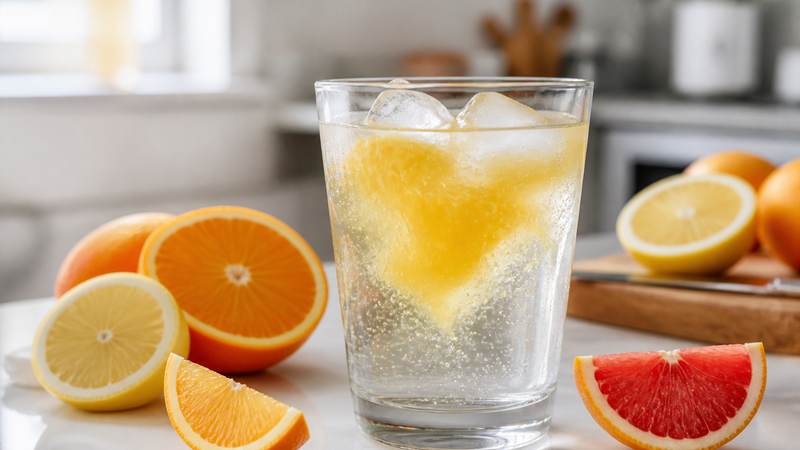
Fizzy Water With Fruit Juice May Be Quietly Stressing Your Liver
You swapped regular soda for sparkling juice drinks — but new research suggests your liver may not be getting the break you think.
Sparkling water blended with fruit juice has become the go-to "healthy" soda swap. It feels virtuous. It's fizzy, fruity, and comes in sleek cans. But a growing body of research is raising a pointed question: could the fructose packed into those drinks be quietly burdening your liver in ways that matter over time?
What Makes These Drinks Different From Plain Sparkling Water
Plain sparkling water — just carbonated water with no added sugar or juice — is widely considered a safe, calorie-free alternative to soda. The story changes when fruit juice enters the picture.
Many popular sparkling juice drinks and "hard juice" seltzers contain anywhere from 10 to 25 grams of sugar per can, much of it from fructose — the natural sugar found in fruit juice. At first glance, "natural" sounds reassuring. But how the body handles fructose is a different matter than how it handles other sugars.
Why Fructose Is Harder on the Liver Than Other Sugars
Here's the key difference: glucose, the most common sugar, is used by nearly every cell in the body. Fructose, by contrast, is processed almost entirely by the liver. When large amounts arrive quickly — as they do in liquid form — the liver can be overwhelmed.
Research published in the Journal of Hepatology and other peer-reviewed sources has linked high fructose intake to increased fat accumulation in the liver, a condition known as non-alcoholic fatty liver disease (NAFLD). Studies in this area have included both animal models and human trials of varying sizes, so the picture is still developing. But the signal is consistent enough that liver specialists have taken notice.
It is worth noting that eating whole fruit delivers fructose too — but along with fiber, which slows absorption and softens the metabolic impact. Juice drinks strip out most of that fiber, so the fructose hits the liver faster.
Who Should Pay Closest Attention
Not everyone faces the same risk. People who are over 40, carry extra weight around the midsection, have prediabetes or insulin resistance, or already have elevated liver enzymes may be more sensitive to regular fructose loads from beverages.
NAFLD now affects an estimated one in four adults globally, according to data cited by the European Association for the Study of the Liver. Most people with early-stage fatty liver have no symptoms, which is part of what makes it easy to miss — and easy to worsen without realizing it.
How to Read a Label Before You Crack the Can
The marketing on sparkling juice drinks often emphasizes what they don't have — no artificial sweeteners, no high-fructose corn syrup — without being transparent about total sugar content. A few things to check before you buy:
- Total sugars per serving: Aim for under 5 grams if you drink these regularly.
- Serving size: Some cans count as 1.5 or 2 servings. Do the math before you drink the whole thing.
- Juice percentage: A higher juice percentage means more fructose, not necessarily more nutrition.
- Ingredients list: "Fruit juice concentrate" near the top means sugar is a primary ingredient.
Smarter Sips to Consider
If you love the fizz and want to keep it, plain sparkling water is still a solid choice. Add a squeeze of fresh lemon, lime, or a few crushed mint leaves for flavor without the fructose load.
Unsweetened sparkling water infused with a small splash — think a tablespoon or two — of 100 percent juice gives you the flavor hit with a fraction of the sugar. Herbal teas chilled and poured over ice are another low-sugar, flavorful option.
If you currently drink sparkling juice beverages daily and have any concerns about your liver health, metabolic health, or blood sugar, it's worth bringing up with your doctor at your next visit.
The Bottom Line
Swapping soda for a sparkling juice drink is a step in the right direction — but it may not be as liver-friendly as it looks. Research suggests that regular, high doses of fructose from liquid sources can stress the liver over time, particularly for adults who are already managing weight, blood sugar, or metabolic health. Check the label, mind your portions, and when in doubt, reach for plain sparkling water. Your liver does a lot of quiet, essential work every day — it's worth giving it a fair deal.
