

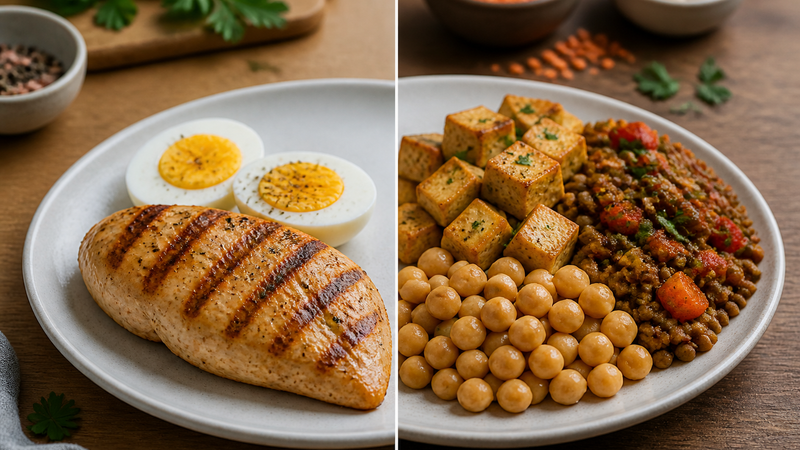
Animal Protein or Plant Protein: What Science Says About Your Testosterone
Your protein source may do more than build muscle — it could influence one of your most important hormones.
Most people pick their protein based on taste, habit, or fitness goals. But a growing body of research suggests the type of protein you eat may also affect your testosterone levels — and the findings are more nuanced than you might expect.
Why Testosterone Matters Beyond the Gym
Testosterone is often associated with muscle and masculinity, but it plays a broader role in both men and women. It supports bone density, mood, energy, libido, and metabolic health.
Testosterone levels naturally decline with age — in men, typically starting in the 30s and 40s. That makes diet one of the lifestyle factors worth paying attention to, since what you eat can influence hormone production.
What the Research Shows About Animal Protein
Several studies have found a positive association between dietary fat — especially saturated fat found in animal foods like meat and eggs — and testosterone levels. The body uses dietary cholesterol and fat as raw material to synthesize testosterone, so very low-fat diets have been linked to lower testosterone in some research.
A review published in the European Journal of Nutrition found that men eating higher amounts of animal-based foods tended to have modestly higher testosterone levels compared to those eating predominantly plant-based diets. However, the researchers noted that total calorie intake, body composition, and overall diet quality also played major roles — making it difficult to isolate protein source as the sole factor.
It is worth noting that most of these studies are observational, meaning they show associations, not cause and effect.
What the Research Shows About Plant Protein
Plant proteins — from foods like soy, lentils, beans, and tofu — have been studied in relation to testosterone as well, and the picture is more complex than early headlines suggested.
Soy, in particular, has received attention because it contains phytoestrogens, plant compounds that weakly mimic estrogen. Some earlier studies raised concerns that soy might lower testosterone, but a more recent review in the Journal of the International Society of Sports Nutrition found that normal dietary amounts of soy did not significantly reduce testosterone levels in men. The reviewers emphasized that the studies showing hormonal effects often involved very high, supplement-level doses of soy isoflavones — far above what most people eat.
Other plant proteins like peas, lentils, and legumes have not been shown to negatively affect testosterone in the available research.
The Bigger Picture: It Is Not Just About the Protein
Experts who study diet and hormones consistently point out that no single food or nutrient drives testosterone on its own. Total caloric intake matters. So does body fat — excess body fat, particularly around the abdomen, is linked to lower testosterone because fat tissue converts testosterone to estrogen.
Research published in Nutrients highlights that diets rich in zinc, vitamin D, and healthy fats support testosterone production regardless of whether the protein comes from animals or plants. Zinc, for example, is found in both red meat and plant foods like pumpkin seeds and lentils, though it is more bioavailable from animal sources.
Sleep, exercise — particularly resistance training — and stress management are also among the strongest evidence-based influences on testosterone levels.
What This Means for You
If you eat a mixed diet and get a reasonable amount of healthy fat, you are likely covering your nutritional bases for hormone support. If you follow a plant-based diet, paying attention to zinc and vitamin D intake and overall calorie adequacy is worth discussing with your doctor or a registered dietitian.
The evidence does not support cutting out plant proteins out of fear for your testosterone. Nor does it make animal protein a guaranteed hormone booster. What appears to matter most is the overall quality and balance of your diet.
- Include a variety of protein sources — both animal and plant — if your diet allows
- Do not go extremely low-fat; healthy fats from olive oil, avocado, nuts, and eggs support hormone production
- If you eat plant-based, check your zinc and vitamin D levels with your doctor
- Prioritize sleep and strength training, which have strong evidence for supporting healthy testosterone
- Talk to your doctor if you have symptoms of low testosterone — diet is one piece of the puzzle, but it is not the whole picture
The Bottom Line
The debate between animal and plant protein is not as clear-cut as some headlines make it sound. Current research suggests that animal protein may offer a modest edge for testosterone support, largely due to fat content and nutrient bioavailability — but a well-planned plant-based diet does not appear to significantly harm hormone levels either. What matters most is the overall quality of your diet, your body composition, and key lifestyle habits like sleep and exercise. If you have concerns about your testosterone levels, that conversation belongs with your doctor.
