

At-Home Hormone Tests: Smart Health Tool or False Sense of Certainty?
At-home hormone tests are everywhere — but do they actually tell you what you need to know?
You've seen the ads. A simple saliva or finger-prick test, mailed to your door, promises to reveal whether your hormones are behind your fatigue, weight gain, or brain fog. It sounds like a shortcut to answers. But experts say the picture is more complicated than a test kit can capture — and acting on inaccurate results could do more harm than good.
The Appeal Is Real
It's easy to understand why these tests are booming. Hormones regulate nearly everything — energy, mood, metabolism, sleep, and sex drive. When something feels off, people want explanations.
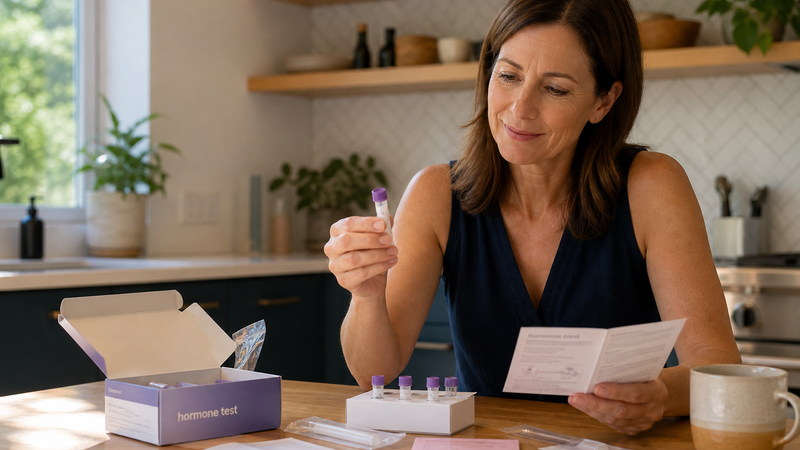
At-home kits promise convenience and privacy. You collect a saliva sample, a urine sample, or a small blood spot from a finger prick, mail it to a lab, and receive a digital report, often with color-coded charts and supplement recommendations attached.
What These Tests Can and Cannot Measure
Most at-home hormone tests screen for markers like cortisol, estrogen, progesterone, testosterone, DHEA, and thyroid hormones. The technology behind the lab analysis is often legitimate — many kits use the same immunoassay or mass spectrometry methods used in clinical labs.
The problem is not always the lab. It's the sample type, the timing, and the context. Hormone levels fluctuate significantly throughout the day, across the menstrual cycle, and in response to stress, sleep, and food. A single snapshot from a saliva or dried blood spot sample may not reflect what's actually happening in your body over time.
The U.S. Food and Drug Administration (FDA) has flagged concerns about some direct-to-consumer laboratory tests, noting that tests marketed without proper clinical validation may produce results that are difficult to interpret or potentially misleading. The FDA regulates diagnostic tests, and not all at-home hormone kits have gone through the same level of scrutiny as tests ordered by a physician.
Saliva vs. Blood: Why the Sample Type Matters
Many at-home hormone tests use saliva rather than blood drawn from a vein, which is the clinical gold standard for most hormone measurements. Saliva tests measure what's called "free" hormone — the small fraction not bound to proteins in the blood. Some researchers argue this fraction is biologically meaningful. Others, including many endocrinologists, say salivary hormone levels are harder to standardize and more prone to contamination from food, bleeding gums, or collection technique.
Dried blood spot tests, where you prick your finger and blot blood onto a card, are closer to standard blood testing and are considered more reliable by many clinical researchers. But even these can vary depending on how the sample is collected and stored before it reaches the lab.
The Risk of Over-Interpreting Results
Here's where things can go sideways. Many at-home hormone test reports come bundled with supplement recommendations or wellness protocols tied to whatever the results show. If your cortisol reads low, you might be nudged toward an adrenal support supplement. If estrogen looks elevated, an estrogen-detox product may appear in your cart.
The concern among clinicians is that people may treat these results as diagnoses and self-medicate — sometimes unnecessarily, sometimes in ways that interfere with how they're actually feeling or with other health conditions. Hormones interact in complex feedback loops. Adjusting one without understanding the full picture can create new imbalances.
It's also worth noting that "normal" hormone ranges vary by age, sex, the phase of the menstrual cycle, and individual physiology. A number that looks low on a chart may be perfectly appropriate for you — and only a clinician who knows your full health history can make that call.
When At-Home Tests Might Actually Help
That doesn't mean every at-home hormone test is worthless. For some people, they serve a useful purpose: raising awareness, motivating a doctor's visit, or tracking general trends over time under the guidance of a healthcare provider.
Some functional medicine physicians use at-home hormone panels as one piece of a broader picture, alongside clinical blood work, symptom history, and physical exams. In that context — where results are interpreted by a trained provider rather than an algorithm — they may add value.
If you're curious about your hormones, the most reliable path is still a conversation with your doctor, followed by lab work ordered and interpreted in the context of your individual health. If you've already taken an at-home test and the results concern you, bring that report to your next appointment. Use it as a starting point for a conversation, not a final answer.
The Bottom Line
At-home hormone tests can spark useful conversations about your health, but they are not a substitute for clinical evaluation. Sample type, timing, and context all affect accuracy, and results stripped of medical context can mislead as easily as they inform. If you suspect a hormone imbalance is behind how you're feeling, the smartest move is to bring those questions to your doctor — where the full picture can be seen clearly.
