

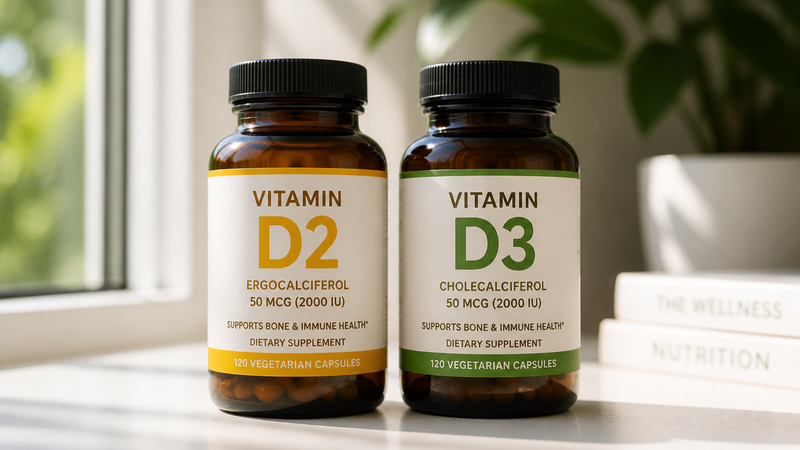
Are You Taking the Wrong Form of Vitamin D? Here's What to Know
Millions of Americans take vitamin D every day — but many may be reaching for a form that doesn't work as well as they think.
You've probably heard that vitamin D is essential for strong bones and a healthy immune system. But here's something most people don't know: not all vitamin D supplements are created equal. The form on the label matters — and choosing the wrong one could mean your body isn't getting the benefit you're counting on.
Two Forms, One Big Difference
Walk down the supplement aisle and you'll find two versions: vitamin D2 (ergocalciferol) and vitamin D3 (cholecalciferol). They sound similar, but they behave differently once they're inside your body.
Vitamin D3 is the form your skin naturally produces when exposed to sunlight. Vitamin D2 comes from plant sources and has been used in prescription-strength vitamin D for decades. The question researchers have been asking is: are they equally effective?
What the Research Actually Shows
Multiple clinical studies have found that vitamin D3 is more effective than D2 at raising and maintaining blood levels of 25-hydroxyvitamin D — the marker doctors use to assess your vitamin D status. A review published in the American Journal of Clinical Nutrition found that D3 was approximately 87 percent more potent than D2 in raising those levels.
It's worth noting that research in this area continues to evolve. Most studies have been relatively short-term, and scientists are still working to fully understand the long-term implications of choosing one form over the other. But the current weight of evidence favors D3 for most people.
The National Institutes of Health Office of Dietary Supplements acknowledges the ongoing debate and notes that some studies suggest D3 is superior while others show little difference, particularly in higher doses. The conversation is nuanced — which is why talking with your doctor about your specific situation is always a smart move.
Why D2 Still Shows Up Everywhere
If D3 appears to be more effective, why is D2 still so common? A few reasons.
Vitamin D2 has a longer history in prescription medicine and was the standard form used to fortify foods like milk for many years. It's also vegan-friendly — D3 is typically derived from lanolin, a substance from sheep's wool, while D2 comes from plant-based sources like yeast and mushrooms. For people following a plant-based diet, D2 may seem like the natural choice, though vegan D3 supplements derived from lichen are now available.
Who Should Pay Attention Most
Vitamin D deficiency is widespread. The NIH estimates that large portions of the U.S. population have insufficient vitamin D levels, particularly older adults, people with darker skin tones, those who spend little time outdoors, and individuals with certain medical conditions that affect absorption.
For adults over 40 — the heart of our audience — this matters quite a bit. Vitamin D plays a role in bone density, immune function, muscle strength, and emerging research is exploring its connection to mood and cardiovascular health. Getting the most out of your supplement is worth a moment of attention.
A Few Things Worth Knowing Before You Shop
- Check your label. Look for "D3" or "cholecalciferol" on the bottle. Many generic or store-brand supplements still use D2.
- Vegan? You have options. Lichen-derived D3 supplements offer the more effective form without animal-derived ingredients.
- Fat matters. Both D2 and D3 are fat-soluble vitamins, meaning they're absorbed better when taken with a meal that contains some fat. Taking your supplement with breakfast or lunch rather than on an empty stomach may improve absorption.
- More isn't always better. Vitamin D toxicity is rare but possible. The NIH sets the tolerable upper intake level for adults at 4,000 IU per day from supplements, though many people take less. Don't significantly increase your dose without guidance from your doctor.
- Get your levels tested. A simple blood test can tell you where your vitamin D stands. This is the best way to know whether you actually need more — and whether what you're taking is working.
The Bottom Line
If you're already taking vitamin D, you're ahead of many people. But it's worth flipping that bottle over to check which form you're getting. The current evidence suggests that vitamin D D3 is more effective than D2 at raising blood levels of this crucial nutrient. Talk with your doctor about your vitamin D status, the right dose for your needs, and whether the form you're taking is doing its job.
