

Your Grip Strength Could Reveal How Long You'll Live
A simple squeeze test may tell doctors more about your future health than your blood pressure reading.
You probably don't think much about how firmly you grip a jar lid or shake someone's hand. But researchers increasingly do. Studies suggest that grip strength is one of the most reliable physical markers of overall health and longevity — especially in adults over 40. Here's what the science actually says, and what you can do about it.
What Is Grip Strength, and Why Do Researchers Care About It?
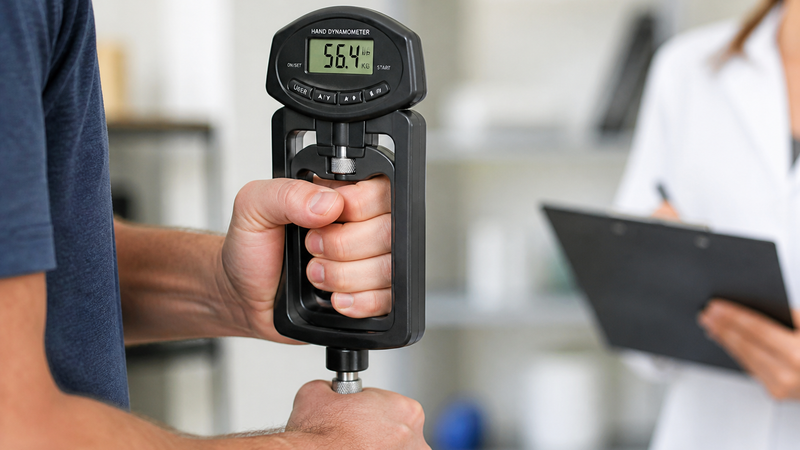
Grip strength is exactly what it sounds like: how much force your hand can generate when squeezing. It's measured with a simple handheld device called a dynamometer, and the test takes about 30 seconds.
Researchers have embraced it as a health marker because it's cheap, fast, and surprisingly informative. Muscle strength doesn't exist in isolation — it reflects the overall condition of your musculoskeletal system, your nervous system, and your metabolic health.
What the Research Has Actually Found
A landmark study published in The Lancet followed nearly 140,000 adults across 17 countries and found that lower grip strength was associated with a higher risk of death from cardiovascular disease and all causes. The researchers found grip strength was a stronger predictor of cardiovascular death than systolic blood pressure.
A separate analysis published in the British Medical Journal reviewed data from multiple large studies and found that weaker grip strength was linked to higher risks of heart attack, stroke, and earlier death. Importantly, these are observational studies — they show an association, not a direct cause-and-effect relationship.
Research published in the Journal of Cachexia, Sarcopenia and Muscle has also connected low grip strength to a condition called sarcopenia — age-related muscle loss — which is itself linked to falls, fractures, and loss of independence in older adults.
Why Does Muscle Strength Signal So Much?
Muscle is metabolically active tissue. It helps regulate blood sugar, supports your cardiovascular system, and protects your joints and bones. When overall muscle health declines, the effects ripple through the body.
Grip strength is considered a useful proxy for whole-body muscle strength. If the muscles in your hand and forearm are weakening, the research suggests, the rest of your musculature likely is too.
It's also worth noting that grip strength tends to decline naturally with age — typically starting in the 50s and accelerating after 65. That makes it a useful tool for tracking change over time, not just a one-time snapshot.
Important Limitations to Keep in Mind
Before you panic about your handshake, here's the important context. Most of the major studies in this area are observational — they identify patterns across large groups of people, but they cannot prove that weak grip strength directly causes disease or early death.
Many factors influence both grip strength and health simultaneously: physical activity level, nutrition, chronic illness, and genetics, among others. Grip strength may be a useful signal, but it's one data point, not a verdict on your future.
Researchers also note that grip strength norms vary by age, sex, and body size. What counts as "low" for a 70-year-old woman differs from what's typical for a 45-year-old man.
What You Can Do About It
The encouraging news is that muscle strength is trainable at any age. Research consistently shows that resistance training — lifting weights, using resistance bands, or doing bodyweight exercises — can build and preserve muscle mass and strength well into your 70s and 80s.
You don't need a gym or a complicated program to get started. Here are evidence-backed steps to consider:
- Add resistance training at least twice a week. Major health organizations including the CDC and the American Heart Association recommend it for adults of all ages.
- Don't skip protein. Muscle building requires adequate protein intake. Talk to your doctor or a registered dietitian about what's right for your age and activity level.
- Stay active throughout the day. Regular walking, gardening, and everyday movement all contribute to maintaining muscle function.
- Ask your doctor about a grip strength test. It's a quick, painless measurement that could be part of your regular health picture — especially if you're over 50.
The Bottom Line
Your grip strength isn't just about handshakes. Large observational studies suggest it may be one of the better simple indicators of how well your body is aging overall. The science isn't saying a weak grip causes disease — but it may be signaling something worth paying attention to. If you're not already doing regular strength training, this is a solid reason to start. Talk to your doctor about what makes sense for your age and health history.
