

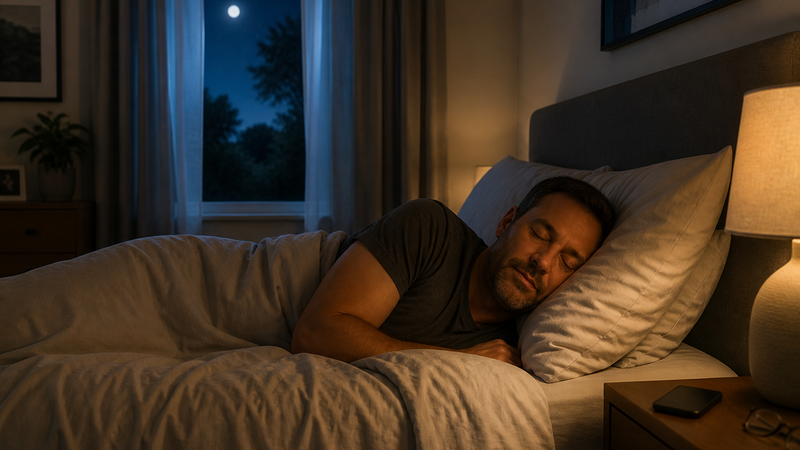
Sleep Your Way to a Longer Life: What the Latest Research Reveals
You already know sleep feels good. But a growing body of research suggests it may actually be adding years to your life.
Most of us treat sleep as the first thing we cut when life gets busy. Work deadlines, late-night scrolling, early alarms — and suddenly seven hours becomes five. But science is making a strong case that skimping on sleep isn't just making you tired. It may be quietly shortening your life.
What Research Tells Us About Sleep and Longevity
A large study published in the journal Nature Communications followed nearly 8,000 British civil servants over 25 years and found that people who consistently slept six hours or fewer per night in their 50s, 60s, and 70s were significantly more likely to develop multiple chronic diseases — including heart disease, diabetes, and cancer — compared to those who slept seven hours.
Importantly, this was an observational study, which means researchers identified associations, not direct cause and effect. But the size of the study and the length of follow-up make the findings hard to ignore.
A separate analysis published in the Journal of the American Heart Association looked at sleep quality across five different healthy habits and found that people who met all five — including seven to eight hours of sleep per night — had a meaningfully lower risk of dying from cardiovascular disease, cancer, and all causes combined compared to those who did not.
Why Sleep Does So Much More Than Rest You
Sleep isn't downtime for your body. It's active repair time.
During deep sleep, your brain clears out metabolic waste products — including proteins linked to Alzheimer's disease — through a system called the glymphatic system. Your immune system ramps up. Hormones that regulate appetite, stress, and cell repair are released and balanced.
When sleep is consistently cut short, those repair processes get interrupted night after night. Over years and decades, researchers believe that cumulative sleep debt may contribute to inflammation, hormonal imbalance, and a higher burden of chronic disease.
Too Much Sleep May Also Be a Signal Worth Watching
Here's something that surprises many people: sleeping too much is also associated with poorer health outcomes in some studies.
Research consistently finds a U-shaped curve, where both short sleepers (under six hours) and very long sleepers (over nine hours) tend to have higher rates of disease and mortality than those in the seven-to-eight-hour range. However, experts caution that long sleep is often a symptom of an underlying health issue — depression, chronic illness, or sleep disorders like apnea — rather than a cause of poor health on its own.
If you find yourself needing nine or more hours regularly and still feel exhausted, that's worth a conversation with your doctor.
Sleep Quality Matters, Not Just Quantity
Clocking eight hours doesn't mean much if those hours are fragmented, restless, or shallow.
Conditions like obstructive sleep apnea — where breathing repeatedly stops during the night — can rob you of deep, restorative sleep even when you're technically in bed for a full eight hours. The American Academy of Sleep Medicine estimates that sleep apnea affects roughly 30 million adults in the U.S., many of them undiagnosed.
Signs of poor sleep quality include waking up feeling unrefreshed, daytime sleepiness, snoring, or frequent nighttime waking. If any of these sound familiar, ask your doctor whether a sleep evaluation makes sense.
Practical Steps to Protect Your Sleep
The good news is that sleep is one of the most modifiable health habits you have. Small changes in your daily routine can add up to real improvements over time.
- Keep a consistent schedule. Going to bed and waking up at the same time every day — even on weekends — helps anchor your body's internal clock.
- Get morning light. Stepping outside within an hour of waking up helps reinforce your natural sleep-wake rhythm and makes it easier to fall asleep at night.
- Wind down before bed. Dim the lights and step away from screens at least an hour before sleep. Bright light at night suppresses melatonin, the hormone that signals it's time to sleep.
- Watch caffeine timing. Caffeine has a half-life of about five to six hours, meaning a 3 p.m. coffee can still be affecting your brain at 9 p.m.
- Keep your bedroom cool and dark. Your core body temperature needs to drop slightly to initiate sleep. A cooler room helps that process along.
- Move your body during the day. Regular physical activity is consistently linked to better sleep quality, though intense exercise close to bedtime may be stimulating for some people.
If lifestyle changes aren't enough, talk to your doctor before reaching for over-the-counter sleep aids. Many common sleep medications are not intended for nightly use and carry risks, particularly for adults over 65.
The Bottom Line
Sleep is not a luxury — it's one of the most powerful tools you have for protecting your long-term health. The research linking consistent, quality sleep to a lower risk of chronic disease and longer life is growing stronger every year. Aim for seven to eight hours, pay attention to how rested you actually feel, and talk to your doctor if sleep is a nightly struggle. What happens while you're asleep may matter just as much as everything you do while you're awake.
