

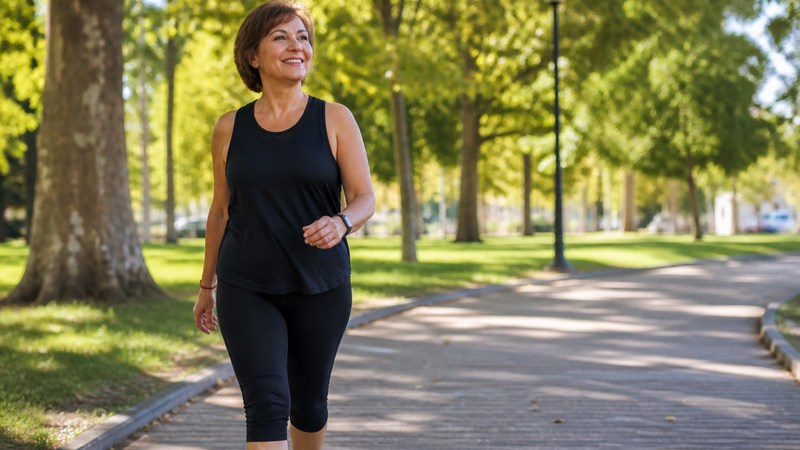
Your Cells Are Listening: What Exercise Does to Your Body After 50
You don't need to run marathons for exercise to work its magic at the cellular level — even gentle movement triggers remarkable changes after 50.
Most people assume that unless they're sweating through a hard workout, they're not really doing much for their health. But the science tells a different story. Even moderate, low-intensity exercise sets off a cascade of changes inside your cells that can help protect you from some of the most common effects of aging.
Here's what's actually happening under the hood when you move your body — and why it matters more after 50 than at any other time in your life.
Your Mitochondria Get a Wake-Up Call
Mitochondria are the tiny powerhouses inside your cells that convert food into usable energy. After 50, they naturally start to decline in both number and efficiency — a process researchers believe plays a central role in fatigue, muscle loss, and age-related disease.
Here's the good news: exercise is one of the most reliable signals known to stimulate the production of new mitochondria. This process, called mitochondrial biogenesis, has been documented in studies of older adults performing aerobic exercise, including walking and cycling at moderate intensity.
More mitochondria means your cells can generate energy more efficiently — which translates to less fatigue, stronger muscles, and better endurance over time.
Inflammation Gets Turned Down
Chronic low-grade inflammation is one of the leading drivers of age-related conditions, including heart disease, type 2 diabetes, and cognitive decline. Researchers sometimes call this slow-burning state "inflammaging" — a blend of inflammation and aging.
Regular physical activity, even at a gentle pace, has been linked in multiple studies to lower levels of inflammatory markers in the blood, including C-reactive protein (CRP) and interleukin-6. A review published in the journal Brain, Behavior, and Immunity found that exercise has consistent anti-inflammatory effects, and that these benefits appear across a range of intensities.
You don't have to push hard to see results. Consistency matters more than intensity when it comes to keeping inflammation in check.
Your DNA Gets a Little Extra Protection
At the tips of your chromosomes sit structures called telomeres — protective caps that tend to shorten as you age. Shorter telomeres have been associated with a higher risk of chronic disease and are considered one marker of biological aging.
Research suggests that physically active people tend to have longer telomeres than sedentary adults of the same age. A study published in the journal Preventive Medicine found that adults who exercised regularly had significantly longer telomeres compared to those who were largely inactive, even after accounting for other factors. The researchers estimated the difference could translate to years of biological aging.
It's important to note that telomere research is still evolving, and longer telomeres don't guarantee a longer life. But the association between regular movement and this marker of cellular health is one more reason to keep moving.
Muscles Stay Stronger — and Smarter
After 50, adults can lose three to five percent of muscle mass per decade if they don't work to maintain it — a condition called sarcopenia. This loss isn't just about appearance. It affects balance, metabolism, bone density, and the ability to stay independent as you age.
Resistance exercise — things like bodyweight movements, resistance bands, or light weights — directly stimulates muscle protein synthesis, the process by which your body builds and repairs muscle tissue. Research from institutions including the Buck Institute for Research on Aging has shown that older adults who engage in regular resistance training can meaningfully slow or partially reverse age-related muscle loss.
Even walking helps, because it places consistent low-level demand on your leg and core muscles that signals them to stay active and functional.
Your Brain Benefits, Too
Exercise doesn't just work below the neck. Physical activity triggers the release of brain-derived neurotrophic factor, or BDNF — a protein that supports the growth, maintenance, and survival of neurons. Researchers sometimes describe BDNF as a kind of "fertilizer" for the brain.
Studies have linked regular aerobic exercise in older adults to better memory, sharper executive function, and a reduced risk of cognitive decline. A landmark study published in the Proceedings of the National Academy of Sciences found that older adults who walked regularly showed an increase in the size of the hippocampus — the brain region central to memory — compared to those who did stretching only.
Again, these studies show associations and possibilities, not guarantees. But the direction of the evidence is consistent and encouraging.
How Much Do You Actually Need?
Current guidelines from the U.S. Department of Health and Human Services recommend that adults aim for at least 150 minutes of moderate-intensity aerobic activity per week — roughly 30 minutes on most days — plus two days of muscle-strengthening activity.
But if that feels like a lot right now, start smaller. Research consistently shows that even short bouts of movement — a 10-minute walk, some light gardening, a gentle yoga session — add up and provide real benefits. Getting off the couch is always the right first step.
If you have existing health conditions or haven't been active in a while, talk with your doctor before starting a new exercise routine. They can help you find an approach that fits your health history and goals.
The Bottom Line
You don't have to train like an athlete to give your cells a serious upgrade. After 50, even gentle, consistent movement — walking, light resistance work, a swim — triggers real changes at the cellular level: better energy production, lower inflammation, DNA protection, stronger muscles, and a sharper brain. The science is clear that it's never too late to start, and the benefits begin earlier than most people think. Find something you enjoy, make it a habit, and let your cells do the rest.
