

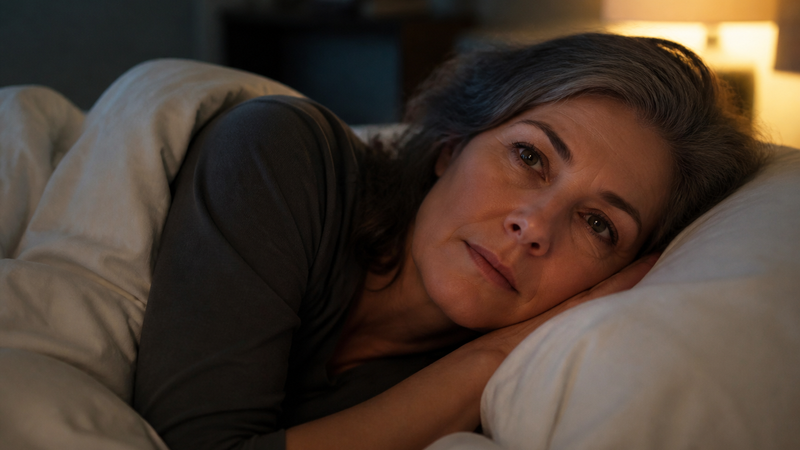
Why Menopause Wrecks Your Sleep and What Can Actually Help
Hot flashes get all the attention, but disrupted sleep may be the menopause symptom that does the most damage to your daily life.
You fall asleep just fine. Then 2 a.m. hits and you're wide awake, heart racing, sheets damp. Sound familiar? If you're in perimenopause or menopause, your sleep problems have a biological explanation — and there are real, evidence-backed ways to fight back.
What's Actually Happening in Your Body
During menopause, estrogen and progesterone levels fall sharply. Both hormones play a role in sleep regulation. Progesterone in particular has a natural calming, sleep-promoting effect, so when it drops, your ability to stay asleep can drop with it.
Estrogen helps regulate your body's internal thermostat. When levels decline, that thermostat becomes unstable — which is why hot flashes and night sweats wake so many women in the middle of the night. According to the North American Menopause Society, up to 61 percent of perimenopausal and postmenopausal women report sleep problems.
It's Not Just Hot Flashes
Here's what often gets missed: sleep disruption during menopause isn't always caused by night sweats directly. Research published in the journal Sleep Medicine Reviews notes that hormonal shifts can alter sleep architecture itself — meaning you spend less time in the deep, restorative stages of sleep, even on nights when you don't wake up sweating.
Mood changes matter here too. Declining estrogen is linked to higher rates of anxiety and depression during the menopause transition, and both are well-established disruptors of sleep quality. It's often a feedback loop: poor sleep worsens mood, and poor mood worsens sleep.
There's also a connection to sleep apnea. Research suggests postmenopausal women have a significantly higher risk of obstructive sleep apnea compared to premenopausal women, possibly because of changes in body composition and upper airway muscle tone. If you snore heavily or wake up exhausted despite a full night in bed, mention it to your doctor.
What the Research Says About Treatment
The most studied conventional treatment for menopausal sleep disruption is menopausal hormone therapy (MHT, formerly called HRT). Multiple studies have found it can reduce night sweats and improve sleep quality in women whose sleep problems are driven by vasomotor symptoms — the clinical term for hot flashes and night sweats. MHT is not right for everyone, and whether it's appropriate for you depends on your personal health history. That's a conversation to have with your doctor.
For women who can't or don't want to use hormones, there are other options with growing evidence behind them. In 2023, the FDA approved fezolinetant (brand name Veozah), a non-hormonal prescription medication that targets the brain pathway responsible for hot flashes. Clinical trials published in the journal Menopause found it significantly reduced the frequency and severity of moderate to severe hot flashes in postmenopausal women.
Non-Drug Approaches That Have Real Evidence
Cognitive behavioral therapy for insomnia, known as CBT-I, is consistently rated as a first-line treatment for chronic insomnia by sleep medicine organizations — and it works for menopausal women too. A study published in the journal Sleep found CBT-I improved sleep in perimenopausal and postmenopausal women even when hot flashes were still present. CBT-I is available through therapists, online programs, and some apps.
Keeping your bedroom cool is one of the most practical steps you can take. The National Sleep Foundation recommends a bedroom temperature between 60 and 67 degrees Fahrenheit for optimal sleep. For women dealing with night sweats, moisture-wicking sheets and a fan or cooling mattress pad may also help reduce nighttime wake-ups.
Mind-body practices show promise as well. A systematic review in Menopause found that mindfulness-based interventions were associated with improvements in sleep quality and reductions in perceived stress in menopausal women, though researchers noted the studies were relatively small and called for larger trials. Still, the risk is low and the potential upside is real.
What Probably Doesn't Help as Much as You Think
A glass of wine before bed is a common sleep ritual, but alcohol is actually a sleep disruptor. It may help you fall asleep faster, but it fragments sleep in the second half of the night — which is already vulnerable during menopause. The same goes for late-night caffeine, heavy meals close to bedtime, and irregular sleep schedules.
Over-the-counter sleep aids containing diphenhydramine (the ingredient in many "PM" products) are meant for occasional, short-term use only. They carry a higher risk of grogginess and confusion in adults over 65, and they don't address the underlying hormonal causes of menopausal sleep disruption.
The Bottom Line
Waking up at 3 a.m. in a cold sweat is not just something you have to live with. Menopausal sleep disruption has clear biological causes and a growing number of evidence-based solutions — from hormone therapy and newer non-hormonal medications to CBT-I, cooling strategies, and mindfulness practices. The right approach depends on your symptoms, your health history, and what fits your life. Start by bringing it up with your doctor. Sleep is not a luxury — especially now.
