

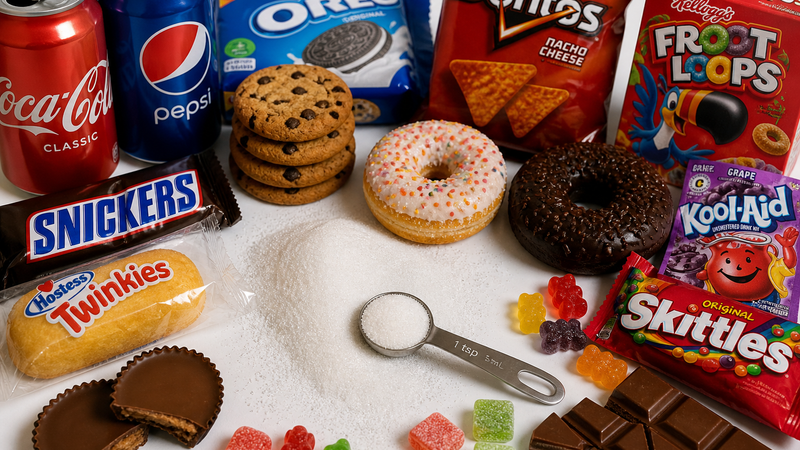
Is Fructose Fueling Cancer Growth? Here's What the Science Says
You've heard that sugar feeds cancer — but fructose may play a surprisingly specific role that researchers are only beginning to understand.
Most of us have heard the phrase "sugar feeds cancer." It gets tossed around a lot, often without much nuance. But researchers are now asking a sharper question: does fructose — a specific type of sugar that dominates the modern American diet — do something to cancer cells that other sugars don't?
The early findings are worth paying attention to, even if the science is still developing.
Fructose vs. Glucose: What's the Difference?
All sugars are not the same inside your body. Glucose is the form your cells use most directly for energy. Fructose is processed differently — primarily in the liver — and it behaves differently at the cellular level, too.
High-fructose corn syrup, used widely in sodas, packaged snacks, sweetened condiments, and fast food, contains a mixture of both. But it's the fructose portion that has drawn increasing attention from cancer researchers.
What Researchers Have Found
A study published in Nature examined how cancer cells in the small intestine use fructose as a fuel source. The researchers found that cancer cells in that environment were able to metabolize fructose in ways that supported their growth. Crucially, this wasn't about fructose simply adding extra calories — it appeared to involve specific metabolic pathways that cancer cells can exploit.
Separate research published in Cell Metabolism found that fructose consumption was linked to changes in the tumor microenvironment — the cellular neighborhood surrounding a tumor — in ways that could potentially make it easier for some tumors to thrive.
It's important to be clear: these are early-stage findings. Much of this research has been conducted in animal models or cell cultures, which don't always translate directly to humans. This is not proof that eating fructose causes cancer. What it does suggest is that the relationship between fructose and cancer biology deserves serious scientific attention — and is getting it.
Why This Matters More as You Age
Cancer risk increases with age, and so does the metabolic impact of a high-sugar diet. Adults over 40 often experience shifts in how the body processes sugar, including reduced insulin sensitivity. That means the same amount of dietary fructose may have a more pronounced effect on blood sugar and metabolic health in midlife than it did in your twenties.
Add to that the fact that the average American consumes far more added fructose today than previous generations did, primarily through ultra-processed foods and sweetened beverages, and there's a compelling reason to take a closer look at what's in your diet.
The Foods Where Fructose Hides
You won't always see "fructose" on the label. Here's where it tends to show up:
- Sodas and sweetened drinks — including energy drinks, sweetened teas, and fruit-flavored beverages
- Packaged snack foods — cookies, crackers, granola bars, and cereals
- Condiments and sauces — ketchup, barbecue sauce, salad dressings
- Flavored yogurts and other "healthy-sounding" packaged foods
- Fruit juice — even 100% juice delivers a concentrated dose of natural fructose without the fiber of whole fruit
Whole fruits also contain fructose, but they come packaged with fiber, water, vitamins, and antioxidants that slow absorption and add nutritional value. Researchers generally don't flag whole fruit consumption as a concern in this context.
What You Can Do Right Now
You don't need to overhaul your entire diet overnight. Small, consistent changes make a real difference over time.
- Swap sweetened beverages for water, sparkling water, or unsweetened tea
- Read ingredient labels and look for high-fructose corn syrup, fructose, or corn syrup in the first few ingredients
- Choose whole fruit over fruit juice
- Cook more at home, where you control what goes in the food
- Treat ultra-processed snack foods as an occasional indulgence, not a daily staple
If you have concerns about cancer risk, metabolic health, or how your diet may be affecting your body, talk with your doctor. This kind of conversation is especially worth having if you have a family history of cancer or existing metabolic conditions like diabetes or prediabetes.
The Bottom Line
The science connecting fructose to cancer biology is early and still evolving — this is not a reason to panic. But it is a reason to pay closer attention to one of the most common ingredients in the modern food supply. Cutting back on added fructose from ultra-processed foods and sugary drinks is a practical, low-risk step that supports your overall health, whatever the future research ultimately shows.
