

Could Your Protein Choices Be Quietly Draining Your Testosterone?
Not all protein is created equal — and the type you eat may matter more than you think for men's hormone health.
Most men trying to protect their testosterone focus on the gym, sleep, and stress. Fair enough — all three matter. But a growing body of research suggests what's on your plate, specifically which animal proteins you choose, may play a surprisingly important role too.
What the Research Actually Shows
Several observational studies have explored the link between dietary protein sources and testosterone levels in men. Research published in the Journal of Steroid Biochemistry and Molecular Biology found associations between high dairy intake and lower testosterone levels in men, though the studies were observational — meaning they can show a link but not prove cause and effect.
A study published in Nutrition Journal that examined dietary patterns in male participants found that men who consumed more plant-based proteins and certain animal proteins like eggs and fish tended to have more favorable hormone profiles compared to men with high dairy consumption. Again, this type of research identifies patterns, not direct cause.
It's worth noting that most studies in this area have been relatively small, and researchers acknowledge that many factors — total calorie intake, body weight, physical activity, and overall diet quality — also influence testosterone levels.
Why Dairy Specifically?
Cow's milk naturally contains its own hormones, including estrogens, because dairy cows are often pregnant during milking. Some researchers have hypothesized that these hormones, even in small amounts, could have downstream effects on men's endogenous hormone balance.
Commercial dairy products also contain insulin-like growth factor 1 (IGF-1), a hormone that has complex interactions with the endocrine system. Scientists at the Harvard T.H. Chan School of Public Health have studied dairy's hormonal content and its potential effects on the body, though research is ongoing and no definitive conclusions have been drawn.
It's important to be clear: this is an area of active scientific inquiry. The evidence is suggestive, not conclusive, and dairy remains a nutritious food for many people.
Where Animal Protein May Help
Not all animal protein appears to work the same way. Research has linked adequate intake of zinc and saturated fat — both found in red meat and eggs — to healthy testosterone production. Zinc in particular plays a well-established role in testosterone synthesis, and deficiency in this mineral is associated with lower levels.
Fatty fish like salmon and sardines supply vitamin D and omega-3 fatty acids, both of which have been associated with healthier testosterone levels in some studies. These are associations, not guarantees, but they point toward protein quality and nutrient density mattering as much as protein quantity.
What This Means in Practical Terms
If you're a man concerned about your testosterone levels, your protein choices are worth a conversation with your doctor — especially if dairy is a large part of your daily diet. Here are some things worth considering:
- Diversify your protein sources rather than relying heavily on any single food
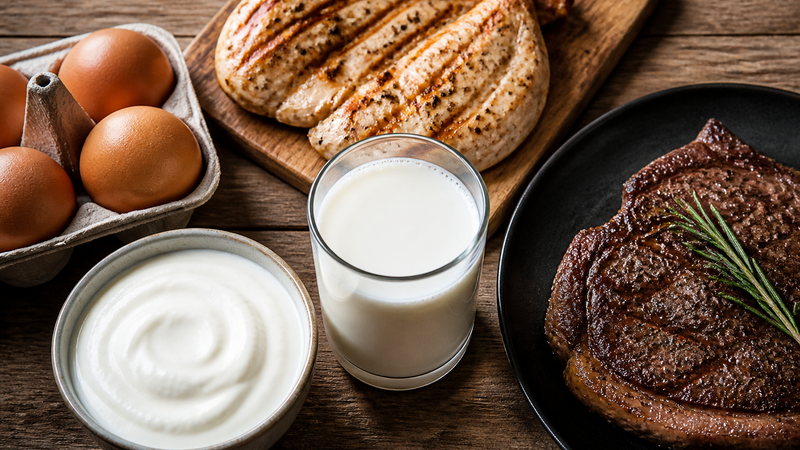
- Eggs, fatty fish, and lean meats like chicken and turkey supply high-quality protein without the hormonal compounds found in dairy
- Make sure you're getting enough zinc — found in beef, oysters, pumpkin seeds, and legumes
- Vitamin D status matters: ask your doctor about testing your levels
- Total diet quality, sleep, and exercise remain the biggest levers for hormone health
None of this means you need to swear off cheese or give up your morning yogurt. It means that if you're eating large amounts of dairy every day and noticing symptoms like fatigue, low libido, or difficulty building muscle, it may be worth discussing your diet and hormone levels with your physician.
Know Your Numbers
Testosterone naturally declines with age — roughly 1 to 2 percent per year after age 30, according to data cited by the American Urological Association. Symptoms of low testosterone can include fatigue, reduced muscle mass, decreased libido, and mood changes.
The only way to know your actual testosterone level is a blood test. If you're experiencing symptoms, talk to your doctor before making major dietary changes or considering any supplement or treatment. Diet is one piece of the puzzle, not the whole picture.
The Bottom Line
Research suggests that high dairy consumption may be linked to lower testosterone levels in men, while other animal proteins like eggs, fish, and lean meats appear more favorable for hormone health. The science is promising but not yet definitive — these are associations from observational studies, not proof of cause and effect. If you're concerned about your testosterone, the smartest first step is a conversation with your doctor, a blood test, and an honest look at your overall diet and lifestyle.
