

Why Cannabis Calms Some People and Triggers Anxiety in Others
The same compound that makes some people feel calm can send others into a spiral of worry — and neuroscience is starting to explain why.
You've probably heard someone say cannabis helps them unwind. You may also know someone whose experience was the opposite — heart racing, thoughts spiraling, convinced something was terribly wrong. Both reactions are real. And the reason they happen comes down to what cannabis does inside one of the brain's most ancient structures: the amygdala.
Meet Your Brain's Alarm System
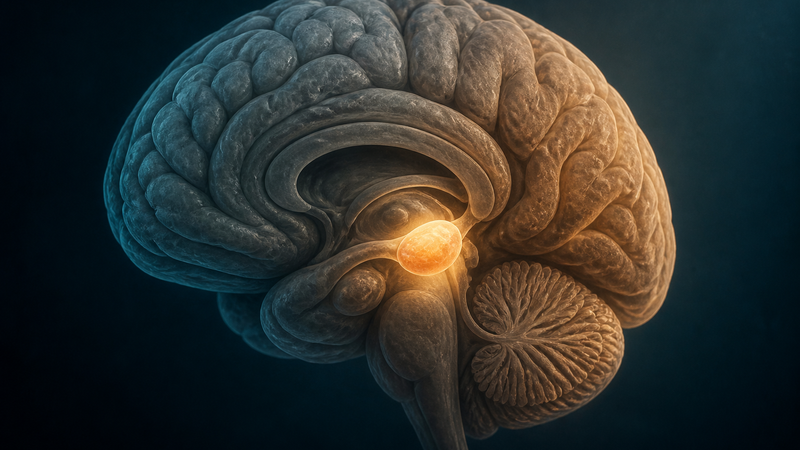
The amygdala is a small, almond-shaped cluster of neurons buried deep in the brain. Think of it as your internal threat detector. It processes fear, decides what counts as dangerous, and triggers your fight-or-flight response when something feels wrong.
Under normal circumstances, the amygdala works in close communication with the prefrontal cortex — the rational, decision-making part of your brain — which helps put the brakes on fear responses that aren't truly necessary. When that balance is working well, you feel calm and in control. When it's disrupted, anxiety can take over.
Where Cannabis Enters the Picture
Cannabis contains dozens of compounds, but the one most responsible for its mental effects is THC, or delta-9-tetrahydrocannabinol. THC works by binding to cannabinoid receptors throughout the brain — and the amygdala is packed with them.
Research published in the Journal of Neuroscience and reviewed in Nature Reviews Neuroscience has found that activating those cannabinoid receptors in the amygdala can suppress the firing of neurons involved in fear responses. In theory, that's why cannabis sometimes produces feelings of relaxation and reduced worry. The amygdala gets quieter, and the sense of threat fades.
But here's where it gets complicated.
The Dose Problem — and the Paradox
The relationship between THC and the amygdala isn't a straight line. Research suggests that at lower doses, THC may calm amygdala activity. At higher doses, the effect can reverse — actually increasing amygdala reactivity and amplifying feelings of fear, paranoia, and anxiety.
This dose-dependent paradox helps explain why the same plant can feel like a relaxant to one person and a panic trigger to another — or even to the same person on different occasions, depending on how much they consumed and what form they used.
It's also worth noting that most of this research comes from animal studies and small human imaging studies, which means the science is still developing. Researchers can observe what's happening in the brain, but predicting exactly how any individual will respond remains difficult.
Why Some People Are More Vulnerable
Individual biology matters enormously here. People differ in the density of cannabinoid receptors in their brains, how quickly they metabolize THC, and the baseline activity level of their amygdala. Someone who already has a highly reactive amygdala — common in people with anxiety disorders or a history of trauma — may be more likely to tip into a fear response rather than a calm one.
Age plays a role too. The adolescent brain, which is still building its prefrontal cortex, appears to be particularly sensitive to THC's effects on amygdala signaling. This is part of why researchers and clinicians express concern about cannabis use among teenagers and young adults. The brain's regulatory systems aren't fully online yet, and disrupting that development may have lasting effects — though more long-term human research is still needed to fully understand the scope.
CBD: A Different Story
Cannabidiol, or CBD, is another major compound in cannabis, and it appears to act on the amygdala differently than THC. Some imaging studies in humans suggest CBD may reduce amygdala activation in response to threatening stimuli, which has sparked interest in its potential role in anxiety-related conditions.
Importantly, CBD does not produce the intoxicating high associated with THC, and its effect on cannabinoid receptors is more indirect. Research into CBD's therapeutic potential is ongoing, and while early findings are promising, the evidence is not yet strong enough to make definitive clinical claims. If you're curious about CBD for anxiety, that's a conversation worth having with your doctor.
What This Means If You Use Cannabis — or Are Thinking About It
If you've ever felt unexpectedly anxious after using cannabis, your amygdala may be at least part of the explanation. A few things science suggests may influence your response:
- Dose: Lower amounts of THC are more consistently linked to calming effects; higher amounts increase anxiety risk.
- Potency: Today's cannabis products often contain far higher THC concentrations than products from past decades.
- Your baseline anxiety: If you already run anxious, your amygdala may be primed to amplify rather than quiet a THC response.
- Genetics and metabolism: How your body processes THC affects how long it stays active in your system and how strongly it binds to receptors.
- Setting and mindset: The environment you're in and your mental state going in can shape how your brain interprets what it's feeling.
This is not a recommendation to use or avoid cannabis. If you have questions about how cannabis might interact with your health, medications, or mental health history, your doctor is the right person to ask.
The Bottom Line
Cannabis doesn't affect everyone the same way, and the science of why is rooted in brain biology. THC interacts directly with the amygdala — your brain's fear center — and depending on the dose, your individual neurobiology, and other factors, that interaction can go in very different directions. The research is still evolving, but understanding that your brain has a lot to do with your experience is a useful starting point for anyone thinking more carefully about cannabis and their mental health.
