

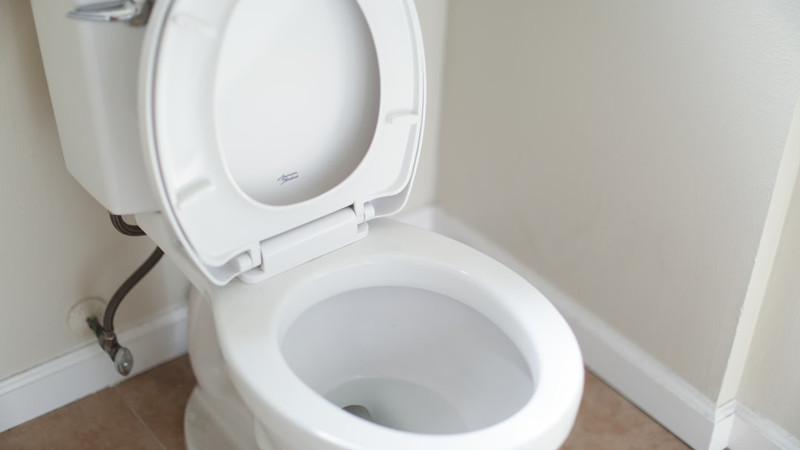
Flushing does more than send waste down the drain. A new research review found that it can also launch tiny airborne particles high enough to reach where adults breathe — though that does not mean every flush will make you sick.
What happens when you flush
A toilet flush creates a fast, turbulent rush of water in the bowl. That turbulence can throw microscopic droplets into the bathroom air. Some droplets may contain biological material from the bowl, including bacteria, viruses, or other microorganisms, which scientists call bioaerosols.
The latest systematic review, published in Science of the Total Environment, evaluated 22 studies on toilet-generated aerosols. Across those studies, particles were detected as high as 163 centimeters — just over five feet — and as far as 150 centimeters, or just under five feet, horizontally from the toilet. Some particles were 3 micrometers or smaller, a size that can potentially be inhaled into the respiratory tract.
Separate laser-based research from the University of Colorado Boulder showed how quickly this can happen. Invisible droplets traveled upward at speeds approaching 6.6 feet per second and reached about 4.9 feet above the toilet within eight seconds of flushing.
A dirtier bowl means more particles
The review found that aerosol levels rose when the toilet water contained more microbes. In plain English, the more biological material present in the bowl, the more bioaerosols may be sent into the air during a flush.
Flush volume also mattered. The analysis found that aerosol and bioaerosol concentrations generally increased by about 1.3 times for each additional liter of water used in a flush. Researchers concluded that the two biggest factors appear to be what is in the bowl and how much force the flush creates.pubmed.ncbi.nlm.nih+1
Don't panic — exposure isn't illness
This is where the story needs context. The evidence shows a possible exposure route, not proof that household toilet plumes routinely spread infections.
Whether a person gets sick depends on several variables: what germ is present, how much of it becomes airborne, how long a person is exposed, whether it reaches the body, and that person’s underlying immune health. The systematic review also said stronger real-world evidence is still needed to quantify infection risk from toilet-generated aerosols.Still, the finding is a good reminder that bathrooms need basic hygiene, especially in homes where someone has a gastrointestinal illness, respiratory infection, or a weakened immune system.
Make flushing cleaner
You cannot eliminate aerosols entirely, but you can reduce your contact with them and limit where they land.
- Put the lid down before flushing when your toilet has one. It may not create a perfect seal, but it can reduce the direct upward spread of droplets; particles can still escape through gaps around the lid and seat.pubmed.ncbi.nlm.nih+1
- Turn on the bathroom exhaust fan to improve air circulation and ventilation.
- Clean the toilet bowl, handle, lid, seat, and nearby high-touch surfaces regularly.
- Wash your hands thoroughly with soap and water after using the bathroom.
- Keep toothbrushes and other personal items as far from the toilet as practical, ideally stored in a closed cabinet.
The takeaway is simple: a toilet is not sterile, and flushing can temporarily put microscopic particles into the air. Closing the lid, cleaning routinely, ventilating the bathroom, and washing your hands remain the easiest ways to make the room more hygienic.
This article is for educational purposes only and is not a substitute for medical advice. Speak with a healthcare professional if you have concerns about infection risk, particularly if you or someone in your household is immunocompromised.

