

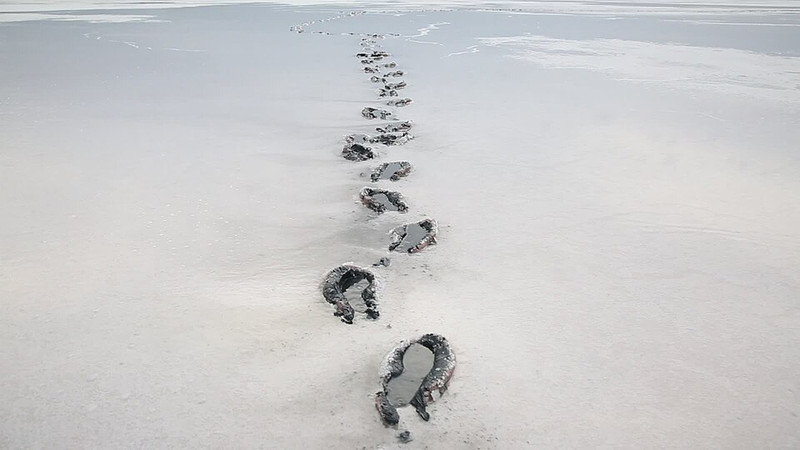
Social media's latest fitness obsession has people literally moving in reverse, and unlike a lot of viral workout trends, this one has real research behind it. Retro walking, also known as walking backward, has been studied for years in physical therapy settings and is now catching on as a mainstream workout.
Not actually a new idea
Walking backward isn't some overnight invention. Physical therapists and rehab specialists have used it for years to help patients rebuild strength and coordination, particularly after knee injuries or with knee osteoarthritis. What's new is that everyday gym-goers are now picking it up as a standalone workout, either outdoors or on a treadmill.
It burns noticeably more calories
Here's a claim that actually holds up: walking backward burns significantly more energy than walking forward at the same speed. Research puts backward walking at roughly 6.0 metabolic equivalents compared to about 3.5 to 4.3 for brisk forward walking, translating to close to 40% more calories burned per minute.
The muscle engagement is different, not opposite
It's a myth that backward walking swaps out one muscle group for another entirely. It actually engages many of the same muscles as forward walking, including the hip flexors, glutes, hamstrings, quadriceps, and calves, just through a different movement pattern and landing sequence. That different mechanical demand is part of why the movement feels so much harder even though you're covering less ground.
The strongest evidence is for knee health
The best-documented benefit of retro walking isn't for general fitness; it's for people managing knee osteoarthritis. A peer-reviewed randomized controlled trial found that a six-week retro walking program produced greater improvements in pain, function, and quadriceps strength compared to forward walking or no intervention at all. That's a meaningful, well-controlled result, not just anecdotal buzz.A possible brain benefit too
There's also emerging evidence linking backward walking, and even just imagining it, to short-term memory improvements, according to research highlighted by UCLA Health. Researchers believe the unfamiliar movement pattern demands more mental focus and coordination, which may be part of why it seems to engage the brain differently than routine forward walking.
Where the evidence gets shakier
Not everyone in the science community is convinced this trend deserves all the hype it's getting. A review from McGill University's Office for Science and Society points out that much of the backward-walking research is small-scale, short-term, and often tests it as an addition to an existing therapy program rather than on its own. That makes it hard to know whether backward walking itself is responsible for the benefits, or whether people are simply getting more overall exercise. The consensus is that the evidence is strongest for people already working with a physical therapist on a specific issue like knee pain, and considerably less certain for general fitness use in healthy adults.
How to actually try it safely
If you want to give retro walking a try, a treadmill is generally the safer starting point over walking backward outdoors. It offers handrails to catch yourself if you misjudge your footing, along with a flat, predictable surface, so you're not worrying about curbs, uneven pavement, or obstacles you can't see.
The bottom line
Retro walking has real research behind it, particularly for people managing knee pain, and it does appear to burn more calories than walking forward at the same pace. But the broader claims about it being a fitness game-changer for everyone are still thin on solid evidence. If you're curious, it's a low-risk addition to try on a treadmill; just don't expect it to replace a well-rounded exercise routine.
The information in this article is for educational purposes only and is not a substitute for professional medical advice, diagnosis, or treatment. Talk with a qualified health care provider or physical therapist before starting any new exercise routine, especially if you have existing joint, balance, or mobility concerns.


