

What Inflammation Actually Is — and Why It Matters
Inflammation isn't always the enemy. When you cut your finger or fight off a virus, acute inflammation is your immune system doing exactly what it's supposed to do. The problem is chronic, low-level inflammation that simmers quietly in the background for years.
Researchers have increasingly identified this slow burn as a common thread running through many of the diseases that most affect people as they age. Addressing it through diet isn't a fringe idea — it's a mainstream focus of nutrition science.
The Foods Research Points To Most Consistently
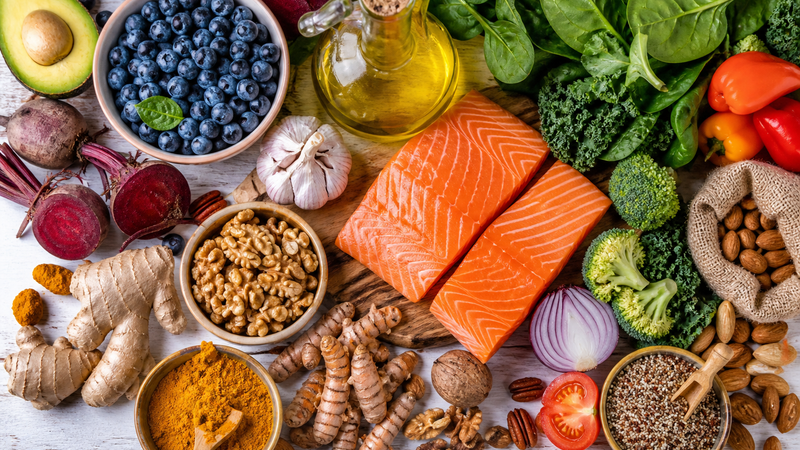
Fatty fish. Salmon, mackerel, sardines, and other fatty fish are rich in omega-3 fatty acids, particularly EPA and DHA. Multiple large reviews, including a 2022 meta-analysis published in Nutrients, have found that higher omega-3 intake is associated with lower levels of inflammatory markers such as C-reactive protein (CRP) and interleukin-6. The American Heart Association recommends eating fatty fish at least twice a week partly for this reason.
Berries. Blueberries, strawberries, raspberries, and cherries are packed with compounds called anthocyanins and polyphenols. Studies, including research from Harvard's T.H. Chan School of Public Health, have linked regular berry consumption to lower markers of inflammation and oxidative stress. These are observational findings, meaning they show a connection — not a guaranteed cause-and-effect — but the consistency across studies is notable.
Extra virgin olive oil. A cornerstone of the Mediterranean diet, extra virgin olive oil contains oleocanthal, a compound that researchers at the University of Pennsylvania have found acts similarly to ibuprofen in blocking inflammatory pathways. A 2020 review in the journal Nutrients concluded that olive oil consumption is associated with reduced inflammation and cardiovascular risk, though most studies rely on self-reported dietary data, which has its limits.
Leafy greens. Spinach, kale, Swiss chard, and collard greens are rich in vitamin K, folate, and a range of antioxidants. Research published in the American Journal of Clinical Nutrition has linked higher vegetable intake — especially dark leafy greens — to lower blood levels of inflammatory markers. Eating more greens also supports a healthy gut microbiome, which plays its own emerging role in regulating inflammation.
Nuts, especially walnuts. Walnuts stand out in the nut family because they contain plant-based omega-3s (ALA) along with vitamin E and polyphenols. A large clinical trial called the WAHA study, published in Circulation in 2020 and involving more than 700 older adults, found that eating about half a cup of walnuts daily for two years significantly reduced several inflammatory biomarkers compared to a control group. This is one of the stronger randomized controlled trials in this area.
Turmeric. The active compound in turmeric, curcumin, has been studied extensively for its anti-inflammatory properties. A 2017 review in the journal Foods summarized evidence from dozens of clinical trials suggesting curcumin can reduce CRP and other inflammatory markers. The honest caveat: curcumin is poorly absorbed on its own. Studies typically use high-dose supplements rather than cooking amounts of turmeric, and results vary. Pairing turmeric with black pepper (which contains piperine) may improve absorption, but more research is needed on real-world dietary amounts.
What the Mediterranean Diet Gets Right
Rather than focusing on single "superfoods," many nutrition researchers argue the bigger picture matters most. The Mediterranean diet — which emphasizes vegetables, fruits, whole grains, legumes, fish, olive oil, and nuts, while limiting red meat and processed foods — has the most robust evidence base of any dietary pattern for reducing inflammation.
A landmark study called PREDIMED, a large randomized trial conducted in Spain and published in the New England Journal of Medicine, found that a Mediterranean diet supplemented with olive oil or nuts significantly reduced cardiovascular events compared to a low-fat diet. While the trial was primarily about heart disease, inflammatory markers improved along with outcomes.
Foods That May Work Against You
The flip side matters too. Research consistently links ultra-processed foods, refined sugars, trans fats, and excess alcohol to higher levels of inflammatory markers. A 2019 study in the British Medical Journal following more than 100,000 French adults found that a higher proportion of ultra-processed foods in the diet was associated with higher inflammatory scores.
You don't have to be perfect. But the overall pattern of what you eat day in and day out appears to carry more weight than any single meal.
A Few Honest Limitations to Keep in Mind
Nutrition research is genuinely hard to do well. Most studies in this area are observational, meaning they track what people eat and what happens to their health over time — but can't fully rule out other explanations. People who eat more fish and vegetables may also exercise more, sleep better, or have less stress.
Randomized controlled trials (where researchers randomly assign people to eat certain foods) are more reliable, but harder to conduct and rarely last long enough to measure disease outcomes directly. The PREDIMED trial and the WAHA walnut study are among the stronger examples in this space, but even they have limits.
The bottom line on the science: the evidence for an anti-inflammatory dietary pattern is strong enough that major health organizations — including the American Heart Association and the World Health Organization — recommend it. For individual foods, the evidence varies from very strong (fatty fish, olive oil) to promising but preliminary (turmeric supplements).
Practical Ways to Start Today
- Swap refined grain sides for a leafy green salad or roasted vegetables a few nights a week.
- Add a handful of walnuts or berries to your morning routine.
- Use extra virgin olive oil as your go-to cooking fat instead of butter or vegetable oils.
- Aim for two servings of fatty fish per week — canned sardines or salmon are affordable options.
- Cut back on packaged, ultra-processed snacks one step at a time rather than all at once.
If you take medications or manage a chronic condition, talk with your doctor before making major dietary changes — especially if you're considering high-dose turmeric or fish oil supplements, which can interact with certain drugs.
The Bottom Line
No single food is a cure for inflammation, and no diet can undo every risk factor. But the research is clear enough to act on: a daily pattern built around fatty fish, colorful vegetables and fruits, olive oil, nuts, and whole foods — and away from ultra-processed products and excess sugar — is one of the most evidence-backed steps you can take for your long-term health. Start with one small swap today. Over months and years, those choices add up.
