

Are Artificial Sweeteners Actually Safe? Here's What Science Now Says
You swapped sugar for zero-calorie sweeteners to be healthier — but the science on whether that trade-off pays off is more complicated than you think.
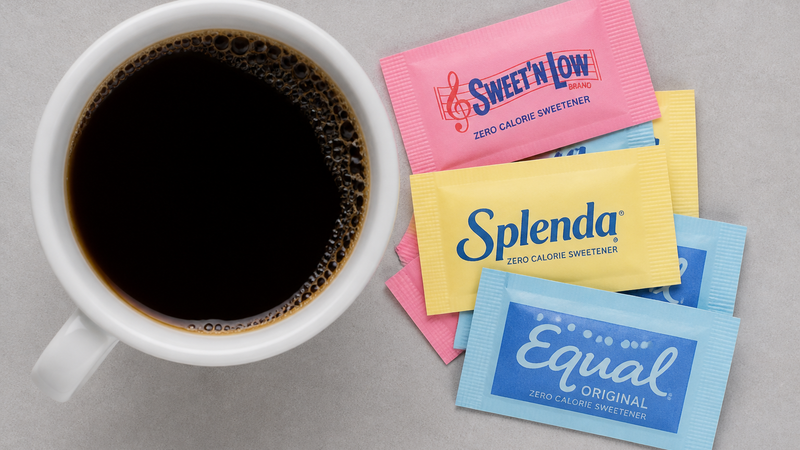
Millions of Americans reach for the pink, yellow, or blue packet without a second thought. Zero calories sounds like a clear win. But over the past few years, researchers have been taking a much harder look at artificial sweeteners — and what they're finding is worth your attention.
What We're Talking About
Artificial sweeteners — also called non-nutritive sweeteners or sugar substitutes — include familiar names like aspartame (Equal), saccharin (Sweet'N Low), sucralose (Splenda), and stevia. They are found in diet sodas, sugar-free yogurts, protein bars, chewing gum, and hundreds of other packaged foods.
They deliver sweetness without the calories of sugar, which is why they became so popular during the low-fat, calorie-counting era of the 1980s and beyond. The logic seemed airtight: fewer calories, less weight gain, better health.
The Weight Loss Promise — Does It Hold Up?
Here's where the story gets complicated. The assumption that cutting sugar calories with sweeteners leads to weight loss has not held up as cleanly as expected in research.
A 2022 review published in PLOS Medicine, which analyzed data from multiple studies, found that while some short-term trials showed modest weight reduction with low-calorie sweeteners, the long-term evidence was less convincing. Observational studies — the kind that follow people over years — have actually found associations between regular diet soda consumption and weight gain in some populations. Researchers caution, though, that this could reflect reverse causation: people who already struggle with weight may be more likely to choose diet products.
The takeaway? Sweeteners are not a guaranteed weight-loss tool, and the evidence is more mixed than the marketing suggests.
Your Gut May Not Love Them
One of the most active areas of sweetener research right now involves the gut microbiome — the trillions of bacteria that live in your digestive system and influence everything from immunity to metabolism.
A study published in Cell in 2022 by researchers at the Weizmann Institute of Science in Israel found that saccharin and sucralose, in particular, altered the gut microbiome in healthy adults. The study was relatively small, involving 120 participants, and the researchers noted that longer and larger studies are needed before firm conclusions can be drawn. Still, the findings raised a flag: gut microbiome changes were linked to changes in blood sugar regulation in some participants.
This is an emerging area of science, not settled proof. But it suggests that the idea of sweeteners as completely inert — passing through your body without any effect — may not be accurate.
The Heart Health Question
In 2023, the World Health Organization (WHO) issued a guideline advising against using non-sugar sweeteners for weight control, citing a lack of long-term benefit and potential risks with prolonged use.
Around the same time, a large study published in Nature Medicine examined erythritol, a sugar alcohol common in keto-friendly and "natural" sweetener products. The study, conducted by researchers at the Cleveland Clinic, found that higher blood levels of erythritol were associated with a greater risk of heart attack and stroke in a group of more than 4,000 adults who were already at elevated cardiovascular risk. It is important to note that this was an observational study, meaning it found an association — not proof that erythritol caused heart events. The researchers called for more investigation.
For healthy adults with no cardiovascular risk factors, the implications are less clear. But it is a finding that experts say deserves follow-up.
What About Stevia and "Natural" Options?
Stevia, derived from the leaves of the Stevia rebaudiana plant, is often marketed as the natural alternative. It has a longer track record of use in some countries and, so far, does not carry the same level of concern as some synthetic sweeteners.
That said, most stevia products sold in stores are highly processed extracts, not raw leaf. And while stevia appears safer in the current evidence base, it has not been studied as extensively as older sweeteners. The WHO's 2023 guidance included stevia in its broad caution against using non-sugar sweeteners as a long-term health strategy.
Should You Give Them Up Entirely?
That is a conversation worth having with your doctor, particularly if you use sweeteners heavily, are managing diabetes or cardiovascular risk, or are trying to lose weight.
For most people, occasional use of sweeteners is unlikely to cause harm based on what we currently know. The bigger concern is daily, high-volume use over many years — and the false sense of security that diet products can create.
If you are trying to reduce your overall sweetness preference, some nutrition researchers suggest that gradually cutting back on both sugar and sweeteners together may help your palate adjust over time.
The Bottom Line
Artificial sweeteners are not the straightforward healthy swap they were once thought to be. The latest research — from the WHO, the Cleveland Clinic, the Weizmann Institute, and others — raises real questions about their effects on gut health, heart risk, and long-term weight management. None of this means you need to panic over the occasional diet soda. But if sweeteners are a daily habit, it is worth talking to your doctor about whether they are actually serving your health goals — and what a smarter strategy might look like for you.
