

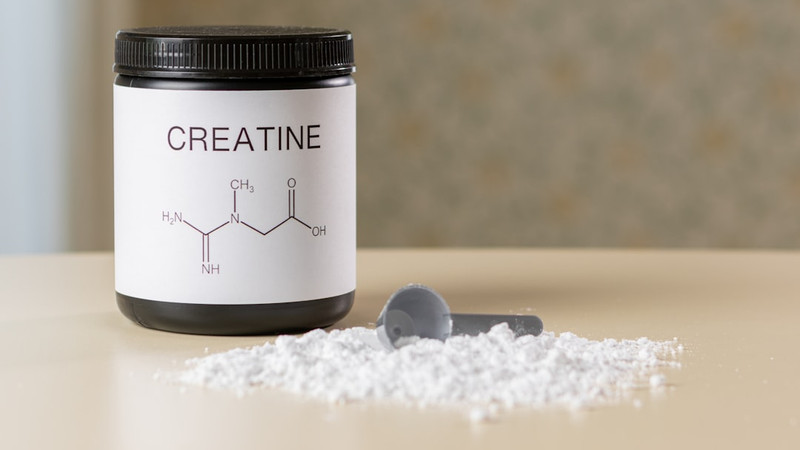
Creatine has lived in the weight room for years—right next to protein powder and shaker bottles. But newer research suggests it may have a second life as a quiet brain booster, helping with memory, focus, and mental stamina, especially when your system is under stress.pmc.ncbi.nlm.nih+1
This doesn’t turn creatine into a magic “smart pill.” It does mean the supplement you’ve been taking for your deadlifts might also be doing something useful upstairs.
A quick refresher: what creatine is and how it works
Creatine is a compound your body makes from amino acids and also gets from food, mainly meat and fish. Its main job is to help rapidly recycle ATP, the short-term energy currency cells use when demands spike—heavy lifting, sprinting, intense thinking, anything that asks for a quick burst.
About 95% of your creatine sits in skeletal muscle because that’s where power output is highest. The rest is spread across other tissues, including the brain, which burns roughly a fifth of your resting energy even though it makes up only a small slice of your body weight. When total creatine stores are higher, your cells have a bigger buffer to draw on when demands ramp up.
Most people who eat a mixed diet get about 1–2 grams of creatine per day from food, and the liver and kidneys synthesize additional amounts. Plant-based eaters typically get very little from food, which is part of why researchers have been so curious about what happens when they supplement.
What the brain data really show
In the last decade, researchers have moved beyond muscle and started measuring creatine inside the brain with magnetic resonance spectroscopy. The findings are nuanced, not hype:
- Supplementation can increase brain creatine, but the bump is smaller than in muscle—often on the order of 3–10%.
- Meta-analyses and systematic reviews report modest improvements in specific cognitive tasks, especially short-term memory, attention and processing speed, rather than sweeping changes in overall intelligence or global cognition.
- Trials where people are put under extra pressure—sleep deprivation, mentally demanding tasks, certain neurological conditions—tend to show more noticeable benefits than those done in completely rested, low-stress conditions.
So the pattern looks like this: creatine seems to matter most when your brain is being pushed harder, or when baseline reserves are lower.
Who tends to benefit the most
Across studies, three groups show up again and again:
- Vegetarians and vegans. They generally have lower muscle and blood creatine because they don’t eat meat; supplementation in these groups often leads to larger changes in tissue levels and more pronounced improvements in memory and reasoning tasks.
- Middle-aged and older adults. Several trials in adults over 60 report better performance on certain cognitive tests after creatine supplementation, such as tasks measuring reasoning or short-term recall, although results aren’t identical across all studies.
- People under acute stress. Volunteers kept up late, given mentally taxing tasks, or dealing with specific medical challenges sometimes show better preserved performance with creatine onboard compared to placebo.pmc.ncbi.nlm.nih+1
Healthy young omnivores with decent sleep and nutrition see smaller shifts overall. That’s not surprising; when baseline reserves and lifestyle are already strong, adding extra buffering does less.
How much creatine makes sense for brain support
For muscle performance, 3–5 grams of creatine monohydrate per day is the well-tested, standard dose in healthy adults. It saturates muscle stores over several weeks and has a long safety record.
Brain studies, however, often use higher amounts, for a simple reason: creatine has to cross the blood–brain barrier, and that process is slower and more limited than uptake into muscle. To get a meaningful change upstairs, most data suggest:
- 5 grams per day may offer some benefit, especially over longer periods.
- Around 10 grams per day is the range where several studies start seeing clearer shifts in brain creatine and stronger effects on targeted cognitive tasks.
You don’t need to obsess over timing. Creatine builds up gradually, so the key is taking it daily—on training and rest days—for at least a month before deciding whether it’s doing anything for you.
If you’re pushing toward the higher end (closer to 10 grams), stepping up slowly and splitting your intake into two servings can help minimize bloating or GI discomfort.
Best form and practical ways to use it
Creatine monohydrate remains the gold standard. It’s the form used in most clinical trials, the one safety data are built around, and usually the most cost-effective.
Practical tips, based on both research protocols and real-world experience:
- Mix the powder into water, juice, or a smoothie—whatever you’ll reliably drink every day.
- Taking it with a meal or carb-containing snack is common and may support uptake; many exercise and cognition trials use this pairing.
- If a single larger dose feels heavy on your stomach, divide it into morning and afternoon or pre- and post-meal servings.
Fancy forms (buffered creatine, creatine HCl) haven’t consistently outperformed plain monohydrate in well-controlled head-to-head studies, so most people can skip the marketing and stick with the basic version unless they have a specific tolerance issue.
What you might pair with creatine—and what’s still speculative
There’s a long list of nutrients you’ll see mentioned alongside creatine: magnesium, taurine, B-vitamins and more. From my read of the evidence:
- Magnesium has strong independent support for sleep, muscle relaxation and nervous system health, but no definitive trials show a unique creatine–magnesium cognitive effect.
- Taurine plays roles in fluid balance and cellular energy, and may support exercise performance and hydration, but again, combo data with creatine are more theory than proof.
- B-vitamins, including biotin, help basic energy metabolism and psychological function, so they’re sensible for overall brain health, but not yet proven as a specific “stack” with creatine.
In other words, these nutrients can help round out the foundation—sleep, energy, mood—but creatine’s brain effects are primarily documented on its own.
Limits, myths and safety
The strongest, best-supported effects of creatine are still in the gym: improved strength, power and muscle mass when paired with resistance training. On the brain side, the picture is encouraging but measured: modest improvements in certain tasks, more visible in specific populations or under stress, not a complete overhaul of cognition.
It will not:
- Fix chronic sleep deprivation, even if it blunts the edge of one bad night.
- Replace actual training or effort, in the gym or in cognitive tasks.
- Turn a poor diet into a good one.
As for safety, creatine monohydrate is one of the most studied supplements in existence. Long-term use at standard doses has not been shown to harm kidney function in healthy adults, and major medical organizations generally consider it safe when used as directed.
The key exceptions:
- If you have kidney disease, are pregnant or breastfeeding, or take medications that affect kidney or liver function, talk with your doctor before starting or increasing creatine.
- Adolescents and people with complex medical conditions should also check in with a clinician rather than self-experimenting at high doses.
For most otherwise healthy adults, daily creatine in the 3–5 gram range—and potentially up to around 10 grams when targeting cognition—appears reasonable based on current evidence, as long as you’re layering it on top of good basics: sleep, nutrition, movement and stress management.
The information in this article is for educational purposes only and is not a substitute for professional medical advice, diagnosis or treatment. Always consult a qualified health care provider before starting creatine or changing your dose, especially if you have existing medical conditions or take prescription medications.

