

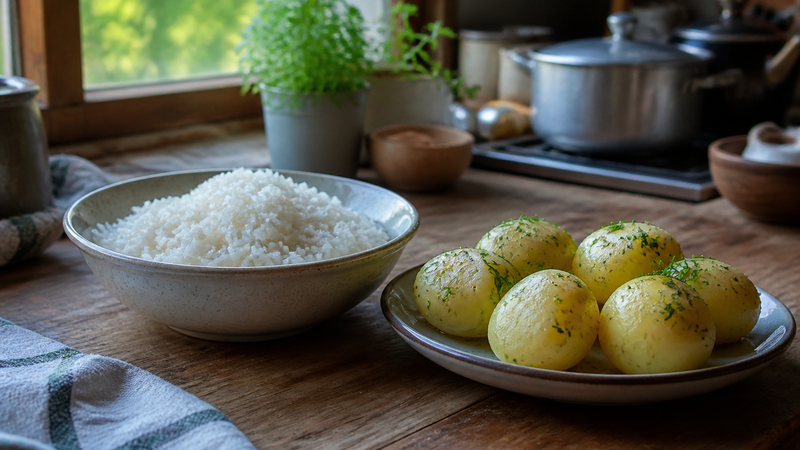
Cooling Rice and Potatoes Before Eating May Change How Your Body Handles Carbs
A simple kitchen trick may soften the blood sugar spike from two of the world's most common carbs — but how strong is the evidence?
You probably already know that white rice and potatoes can send blood sugar climbing fast. But what if letting them cool in the refrigerator before you eat them could change that? The idea sounds almost too simple to be true. Here is what the science actually says.
What Changes When Starchy Foods Cool Down
When you cook rice or potatoes, heat breaks the starch into a form your body digests quickly — which is part of why these foods raise blood sugar fast. But something interesting happens when cooked starchy foods are chilled.
As rice and potatoes cool, some of their starch goes through a physical change called retrogradation. The starch molecules restructure into a form that your digestive enzymes have a harder time breaking down. This transformed form is called resistant starch.
Resistant starch behaves more like fiber than a typical carbohydrate. Instead of being quickly absorbed in the small intestine, it passes further into the gut, where it feeds beneficial bacteria and produces a slower, gentler effect on blood sugar.
What the Research Actually Shows
Studies on resistant starch and blood sugar response are real, but it is important to be honest about their scale and limits.
Research published in journals including the Asia Pacific Journal of Clinical Nutrition and others has found that cooling cooked rice can meaningfully increase its resistant starch content. One study found that rice cooled overnight and then reheated had a lower glycemic index than freshly cooked rice. Potatoes show a similar pattern — a 2015 study published in the Journal of Nutritional Science found that cooked and cooled potatoes had a lower glycemic response compared to freshly cooked ones when fed to human volunteers.
That said, most studies in this area have been small, often involving just a few dozen participants, and results vary depending on the type of rice or potato, how long they are cooled, and how they are reheated. This is promising early science, not a proven prescription.
Does Reheating Ruin the Effect?
Here is where things get a little more nuanced. Some research suggests that reheating cooled rice or potatoes preserves much of the resistant starch gain — but not always completely. The reheating temperature and method matter.
Gentle reheating, such as warming rather than boiling again, appears to hold onto more of the resistant starch benefit than aggressive high-heat cooking. If you cool rice overnight and then steam it briefly, you likely retain more of the effect than if you re-boil it.
Eating cold rice or potato — in a rice salad or a cold potato salad — may deliver the maximum resistant starch benefit, though that is not always practical or appealing depending on the meal.
Who Might Benefit Most
People managing blood sugar levels — including those with prediabetes or type 2 diabetes — are the ones most likely to notice a meaningful difference from this approach. Even so, cooling rice or potatoes is not a substitute for broader dietary changes or any treatment plan your doctor has recommended.
For healthy adults, the effect is real but modest. Blood sugar management involves the full picture of what you eat, how much, your activity level, and your overall dietary pattern. A small shift in starch structure is one piece, not the whole puzzle.
How to Put This to Work in Your Kitchen
If you want to experiment with this, here are practical ways to do it:
- Cook a larger batch of rice or potatoes and refrigerate the leftovers for at least 12 hours before eating.
- Try cold rice in a grain bowl, or use chilled boiled potatoes in a salad with olive oil, herbs, and vegetables.
- If you prefer your food warm, reheat gently — a brief steam or low microwave setting — rather than re-boiling.
- Pair cooled starches with vegetables, protein, and healthy fats to further smooth out the blood sugar curve.
- Talk with your doctor or a registered dietitian before making changes if you are managing diabetes or on blood sugar medication.
The Bottom Line
Cooling cooked rice and potatoes before eating does increase their resistant starch content, and early research suggests this may lead to a more moderate blood sugar response compared to eating them freshly cooked. The science is real but still developing — most studies are small and results vary. Think of it as a simple, no-cost kitchen habit worth trying, not a magic fix. If blood sugar is a concern for you, bring this up with your doctor and treat it as one useful tool among many.
