

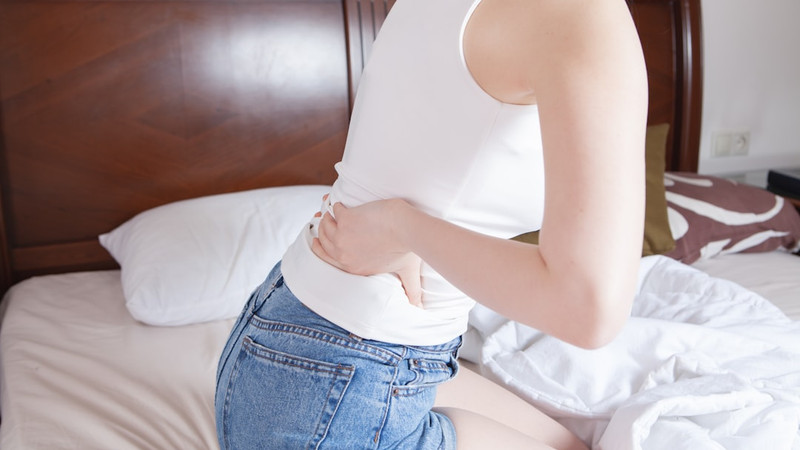
If your pants are looser but your back, hips, or knees suddenly hurt, you might not just be “getting old.”
Fast weight loss from drugs like Ozempic can leave you with weaker, smaller glutes that no longer do their job, a problem many people now call Ozempic butt.
When your butt muscles check out, other joints and tissues pay the price.
What Ozempic butt really is
Ozempic butt is not a medical diagnosis; it is a nickname for a very real problem: weak, underused glute muscles after rapid weight loss.
You lose fat, but you can also lose muscle, and if your glutes were not strong to begin with, they can end up flat, soft, and switched off.
That same pattern shows up in people who sit all day and in very active people who think they are training their glutes but end up letting other muscles take over.
Either way, the result is the same: your glutes stop pulling their weight.
When that happens, your lower back muscles, hamstrings, and even the tissues around your knees and hips take on jobs the glutes were supposed to handle.
Over time, that can mean chronic back pain, cranky knees, and hips that feel unstable or sore every time you move.
Why your back and knees start complaining
Your glutes are supposed to be the engine of your lower body.
They help you stand up, walk, run, climb stairs, lift, and land.
When they are weak or late to fire:
- Your lower back muscles end up doing the heavy lifting during everyday movements and workouts, which can set you up for nagging back pain.
- Your thigh bone tends to roll inward when you walk, squat, or land from a step or a jump, which puts extra stress on your knees.
- Your hips lose some of their ability to stabilize each step, so every walk, run, or stair climb feels a little less solid and a little more achy.
You do not have to be sedentary for this to happen.
Plenty of runners, lifters, and group class regulars have underactive glutes because their quads, hamstrings, and back muscles have been taking over for years.
Quick self-test: Is your butt actually doing its job?
Because both desk dwellers and gym regulars can have Ozempic butt, you cannot always eyeball it.
This simple at-home test can give you a clue.
Single-leg glute bridge test:
- Lie on your back.
- Bend one knee so that the foot is flat on the floor, and straighten the other leg so both thighs line up.
- Push through the foot on the floor and lift your hips until your body forms a straight line from your shoulders to your knee.
- Hold for up to 20 seconds to notice which leg is working the hardest, then switch legs.
If you mostly feel your hamstrings or lower back, not your glutes, your butt is not carrying its share of the load.
If one side feels much weaker or more wobbly, that asymmetry can also feed into hip, back, or knee pain.
Three moves to bring an Ozempic butt back to life
The good news is that your glutes can wake up again, but you have to teach your brain to use them.
That means fewer mindless reps and more focused holds where you squeeze the muscle and keep it on.
You will get more out of these if you use a small band around your thighs, just above your knees, and if you do them most days of the week, especially before you lift or walk.
Start with 30-second holds on each side for all three exercises.
Clamshell
- Lie on your side with knees and hips bent about 45 degrees, legs stacked.
- Keeping your feet together, lift your top knee up and slightly back.
- Stop when you feel a clear squeeze deep in the side of your butt, not your lower back.
- Hold that squeeze for up to 30 seconds, then switch sides.
Side-lying hip abduction
- Lie on your side again.
- Bend your bottom leg, straighten your top leg.
- Lift the top leg up and slightly back, just enough to feel your glute working hard.
- Hold for up to 30 seconds, then switch sides.
Fire hydrant
- Start on hands and knees, hips level, hands under shoulders.
- Keeping your spine still, lift one knee out to the side and slightly back so your thigh points somewhere between straight out and straight back.
- Gently rotate your thigh outward until you feel the band pull and your glute light up.
- Hold for up to 30 seconds, then switch sides.
You are not chasing a huge range of motion.
You are chasing a strong, steady glute squeeze while your hips stay level and your back does not twist.
Do this mini routine six days a week for about four weeks.
After that, keep it in your warm-up three days a week before strength moves like squats, deadlifts, lunges, or step-ups.
Keeping your butt alive after weight loss
If you are on Ozempic or any similar medication, or you have just lost a lot of weight quickly, protecting your muscles is just as important as shrinking your waist.
A few simple rules help:
- Do some kind of strength work two or three times a week, especially for your glutes and legs.
- Keep protein intake in a healthy range your clinician is comfortable with, so your body has what it needs to maintain muscle.
- Use activation work like the three holds above before you train, so your brain remembers to use your glutes instead of dumping everything onto your back and knees.
Too many things you do all day, sitting, slouching, standing on one hip, make your glutes want to drift back to sleep.
It is much easier to keep them awake than it is to drag an Ozempic butt back from the dead once everything hurts.
The information in this article is for educational purposes only and is not a substitute for professional medical advice, diagnosis, or treatment. Always talk with your health care provider before starting a new exercise program or making major changes to your medications, including Ozempic or similar drugs.

