

Your Gut Is Aging Too — Fermented Foods May Help Slow It Down
The trillions of bacteria living in your gut may have more to say about how you age than you ever imagined.
Most people think aging happens in their joints, their skin, or their heart. But a growing body of research suggests one of the most important clocks in your body is ticking inside your gut. The good news? You may have more influence over it than you think — starting with what's on your plate.
What Happens to Your Gut as You Age
Your gut is home to roughly 38 trillion microorganisms — bacteria, fungi, and viruses that together form what scientists call the gut microbiome. In your younger years, this community tends to be diverse and balanced. As you get older, that diversity naturally declines.
Research published in Nature Reviews Microbiology has linked a less diverse gut microbiome to increased inflammation, weaker immune response, and a higher risk of age-related conditions including metabolic disease and cognitive decline. Scientists sometimes call this low-grade chronic inflammation that builds with age "inflammaging" — and the gut appears to play a central role in driving it.
This doesn't mean aging is a gut health death sentence. It means the choices you make now may matter more than you realize.
Why Fermented Foods Are Getting So Much Attention
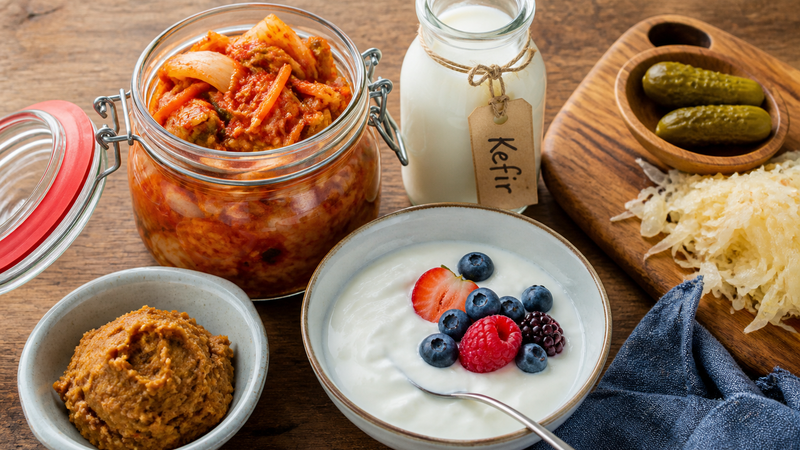
Fermented foods — think yogurt, kefir, kimchi, sauerkraut, miso, and kombucha — have been part of human diets for thousands of years. But only recently have researchers begun to understand what they may actually do inside the body.
A landmark study from Stanford University, published in the journal Cell in 2021, put fermented foods head-to-head with a high-fiber diet in 36 healthy adults over 17 weeks. The group that ate more fermented foods showed a significant increase in microbiome diversity — a marker researchers associate with better gut health. They also showed lower levels of 19 inflammatory proteins compared to the high-fiber group.
That's an important finding, but it comes with a caveat: this was a small study of 36 people, and it was relatively short in duration. Scientists say larger, longer trials are needed before drawing firm conclusions. Still, the results were striking enough to generate serious interest in the field.
The Inflammation Connection
Here's why that inflammation finding matters so much for people over 40. Chronic low-level inflammation is linked to many of the conditions that become more common with age — heart disease, type 2 diabetes, arthritis, and even Alzheimer's disease.
Research published in Nature Medicine has found that as the gut microbiome shifts with age, it can become less effective at keeping inflammation in check. Certain beneficial bacterial strains that produce short-chain fatty acids — compounds that help regulate the immune system and protect the gut lining — tend to decline over time.
Fermented foods may help replenish some of those beneficial microbes, or at least create an environment where they thrive. Researchers are still working out exactly how and why, but the early signals are encouraging.
Which Fermented Foods Are Worth Eating
Not all fermented foods are created equal. The ones most likely to deliver live, active cultures — the beneficial bacteria that may support gut health — include:
- Yogurt with live and active cultures (check the label)
- Kefir, a fermented dairy drink with a wide variety of bacterial strains
- Kimchi, a Korean fermented vegetable dish
- Sauerkraut, fermented cabbage (look for refrigerated, unpasteurized versions)
- Miso, a fermented soybean paste used in soups and sauces
- Kombucha, a fermented tea (watch for added sugars)
Foods that have been pasteurized after fermentation — like some shelf-stable sauerkraut or certain pickles made with vinegar — may not contain live cultures and are less likely to offer the same benefits.
Fiber Still Matters — It's Not Either/Or
The Stanford study compared fermented foods to a high-fiber diet, but that doesn't mean you have to choose. Fiber acts as a prebiotic — essentially food for the beneficial bacteria already living in your gut. Fermented foods bring in new microbes. Together, they may work better than either one alone.
Foods rich in prebiotic fiber include garlic, onions, leeks, asparagus, oats, bananas, and beans. Think of fiber as feeding the garden, and fermented foods as planting new seeds in it.
If you're not eating much of either right now, go slowly. Adding too much fiber too fast can cause bloating and discomfort. Give your gut time to adjust.
What This Means for You
This research is promising, but it's still evolving. Scientists don't yet have a precise prescription — no one can tell you exactly how many servings of kimchi per week will keep your microbiome young. What the evidence does suggest is that regularly eating a variety of fermented foods, alongside a diet rich in plants and fiber, supports the kind of microbial diversity that appears to be good for healthy aging.
If you have digestive conditions like irritable bowel syndrome, inflammatory bowel disease, or a history of gut issues, talk with your doctor before significantly changing your diet. Some people with sensitive systems need to ease into fermented foods gradually or avoid certain types altogether.
The Bottom Line
Your gut microbiome changes as you age — and those changes may influence everything from inflammation to immune function to brain health. Early research, including a notable Stanford University study published in Cell, suggests that regularly eating fermented foods like yogurt, kefir, kimchi, and sauerkraut may help increase the diversity of your gut bacteria and dial down inflammation. The science is still developing, and no single food is a magic fix. But adding more fermented foods to a plant-rich diet is a low-risk, high-upside habit that's worth starting today. Your future self may thank you for it.
