

When Wellness Becomes a Worry: The Hidden Anxiety Trap for Women
Wellness routines are supposed to help you feel better — but for some women, they may be doing the opposite.
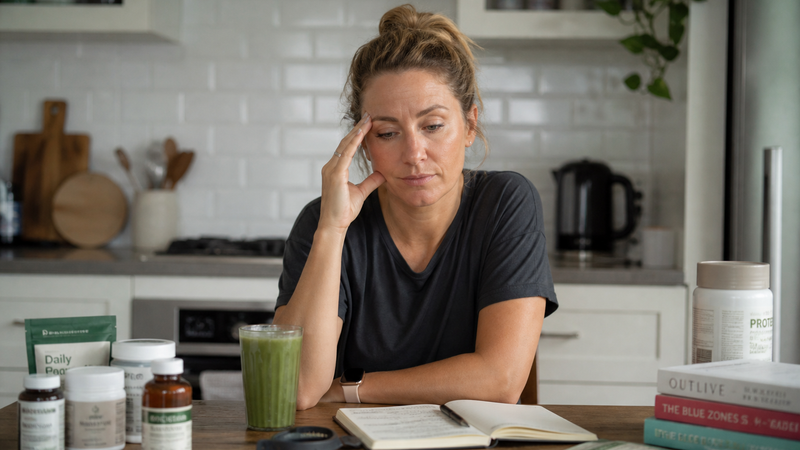
You downloaded the sleep tracker. You eliminated gluten. You take seventeen supplements and feel guilty when you miss a meditation session. Sound familiar? For millions of women, the pursuit of wellness has quietly become another source of stress — and researchers and clinicians are starting to take notice.
The Wellness Boom Is Real — and So Is the Pressure
The global wellness industry was valued at over five trillion dollars, according to the Global Wellness Institute. Women are its primary consumers and, increasingly, its primary targets. Social media feeds are filled with morning routines, elimination diets, hormone-balancing protocols, and gut health advice that shifts by the week.
The message underneath it all is rarely stated outright, but it's hard to miss: if you're not optimizing your body, you're falling behind. For women already navigating careers, caregiving, and midlife health changes, that message can land hard.
What the Research Actually Shows
Health anxiety — excessive worry about one's physical health — is more common in women than men, according to research published in journals including JAMA Network Open. Clinicians and researchers have begun exploring the role that constant health messaging may play in amplifying that anxiety, particularly for women in their 40s and beyond who are navigating perimenopause and other real health transitions.
A concept called "orthorexia" — an obsessive focus on eating only what one considers healthy — has been studied in academic literature and is more frequently reported in women. While it is not yet a formal clinical diagnosis, researchers have described it as a pattern where the pursuit of healthy eating causes significant distress and disrupts daily life. It is worth noting that most studies in this area are relatively small, and more large-scale research is needed.
Separately, studies on wearable fitness and health trackers have found a subset of users — again, more often women — who report increased anxiety when they miss step or sleep targets, or when their numbers fall outside a "normal" range. Researchers at the University of Edinburgh and elsewhere have described this phenomenon as a potential downside of self-tracking technology, though the evidence is still early and mixed.
The Social Media Factor
Instagram and TikTok have become primary channels for wellness content, and the American Psychological Association has linked heavy social media use to higher rates of anxiety and lower self-esteem, particularly among women. Wellness content is not exempt from this effect.
Watching someone else's flawless supplement routine or glowing-skin morning ritual can shift wellness from a personal practice into a performance — and performance comes with the fear of failure. When a wellness habit feels like a moral obligation rather than a choice, missing it stops feeling like a small thing and starts feeling like evidence that you're not taking care of yourself well enough.
Not All Wellness Is the Problem
To be clear: exercise, good nutrition, quality sleep, and stress management are genuinely good for your health. The research on that is solid. The question isn't whether wellness matters — it's whether the culture around it is sometimes being delivered in a way that creates more stress than it relieves.
There is a meaningful difference between habits that leave you feeling energized and grounded and a checklist of obligations that leaves you feeling guilty by noon. If your wellness routine is making you more anxious, more rigid around food, or more distressed when you miss a workout, that's worth paying attention to.
Signs the Pursuit of Health May Be Hurting More Than Helping
- You feel significant guilt or anxiety when you miss a workout, meditation session, or supplement
- Food choices cause you ongoing stress, fear, or social avoidance
- You spend substantial time researching symptoms and health risks even when you feel physically fine
- Your health tracker numbers affect your mood for the day
- Wellness content leaves you feeling worse about yourself, not better
If any of these resonate, it doesn't mean you've done something wrong. It means you may benefit from a conversation with your doctor or a mental health professional about finding an approach to health that genuinely supports your wellbeing — not one that adds to your load.
The Bottom Line
Wellness is supposed to make you feel better — not become another thing to fail at. If your health habits are leaving you more anxious, more rigid, or more exhausted than before, it may be time to step back and ask whether the routine is serving you or the other way around. Real health includes mental and emotional wellbeing, and no supplement stack or tracking app can replace that. Talk with your doctor if the pressure around wellness is affecting your quality of life.
