

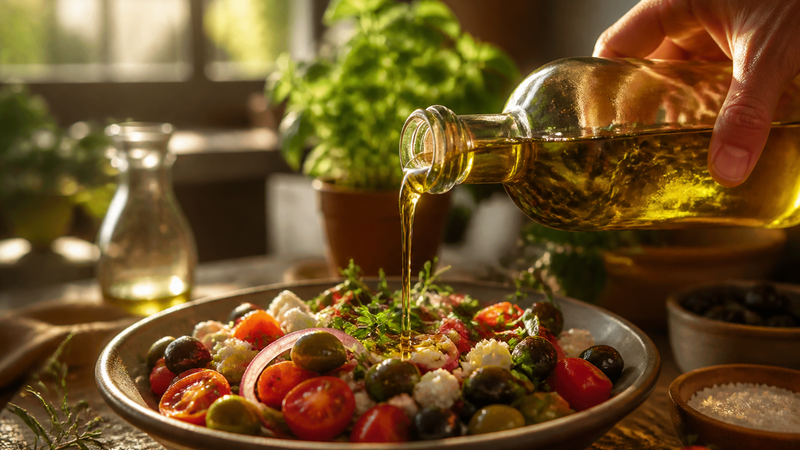
The Ancient Oil That Science Says May Help You Live Longer
Decades of research keep pointing to the same kitchen staple as a powerful ally for a longer, healthier life.
You probably already have a bottle sitting on your counter. But olive oil is no longer just a cooking ingredient — it has become one of the most studied foods in longevity research. And the findings keep coming back in its favor.
What the Research Actually Shows
One of the most cited studies on this topic was the PREDIMED trial, a large randomized controlled trial published in the New England Journal of Medicine. It followed more than 7,000 adults in Spain who were at high risk for heart disease. Those assigned to a Mediterranean diet supplemented with extra-virgin olive oil had significantly fewer major cardiovascular events — including heart attacks and strokes — compared to those on a lower-fat diet.
That is not a small pilot study. That is real-world evidence from thousands of people tracked over years.
The Harvard Findings on Death Risk
A 2022 study from Harvard T.H. Chan School of Public Health, published in the Journal of the American College of Cardiology, analyzed data from more than 90,000 Americans followed for nearly 30 years. Researchers found that people who consumed more than half a tablespoon of olive oil per day had a lower risk of dying from cardiovascular disease, cancer, neurodegenerative disease, and respiratory disease compared to those who rarely or never used it.
The study also found that replacing about a teaspoon of butter, margarine, or mayonnaise with olive oil was associated with a lower risk of total and cause-specific mortality. These are associations, not proof of direct cause and effect, but the pattern held even after researchers adjusted for diet quality and other lifestyle factors.
Why Olive Oil May Be Different From Other Fats
Extra-virgin olive oil is rich in oleocanthal and oleuropein — natural plant compounds with antioxidant and anti-inflammatory properties. It is also high in oleic acid, a monounsaturated fat that research suggests may support healthy cholesterol levels.
Chronic inflammation is thought to play a role in many of the diseases that shorten life, including heart disease, type 2 diabetes, and certain cancers. Some researchers believe olive oil's anti-inflammatory compounds may be part of why it shows up so consistently in longevity studies. That said, most of this mechanistic research is still early, and scientists are careful to note that food works in the context of an overall diet, not in isolation.
Not All Olive Oil Is the Same
Here is something worth knowing before you stock up. Extra-virgin olive oil is the least processed form and retains the highest levels of those beneficial plant compounds. Refined or "light" olive oils have been processed in ways that reduce some of those antioxidants.
Most of the major studies have focused on extra-virgin olive oil specifically, so that is the variety researchers have been studying when they report positive results.
How Much Are We Talking About?
The Harvard study pointed to about half a tablespoon per day as a meaningful threshold. The PREDIMED trial used about four tablespoons per day for the supplemented group — a much higher amount that reflects Mediterranean cooking patterns, where olive oil is used generously across meals.
You do not need to overhaul your entire diet overnight. Swapping olive oil for butter in cooking, drizzling it over vegetables, or using it as a base for salad dressings are simple ways to increase your intake without a dramatic lifestyle change.
A Note on Calories and Context
Olive oil is calorie-dense — about 120 calories per tablespoon. If weight management is a concern for you, it is worth factoring that in rather than simply adding it on top of your current diet. The research suggesting benefit generally comes from people using it as a replacement for less healthy fats, not as an add-on.
As always, talk with your doctor or a registered dietitian before making significant changes to your diet, especially if you have an existing health condition.
The Bottom Line
The evidence linking extra-virgin olive oil to lower risk of heart disease and longer life is among the strongest in nutrition science — backed by large, long-term studies including the PREDIMED trial and Harvard's decades-long research. It is not a miracle cure, and no single food can undo an otherwise poor lifestyle. But if you are looking for one simple, research-backed swap to make today, reaching for extra-virgin olive oil over butter or processed fats is a solid place to start.
