

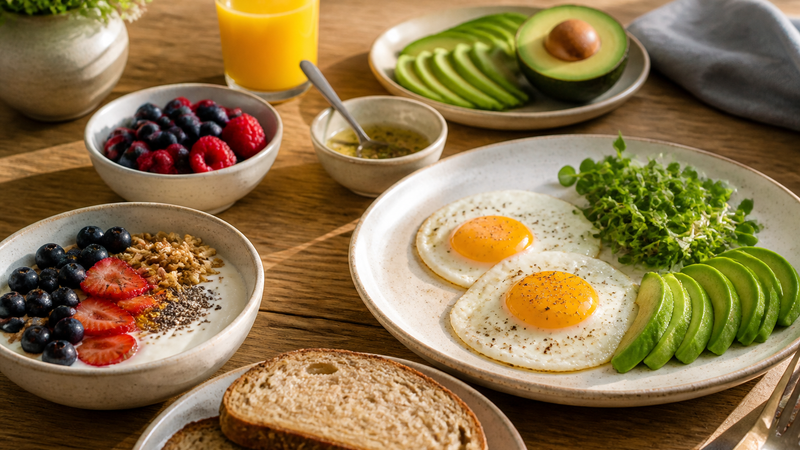
What to Eat at Breakfast to Keep Your Blood Sugar Steady All Morning
What you eat in the first hour of the day can set the tone for your energy, appetite, and blood sugar for hours to come.
Most people think breakfast is just about not being hungry. But nutrition science tells a different story. The foods you choose in the morning can either steady your blood sugar for hours or send it on a roller coaster that leaves you tired, hungry, and reaching for a snack by 10 a.m.
Here is what the research actually says about building the best breakfast for stable blood sugar.
Why Morning Blood Sugar Matters More Than You Think
After a night of fasting, your body is primed to respond strongly to whatever you eat first. A high-carbohydrate, low-protein breakfast, think a bagel, sweetened cereal, or a glass of juice, can cause a rapid rise in blood glucose followed by a sharp drop. That crash is what drives mid-morning fatigue and cravings.
Over time, repeated blood sugar spikes are linked to increased risk of type 2 diabetes, weight gain, and chronic inflammation, according to research published in journals including Nutrients and Diabetes Care. Keeping those spikes in check at breakfast is one of the most accessible tools you have.
Protein First: The Research Is Consistent
Multiple studies point to protein as the most powerful lever you can pull at breakfast. A study published in the American Journal of Clinical Nutrition found that a high-protein breakfast reduced post-meal blood sugar spikes and helped people feel fuller longer compared to a lower-protein breakfast with the same number of calories.
The mechanism makes sense: protein slows down how quickly food empties from your stomach and blunts the glucose response. Eggs, Greek yogurt, cottage cheese, and smoked salmon are all solid protein anchors for breakfast.
Researchers have generally studied protein intakes of around 25 to 30 grams at breakfast to see meaningful effects, so aiming for roughly that range is a practical target. Talk to your doctor or a registered dietitian about what is right for your specific needs.
Fiber Is the Other Half of the Equation
Protein does not work alone. Dietary fiber, especially the soluble kind found in oats, berries, chia seeds, and beans, slows glucose absorption and helps flatten the blood sugar curve after eating.
Research published in Nutrients has shown that adding fiber-rich foods to a meal can significantly reduce the glycemic response, even when some carbohydrates are present. A bowl of steel-cut oats topped with berries and a side of eggs, for example, gives you both protein and fiber working together.
The key is the type of carbohydrate. Refined carbs, like white bread or sugary cereals, digest quickly and spike blood sugar fast. Whole food carbs paired with fiber digest more slowly and produce a gentler rise.
Fat Has a Role Too
Healthy fats, like those in avocado, nuts, and olive oil, also slow digestion and can reduce the glycemic impact of a meal. Including a moderate amount of fat at breakfast, like half an avocado on whole grain toast or a handful of almonds alongside Greek yogurt, adds staying power and helps keep you satisfied.
This does not mean loading up on fat. It means pairing a reasonable amount of healthy fat with your protein and fiber sources to build a more complete, blood-sugar-friendly meal.
What to Skip or Scale Back
Some of the most popular American breakfasts are the worst choices for blood sugar stability. Sweetened cereals, flavored yogurts with added sugar, fruit juices, pastries, and white-flour pancakes all deliver a rapid hit of glucose with little protein or fiber to slow it down.
Even foods marketed as healthy, like granola bars or certain smoothies, can carry enough sugar to cause a significant spike. Reading the label for added sugars and total carbohydrates is worth the extra five seconds.
A Simple Blueprint for Your Plate
You do not need to overhaul your entire diet. A straightforward breakfast that supports stable blood sugar looks something like this:
- A protein anchor: eggs, Greek yogurt, cottage cheese, or smoked salmon
- A fiber source: berries, steel-cut or rolled oats, chia seeds, or vegetables
- A healthy fat: avocado, a small handful of nuts, or a drizzle of olive oil
- A low-sugar drink: water, plain coffee, or unsweetened tea instead of juice
This combination does not have to take long. Scrambled eggs with spinach and avocado takes about ten minutes. Greek yogurt with berries and chia seeds takes about two.
The Bottom Line
What you eat at breakfast is one of the simplest levers you have for steadier energy, better appetite control, and healthier blood sugar throughout the day. The research consistently points to the same formula: prioritize protein, add fiber, include some healthy fat, and keep added sugars low. You do not need a special diet or expensive supplements. Start with what is already in your kitchen and build from there. If you have diabetes or prediabetes, talk with your doctor about what breakfast targets make sense for you specifically.
