

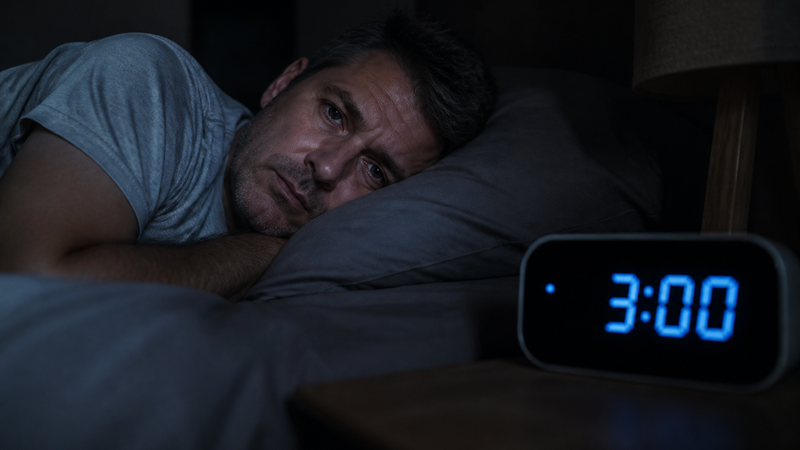
What Sleep Deprivation Really Does to Your Brain
You can survive on less sleep — but your brain quietly pays a steep price every time you do.
Most people think poor sleep just makes them groggy the next morning. A little extra coffee and you're fine, right? The science says otherwise. Chronic sleep loss touches nearly every corner of your brain, from memory and focus to mood and long-term disease risk — and some of those effects can begin after just one bad night.
Your Brain Does Its Housekeeping While You Sleep
Sleep isn't downtime for your brain. It's maintenance time. During deep sleep, your brain activates what researchers call the glymphatic system — essentially a biological cleaning crew that flushes out waste products that build up during the day.
One of those waste products is beta-amyloid, the protein associated with Alzheimer's disease. Research published in the journal Science found that even one night of poor sleep led to a significant increase in beta-amyloid buildup in the human brain. This doesn't mean one bad night causes Alzheimer's, but it does suggest that consistently shortchanging sleep may matter more for long-term brain health than scientists once thought.
Keep in mind: this is an emerging area of research, and scientists are still working to understand exactly how sleep and Alzheimer's risk are connected over a lifetime.
Memory Takes a Hit — Fast
Sleep is essential for memory consolidation — the process by which your brain converts short-term experiences into long-term memories. Most of this work happens during a sleep stage called slow-wave sleep and during REM sleep, which tends to dominate the later hours of the night.
When you cut sleep short, you cut into that process. Research from Harvard Medical School and other institutions has shown that people who are sleep-deprived have measurably harder times learning new information and recalling things they already knew. If you've ever felt like your brain was just not cooperating after a rough night, that's not your imagination — it's biology.
Mood, Anxiety, and Emotional Control
Here's something that may surprise you: sleep and mental health are a two-way street. Poor sleep can worsen anxiety and low mood, and anxiety and low mood can make it harder to sleep. It's a cycle that researchers at the University of California, Berkeley have studied closely.
Their work found that sleep deprivation significantly amplifies the brain's emotional reactivity. The amygdala — the region of the brain that processes threats and strong emotions — becomes overactive when you're sleep-deprived, while the prefrontal cortex, which helps you think rationally and calm down, becomes less effective at doing its job.
The practical result: things that wouldn't normally bother you feel overwhelming. Patience runs thin. Small stressors feel like big ones. This isn't a character flaw — it's a sleep problem.
Focus, Reaction Time, and the Danger of Feeling Fine
Most sleep-deprived people think they're performing normally. Research consistently shows they are not. Studies using cognitive performance tests have found that people who sleep six hours a night for two weeks perform as poorly as people who have been awake for 24 hours straight — and most of them don't realize it.
Reaction time slows, decision-making suffers, and the ability to focus on a task deteriorates. This matters at work, but it matters even more behind the wheel. The National Highway Traffic Safety Administration links drowsy driving to tens of thousands of crashes in the United States every year.
How Much Sleep Does Your Brain Actually Need?
The National Sleep Foundation and the American Academy of Sleep Medicine both recommend seven to nine hours of sleep per night for adults. Some people genuinely feel sharp on seven hours; others need closer to nine. What almost no one can do well on — despite what many people believe — is less than six hours on a regular basis.
Age matters, too. Adults over 60 often experience changes in sleep architecture, getting less deep sleep and waking more frequently. This makes sleep quality, not just quantity, increasingly important as you get older.
If you're routinely struggling to fall asleep, stay asleep, or feel rested, it's worth a conversation with your doctor. There can be underlying causes — from sleep apnea to medications to stress — that are treatable.
What You Can Do Starting Tonight
You don't need a prescription to protect your brain. A few evidence-backed habits can make a real difference:
- Keep a consistent sleep schedule. Going to bed and waking up at the same time every day — yes, on weekends too — helps lock in your body's natural rhythm.
- Get morning light. Natural light early in the day helps set your internal clock and makes it easier to feel sleepy at the right time at night.
- Dim screens before bed. Blue light from phones and tablets suppresses melatonin, the hormone that tells your brain it's time to sleep.
- Keep your bedroom cool and dark. Core body temperature needs to drop to initiate sleep, and even small amounts of light can disrupt it.
- Limit alcohol close to bedtime. Alcohol may help you fall asleep initially but disrupts the deeper, restorative sleep stages your brain needs most.
The Bottom Line
Sleep isn't a luxury — it's one of the most powerful tools you have for protecting your brain. From clearing out Alzheimer's-linked proteins to locking in memories and keeping your emotions on an even keel, what happens during those nighttime hours shapes how your brain works during the day. If you've been treating sleep as optional, the research is clear: your brain is paying for every hour you skip. Start tonight by protecting those seven to nine hours like the health investment they are.
