

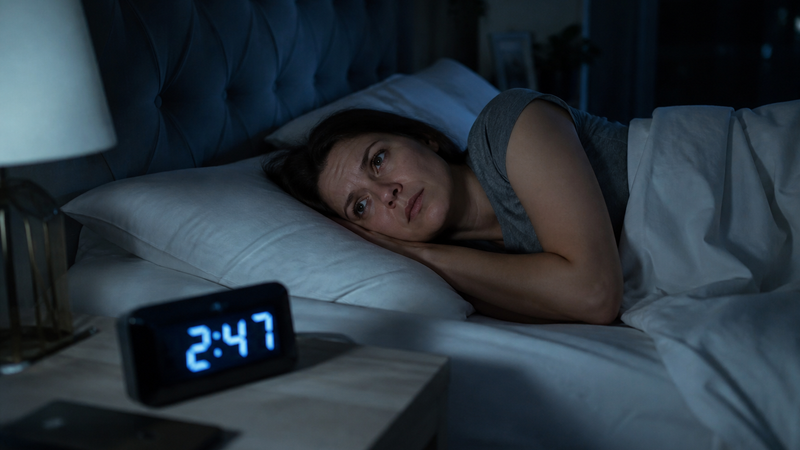
What Poor Sleep Is Really Doing to Your Brain
Skimping on sleep doesn't just leave you tired — research suggests it may be quietly reshaping your brain.
Most people think of a bad night's sleep as an inconvenience. You feel foggy, you reach for extra coffee, and you power through. But a growing body of research is revealing something harder to shake off: chronic poor sleep may have real, measurable effects on brain health, memory, and long-term cognitive function.
Here's what the science actually says — and what you can do about it.
Your Brain Has a Built-In Cleaning System — and Sleep Runs It
During deep sleep, your brain activates what researchers call the glymphatic system — a kind of internal waste-clearance network. Cerebrospinal fluid flows through the brain's tissue, flushing out metabolic waste products that build up during the day.
One of those waste products is amyloid-beta, a protein associated with Alzheimer's disease. Research published in the journal Science and supported by the National Institutes of Health has shown that even a single night of sleep deprivation can lead to a measurable increase in amyloid-beta in the human brain. Scientists are careful to note that this does not prove sleep loss causes Alzheimer's — but it does raise important questions worth taking seriously.
Think of it this way: skipping sleep is a little like skipping trash day. One missed night won't ruin things, but repeated buildup over time may matter.
Memory, Focus, and Decision-Making Take an Immediate Hit
You don't need a long-term study to feel the short-term effects. Sleep is when your brain consolidates memories — transferring what you learned during the day into longer-term storage. Cut that process short and you're not just tired; you're literally less able to retain what you experienced.
Research from the University of Pennsylvania has shown that people who slept only six hours per night for two weeks performed as poorly on cognitive tests as those who were kept awake for 48 hours straight — and critically, they didn't realize how impaired they were. They felt only slightly sleepy, but their performance told a different story.
Focus, reaction time, and the ability to make sound decisions all suffer measurably with less than seven hours of sleep. For adults over 40, who may already be managing early shifts in cognitive speed, that gap matters even more.
The Mental Health Connection Is Real
Sleep and mental health don't just coexist — they influence each other in a two-way relationship. Poor sleep can worsen anxiety, low mood, and emotional reactivity. And anxiety or depression can, in turn, make sleep harder to come by.
Research published in the journal Nature Human Behaviour found that sleep deprivation significantly amplified the brain's emotional response to negative stimuli, while weakening the connection between the rational prefrontal cortex and the emotional amygdala. In plain terms: when you're sleep-deprived, your brain is more reactive and less able to put the brakes on strong emotions.
This doesn't mean poor sleep causes a mental health condition. But it's a meaningful piece of the picture, and one worth discussing with your doctor if you're struggling with both sleep and mood.
How Much Sleep Does Your Brain Actually Need?
The American Academy of Sleep Medicine and the Sleep Research Society recommend that adults get seven or more hours of sleep per night for optimal health. That number is based on a large body of evidence linking shorter sleep duration to a range of health risks.
Consistently sleeping fewer than six hours is where researchers see the sharpest cognitive effects. And while some people believe they function just fine on five or six hours, studies suggest most of them are not accurately judging their own impairment.
Quality matters too, not just quantity. Fragmented sleep — waking frequently through the night — disrupts the deep and REM stages where the most important brain restoration happens.
What You Can Do Starting Tonight
The good news is that sleep is one of the most modifiable health habits there is. You don't need a prescription to start improving it. Here are steps that have solid research backing:
- Keep a consistent sleep schedule. Going to bed and waking up at the same time every day — including weekends — is one of the most effective ways to stabilize your body's internal clock.
- Get morning light. Bright light exposure within an hour of waking helps anchor your circadian rhythm, making it easier to feel sleepy at the right time at night.
- Cool your room down. Core body temperature needs to drop slightly for sleep to begin. A cooler bedroom — around 65 to 68 degrees Fahrenheit — supports that process.
- Limit screens before bed. Blue light from phones and tablets can suppress melatonin, the hormone that signals it's time to sleep. Try dimming screens at least an hour before bed.
- Watch alcohol timing. Alcohol may help you fall asleep faster but disrupts the deeper, restorative stages of sleep later in the night.
- Talk to your doctor if sleep problems persist. Conditions like sleep apnea are common, often undiagnosed, and have significant consequences for brain health. A physician can help identify and treat underlying causes.
The Bottom Line
Sleep isn't downtime — it's when your brain does some of its most important work. The research linking chronic poor sleep to memory problems, emotional dysregulation, and the buildup of brain waste products is serious enough to pay attention to. You don't need to be perfect every night. But making sleep a consistent priority is one of the most powerful things you can do for your long-term brain health. If you're regularly falling short of seven hours, that's worth a conversation with your doctor.
