
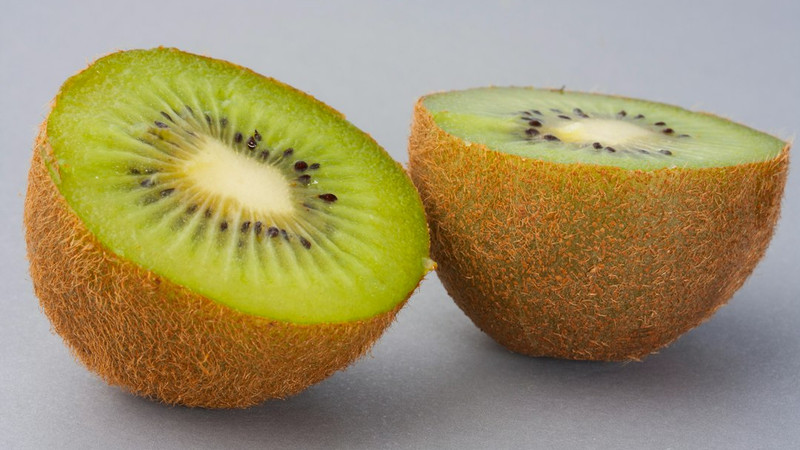
A pair of bright-yellow kiwis a day may have given skin a measurable boost in a small new study—but the viral “anti-aging miracle” spin is getting way ahead of the science.
Twelve adults with low vitamin C levels ate two SunGold kiwifruit every day for eight weeks. By the end, researchers found higher vitamin C levels in their blood and skin, along with a nearly 48% rise in an ultrasound measure of skin density on the forearm.
That is interesting. It is not proof that kiwi fruit erases wrinkles, rebuilds facial collagen, reverses skin aging, or works for everyone. The study had only 12 people, no placebo group, and did not measure visible wrinkles, facial aging, or clinical improvements in appearance.
What the kiwi study found
Researchers selected adults whose vitamin C levels were below the range considered adequate. Participants then added two SunGold kiwis to their regular diet each day. The fruit provided roughly 250 milligrams of vitamin C daily.
After eight weeks, vitamin C levels rose in the blood and in several layers of the skin. An ultrasound reading of skin density on the forearm rose from 0.154 to 0.228 scanner units.
The study also found higher cellular activity in the skin’s outer layer. But because there was no comparison group, researchers cannot be certain that the kiwis alone caused every change. Diet changes, normal measurement variation, differences in sun exposure, skin hydration, or other factors may have played a role.
The collagen claim is a stretch
Vitamin C is essential for normal collagen formation, so it is easy to see why the finding could turn into “kiwis rebuild collagen” online.
But this study did not prove that.
Researchers measured a collagen-related marker called procollagen type I peptides and found no meaningful increase. The ultrasound measure was not a direct test of collagen. A change in skin density could reflect more than one thing, including hydration and other structural changes in the skin.
Translation: The study found a change in a scan—not proof that kiwis rebuilt collagen or made skin younger.
No wrinkle test, no anti-aging verdict
The researchers did not test whether people looked younger. They did not measure facial wrinkles, use before-and-after photos, rate skin appearance, or show that the fruit improved sun damage.
They also did not find better protection against ultraviolet A, or UVA, radiation. Skin elasticity did not improve; it decreased slightly during the eight weeks.
So while the fruit may support a nutrient-rich diet, the study cannot support claims that a kiwi habit acts like Botox, a retinoid, sunscreen, or a cosmetic procedure.
The big catch: These adults started low in vitamin C
The study’s volunteers had low vitamin C levels before they started eating the fruit.
That detail matters. Giving more vitamin C to someone who isn't getting enough can have a different effect than giving extra vitamin C to someone who already has adequate levels. The researchers did not study people whose vitamin C levels were already normal.
The study also did not compare kiwis with other vitamin C-rich foods, such as oranges, strawberries, bell peppers, broccoli, or fortified foods. It also did not compare the fruit with a vitamin C supplement.
So there is no proof SunGold kiwis are uniquely powerful for skin.
Who paid for the research?
Zespri International funded the study —the company that markets SunGold kiwifruit, the exact branded fruit used in the study.
Industry funding does not automatically make research invalid. But it is relevant context, especially when a small study examines a branded food product with commercial value.
The authors reported that Zespri was not involved in collecting the data, analyzing the results, interpreting the findings, or deciding whether to publish the paper. That separation is important, but it does not erase the need for larger independent studies.
What two kiwis can—and cannot—do
Kiwis are nutritious. They provide vitamin C, fiber, and other nutrients, and vitamin C plays a normal role in collagen formation and iron absorption from plant foods.
Adding kiwi to a varied diet may be a perfectly reasonable choice for people who enjoy it. It is not a replacement for skin care, sun protection, medical treatment, or a diet that covers overall nutrient needs.
For healthier skin, the less glamorous moves still have the strongest evidence: use sun protection, avoid smoking, eat a varied diet, get adequate sleep, and see a dermatologist for persistent or concerning skin changes.
The bottom line
Two SunGold kiwis a day raised vitamin C levels and were linked to a higher ultrasound measure of skin density in 12 people who started with low vitamin C levels.
That is a small, early nutrition finding—not a license to market kiwi as a collagen builder, wrinkle eraser, or skin-aging cure. Larger, controlled, independently funded studies need to show whether the change holds up, whether it affects visible skin aging, and whether it applies to people who already get enough vitamin C.
Medical disclosure: This article is for general educational and informational purposes only. It is not medical advice and does not replace care from a qualified healthcare professional. Food-based strategies cannot replace evaluation or treatment for persistent skin changes, nutritional deficiency, or a medical condition. Speak with a clinician, pharmacist, or registered dietitian before making major dietary changes if you have kidney disease, a condition affecting potassium or digestion, or take prescription medication.
