

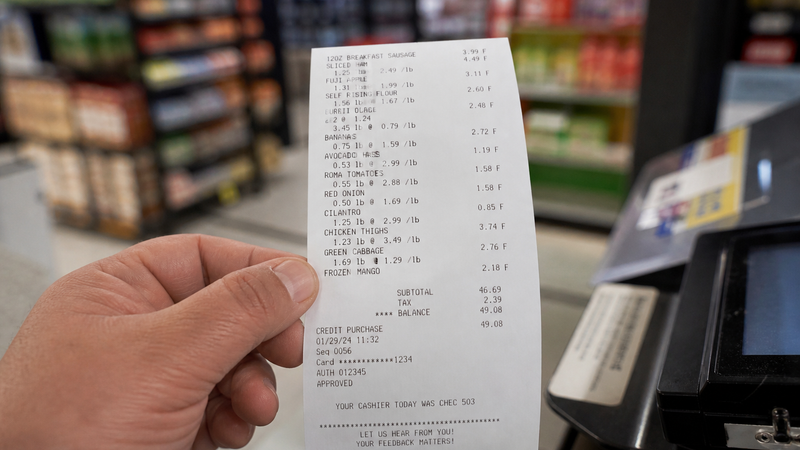
Those Paper Receipts in Your Wallet May Carry a Hidden Chemical Risk
You grab your receipt without a second thought — but researchers say that thin strip of paper may be delivering more than your total.
Most of us handle dozens of paper receipts every month and never think twice. But researchers and public health agencies have raised questions about a chemical commonly used to coat those receipts — and whether routine handling adds up to a real exposure concern. Here is what the science actually says, and what you can do about it.
What Is Actually on That Receipt?
Most grocery store and retail receipts are printed on thermal paper, which uses heat rather than ink to create text. To make that process work, the paper is coated with a color-developing chemical.
For decades, the most common chemical used in that coating was bisphenol A, better known as BPA. You may recognize BPA from the "BPA-free" labels on water bottles and food containers — and the same concerns that drove those labels apply here.
Under pressure from regulators and consumers, many receipt manufacturers have shifted away from BPA. But some have replaced it with a chemical called bisphenol S, or BPS. Researchers say BPS has a similar chemical structure to BPA, and some early studies raise similar questions about its effects on the body — though the science on BPS is still developing.
How Does the Chemical Get Into Your Body?
BPA and BPS are not locked tightly into the paper. They sit on the surface of thermal receipts and can transfer to your skin when you handle them.
Research published in Environmental Health Perspectives found that handling thermal receipts for just a few seconds measurably increased BPA levels on the skin of study participants. The transfer was even higher when hands were wet, had recently been treated with hand sanitizer, or were greasy — common conditions at a grocery store checkout.
From the skin, the chemical can be absorbed into the body. Studies have detected BPA in the urine of people shortly after they handled receipts, according to research cited by the National Institutes of Health. It is worth noting that most of these studies were relatively small and measured short-term exposure, not long-term health outcomes directly.
Why Do Researchers Care About BPA?
BPA is what scientists call an endocrine disruptor. That means it can mimic or interfere with hormones — the chemical messengers that regulate everything from metabolism and mood to reproductive health.
A large body of research has linked higher BPA exposure to concerns including disrupted thyroid function, changes in reproductive hormones, and metabolic effects. The U.S. Food and Drug Administration has banned BPA from baby bottles and infant formula packaging, citing the precautionary principle around early-life exposure.
For adults, the FDA has said that BPA exposure from food packaging at typical levels is safe, but the agency acknowledges ongoing research. Receipt handling represents a separate and direct skin-contact exposure route that is not captured in dietary exposure estimates.
It is important to be clear: no study has proven that handling receipts causes a specific disease. Most research has measured exposure levels or short-term biological changes, not long-term health outcomes. The concern is about cumulative, ongoing exposure — not a single trip to the grocery store.
Who May Want to Be Extra Cautious?
Public health researchers and the Environmental Working Group have highlighted a few groups who may benefit from extra caution around receipt handling.
- Cashiers and retail workers who handle receipts for hours every day face far higher cumulative exposure than the average shopper.
- Pregnant women, because developing fetuses may be more sensitive to hormone-disrupting chemicals.
- Young children, if receipts end up in their hands or mouths.
- Anyone with a skin condition that increases absorption, or who regularly uses hand lotions or sanitizers before handling receipts.
If you fall into one of these categories and have questions about chemical exposures, it is worth bringing up with your doctor or midwife.
Simple Steps You Can Take Right Now
You do not need to overhaul your life over this. A few small habits can meaningfully reduce your receipt-related exposure without any real inconvenience.
- Opt for email or digital receipts when the store offers them — many now do.
- Decline the receipt if you do not need it for returns or reimbursement.
- Wash your hands after handling receipts, especially before eating.
- Store receipts in an envelope or separate pocket rather than loose in your wallet or purse where they contact other items.
- Avoid handling receipts right after applying hand lotion or sanitizer, when skin absorption may be higher.
These are low-effort steps with no downside — and they fit into a broader habit of reducing unnecessary chemical exposures in everyday life.
The Bottom Line
Research suggests that thermal paper receipts commonly contain BPA or its chemical cousin BPS, and that handling them can transfer measurable amounts of these endocrine-disrupting chemicals to your skin. The science has not established that an occasional receipt causes harm, but for cashiers, pregnant women, and anyone handling receipts frequently, reducing exposure makes practical sense. The easiest fix? Go digital. When you do take a paper receipt, a quick handwash afterward costs you nothing.
