
The Longevity Metric That Matters More Than Your Weight
Your scale tells you how much you weigh. It doesn't tell you how long you'll live — but your muscles might.
Most people trying to get healthier are watching their weight, counting calories, or logging cardio miles. Those things matter. But a growing body of research suggests there's one health marker that may predict how well you age better than almost anything else: how much functional muscle you carry on your frame.
Here's the thing — this isn't about looking like an athlete. It's about staying strong, independent, and metabolically healthy well into your 60s, 70s, and beyond.
Why Muscle Is About So Much More Than Strength
Muscle tissue is metabolically active. That means it burns calories even at rest, helps regulate blood sugar, and plays a role in hormone balance. The more muscle you have, the more efficiently your body handles the food you eat.
Research published in the American Journal of Medicine found that muscle mass index — not body mass index (BMI) — was a significantly better predictor of mortality risk in older adults. In other words, what you're made of may matter more than how much you weigh.
Muscle also acts as what some researchers call a "metabolic reserve" during illness. When the body is under stress from surgery, infection, or serious disease, it draws on muscle tissue for fuel and repair. People with greater muscle mass tend to weather those storms better.
The Silent Loss You Probably Don't Know Is Happening
Starting around age 30, most adults begin losing muscle mass — a process called sarcopenia. Without deliberate effort to slow it, the body can lose roughly 3 to 5 percent of muscle mass per decade, with the rate accelerating after age 60.
The loss is often invisible at first. The scale may stay the same while muscle quietly gives way to fat. That's why a healthy weight on paper can coexist with a metabolic profile that raises long-term risk.
Sarcopenia is linked to a higher risk of falls, fractures, type 2 diabetes, cardiovascular disease, and earlier death, according to research reviewed in journals including Age and Ageing and the Journal of Cachexia, Sarcopenia and Muscle. It's a serious condition, and most routine checkups don't screen for it.
Grip Strength: The Simple Test That Predicts a Lot
One of the most studied proxies for overall muscle health is grip strength — how hard you can squeeze. It sounds almost too simple to matter. But a large study published in The Lancet, which followed nearly 140,000 adults across 17 countries, found that grip strength was a stronger predictor of cardiovascular death than systolic blood pressure.
Low grip strength has also been linked to higher rates of cognitive decline, longer hospital stays, and reduced quality of life in older age. Researchers consider it a reliable window into the body's overall muscular and functional health.
You don't need a lab to get a rough sense of where you stand. If you've noticed it's harder to open jars, carry groceries, or hold your balance on uneven ground, those are worth paying attention to.
What Actually Builds and Protects Muscle After 40
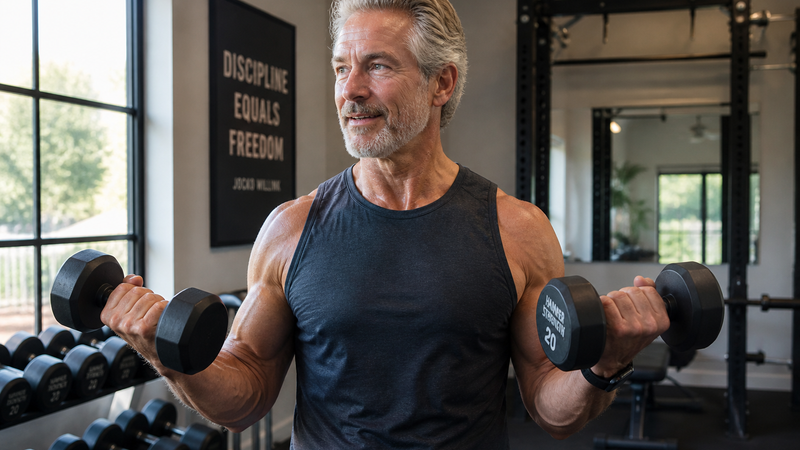
The good news: muscle loss is not inevitable, and it's never too late to push back against it. Research consistently shows that resistance training — lifting weights, using resistance bands, or doing bodyweight exercises — is the most effective tool for building and preserving muscle at any age.
A review published in Sports Medicine found that older adults who engaged in progressive resistance training made meaningful gains in muscle mass and strength, even into their 80s. The key word is progressive — gradually increasing the challenge over time.
Protein intake matters, too. Muscle protein synthesis — the process that repairs and builds muscle — requires adequate dietary protein. Many adults over 50 consume less protein than their bodies need to maintain muscle, particularly if they're following low-calorie diets. Talk with your doctor or a registered dietitian about what's appropriate for your situation.
Beyond the Gym: Small Habits That Add Up
You don't have to overhaul your life to start protecting your muscle health. Here are some steps worth discussing with your healthcare provider:
- Add resistance training 2 to 3 times per week. Bodyweight squats, push-ups, and resistance bands are a reasonable starting point for beginners.
- Ask about your protein intake. General guidance often points to 1.2 to 1.6 grams of protein per kilogram of body weight for older active adults, but individual needs vary.
- Keep moving throughout the day. Prolonged sitting accelerates muscle loss. Short walks, standing breaks, and stair climbing all count.
- Ask your doctor about a functional strength assessment. Tests like grip strength, the chair stand test, or a walking speed test can give you a clearer picture of where you stand.
- Prioritize sleep. Muscle repair happens largely during sleep. Chronic poor sleep is linked to accelerated muscle loss.
The Bottom Line
Your weight is one number. Your muscle health is another — and according to a growing body of research, it may be the more important one when it comes to how long and how well you live. Sarcopenia is real, it starts earlier than most people expect, and it's largely preventable with the right habits. If you haven't thought much about your muscle health, now is a good time to bring it up with your doctor. The goal isn't to look like an athlete. It's to stay strong, capable, and independent for as many years as possible.
