

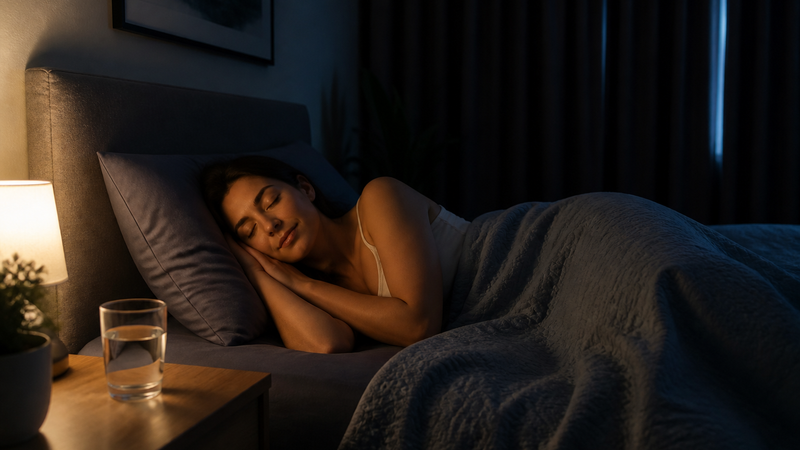
What Is Sleepmaxxing, Exactly?
Sleepmaxxing is the practice of optimizing every possible variable around sleep — light exposure, temperature, supplements, breathing, timing, and more — to get the best night's rest you can. The term has taken off on platforms like TikTok and Reddit, especially among adults who are frustrated with chronic tiredness and want something that actually works.
Some of it overlaps with well-established sleep science. Some of it goes well beyond what the research supports. The good news: you don't need to do all of it to feel the difference.
The Habits That Hold Up
Consistent sleep and wake times. This one is as close to settled science as sleep medicine gets. The American Academy of Sleep Medicine has long recommended going to bed and waking up at the same time every day — yes, including weekends. Your body's internal clock, called the circadian rhythm, runs on consistency. Disrupting it regularly is linked to poorer sleep quality, mood problems, and metabolic issues over time.
Morning light exposure. Getting outside within an hour of waking up — even on a cloudy day — sends a strong signal to your brain that the day has started. Research published in the Journal of Biological Rhythms and other journals has shown that morning light exposure helps anchor your circadian rhythm and can make it easier to fall asleep at night. Ten to fifteen minutes outside is a reasonable starting point.
A cool bedroom. Core body temperature naturally drops as you fall asleep. Research suggests that keeping your bedroom between roughly 65 and 68 degrees Fahrenheit supports that process. It's one of the simplest and most evidence-supported environmental tweaks you can make.
Limiting alcohol close to bedtime. Alcohol may help you fall asleep faster, but studies consistently show it disrupts the second half of the night, reducing restorative REM sleep. Cutting off alcohol two to three hours before bed is a reasonable step that sleep researchers regularly recommend.
The Strategies With Promising But Limited Evidence
Blue-light blocking glasses. The theory makes sense: screens emit blue-spectrum light, which can suppress melatonin production. Some small studies have found that blue-light glasses worn in the evening may modestly improve sleep quality. However, a 2021 review published in Sleep Medicine Reviews noted the evidence is still limited and inconsistent. Simply dimming screens and reducing use before bed may matter more than the glasses themselves.
Magnesium supplements. Magnesium is involved in hundreds of processes in the body, including nervous system regulation. Some studies suggest magnesium supplementation may help adults with insomnia or low magnesium levels sleep better. But the research is mixed, and most studies have been small. If you're curious, talk with your doctor before adding a supplement — especially if you take other medications.
Mouth taping. This one gets a lot of attention online. The idea is to tape your lips shut during sleep to encourage nasal breathing, which some researchers link to better oxygen flow and less snoring. The evidence here is early and limited. More importantly, mouth taping could be dangerous for anyone with sleep apnea or nasal congestion. This is one to discuss with a doctor before trying.
What the Experts Say About Stacking Too Many Habits
One of the patterns sleep researchers flag about sleepmaxxing culture is the risk of what's called orthosomnia — an obsessive focus on optimizing sleep that actually makes sleep anxiety worse. A paper published in the Journal of Clinical Sleep Medicine coined the term to describe patients who became so fixated on sleep tracker data and perfecting their sleep that they developed insomnia as a result.
If your sleep routine is starting to feel like a second job, that's worth noticing. The goal is rest, not perfection.
What Actually Moves the Needle Most
Sleep researchers consistently point to the same foundational habits: a regular schedule, a dark and cool room, avoiding caffeine in the afternoon, limiting alcohol, and winding down without bright screens before bed. These aren't exciting, but they have the strongest and most consistent evidence behind them.
If you've already locked those in and want to experiment further, there's no harm in trying lower-risk additions like morning light walks or keeping the thermostat a few degrees cooler. Just don't let the pursuit of perfect sleep get in the way of actually sleeping.
When to Talk to Your Doctor
If you're doing everything right and still waking up exhausted, it's time to have a conversation with your doctor. Conditions like sleep apnea, restless leg syndrome, thyroid problems, and depression can all interfere with sleep — and no amount of optimization will fix an underlying medical issue. A proper evaluation can make all the difference.
The Bottom Line
Sleepmaxxing has brought real sleep science to a much wider audience, and that's a good thing. The habits with the strongest evidence — a consistent schedule, morning light, a cool dark room, and less alcohol — are also the simplest. Start there, build the foundation, and skip the extreme hacks until the research catches up. Good sleep doesn't require perfection. It just requires consistency.
