

Seed Oils Are Everywhere—But Are They Actually Bad for You?
The internet says seed oils are poison. Science says it's complicated. Here's what the research actually shows.
You've probably seen the headlines: seed oils are inflammatory, toxic, and responsible for everything from obesity to heart disease. But before you throw out your canola oil, it's worth asking what the evidence actually says—because the picture is far more nuanced than social media would have you believe.
What Are Seed Oils, Exactly?
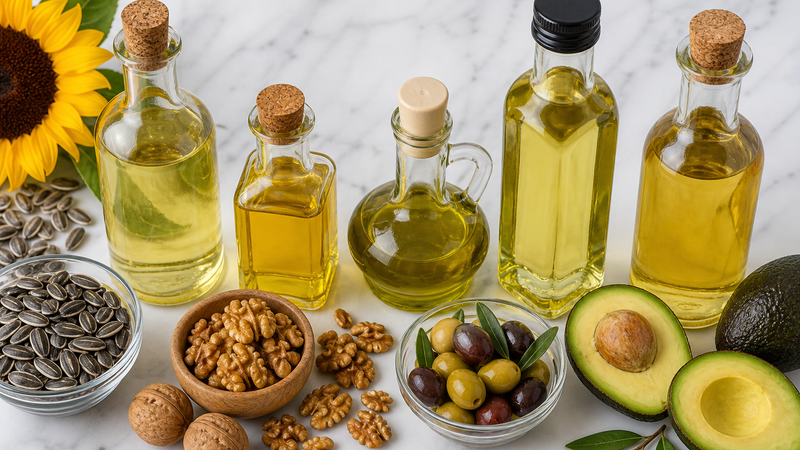
Seed oils are vegetable oils pressed from seeds—think soybean, canola, sunflower, safflower, corn, and cottonseed oils. They became a staple of the American diet in the 20th century, largely replacing animal fats like butter and lard in cooking and processed foods.
They're rich in polyunsaturated fatty acids, or PUFAs, particularly a type called omega-6 linoleic acid. That's the compound at the center of the current debate.
The Case Against Seed Oils
Critics argue that seed oils drive inflammation. The reasoning goes like this: omega-6 fatty acids can be converted by the body into compounds that promote inflammation, and the modern Western diet contains far more omega-6s than omega-3s—a ratio that has shifted dramatically over the past century.
Some researchers and clinicians have raised concerns that this imbalance may contribute to chronic inflammation, which is a known factor in heart disease, metabolic disorders, and other conditions. Seed oils are also highly processed, and some critics point to the fact that they can oxidize—break down into potentially harmful compounds—when heated to high temperatures.
It's worth noting that most of the strongest claims circulating online go well beyond what any single study has demonstrated. Many are based on animal research or small human trials, not large, long-term clinical evidence.
What the Mainstream Research Shows
Major health organizations, including the American Heart Association, have long recommended replacing saturated fats with polyunsaturated fats—including the omega-6s found in seed oils—as a strategy to reduce LDL cholesterol and lower cardiovascular risk. That guidance is based on decades of research.
A frequently cited 2017 review published in the journal Circulation concluded that replacing saturated fat with polyunsaturated fat was associated with a reduced risk of cardiovascular events. The authors found no evidence that linoleic acid—the primary omega-6 in seed oils—increases markers of inflammation in the body when consumed as part of a balanced diet.
However, it's also true that nutrition science is complicated, and not every researcher agrees. Some scientists argue that the evidence supporting seed oils has leaned too heavily on short-term cholesterol markers rather than longer-term clinical outcomes.
The Omega-6 to Omega-3 Ratio: A Real Concern?
One point that does have broader scientific support is the value of keeping your omega-6 to omega-3 ratio in a healthier balance. Historically, humans consumed these fatty acids in roughly equal amounts. Today, estimates suggest most Americans consume far more omega-6 than omega-3.
Increasing omega-3 intake—through fatty fish like salmon and sardines, walnuts, flaxseed, and fish oil—is something most nutrition researchers agree on. Whether that also means dramatically cutting seed oils is still debated.
What does seem clear is that the type of fat matters less than the overall quality of your diet. A diet built on whole foods, vegetables, lean proteins, and healthy fats leaves little room for the ultra-processed foods that contain the most refined seed oils anyway.
Cooking with Seed Oils: Does Heat Change Things?
This is one area where critics raise a fair point. Seed oils high in polyunsaturated fats are less stable at very high temperatures than more saturated fats like coconut oil or more monounsaturated fats like olive oil. When these oils are heated repeatedly or to smoking point, they can produce oxidation byproducts.
For everyday home cooking at moderate heat, this is likely a small concern. It becomes more relevant in commercial frying, where oils are often reheated many times. If you cook at high heat frequently, choosing oils with higher smoke points and more stability—like avocado oil or light olive oil—is a reasonable practical step.
What You Can Actually Do With This Information
You don't need to overhaul your kitchen based on social media trends. But a few practical shifts make sense given what the science does and doesn't show:
- Focus on the big picture. Eating more whole, minimally processed foods naturally reduces your exposure to refined seed oils in packaged and fried foods.
- Add more omega-3s. Aim for fatty fish two to three times a week, and consider walnuts, flaxseed, or chia seeds as easy additions to your diet.
- Use olive oil for everyday cooking. Extra-virgin olive oil has a strong evidence base for cardiovascular benefits and is a sound default for most home cooking.
- Be mindful of high-heat cooking. For searing or roasting at very high temperatures, a more heat-stable oil like avocado oil is a reasonable choice.
- Don't stress over every drop. The occasional use of canola or sunflower oil is not going to undo an otherwise healthy diet.
If you have specific health concerns—heart disease, metabolic syndrome, inflammatory conditions—talk with your doctor or a registered dietitian about what dietary fat choices make the most sense for you personally.
The Bottom Line
The seed oil debate is real, but it's nowhere near as settled as either side claims. The evidence does not support the idea that seed oils are a dietary poison, but it also doesn't mean you should consume them without a second thought. The most honest answer is this: focus on eating more whole foods, balance your omega-6 intake with more omega-3s, and choose minimally processed oils for everyday cooking. That's a strategy backed by solid science—no matter how the online debate shakes out.
