

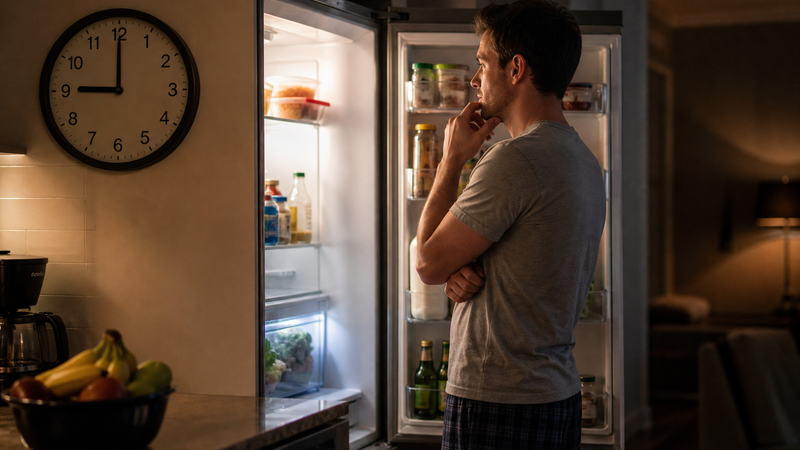
The Old Rule Everyone Repeats
"Don't eat after 8 p.m." It's one of the most common pieces of diet advice out there. The idea is simple: your metabolism slows at night, so any calories you eat get stored as fat instead of burned for energy.
Here's the kicker — that's not exactly how your body works. The relationship between nighttime eating and your health is more nuanced than a single cutoff time.
What the Research Actually Shows
Studies on late-night eating have found that the timing of calories can matter, but not for the reasons most people assume. Research published in journals including Obesity and Cell Metabolism suggests that eating in sync with your body's internal clock — known as your circadian rhythm — may influence how efficiently your body processes food.
Your metabolism, digestion, and hormone levels all follow a daily rhythm. Insulin sensitivity, for example, tends to be higher earlier in the day, meaning your body may handle carbohydrates more effectively in the morning and afternoon than late at night. Some studies suggest that eating a large portion of your calories late in the evening is associated with higher body weight and worse blood sugar control, independent of total calories consumed.
It is important to note that much of this research involves relatively small sample sizes or specific populations, and scientists are still working to understand exactly how much timing matters compared to overall diet quality and total calorie intake.
The Sleep Connection
What you eat before bed can also affect how well you sleep — and poor sleep, in turn, is linked to increased hunger and cravings the next day. It becomes a cycle worth paying attention to.
Heavy, high-fat meals close to bedtime have been associated with disrupted sleep in some studies, possibly because digestion keeps your body working when it would otherwise be winding down. Spicy or acidic foods can worsen heartburn or acid reflux when you lie down, which can fragment sleep.
On the other hand, some small studies have suggested that a light, protein-rich snack before bed — like cottage cheese or a small handful of nuts — may not harm sleep and could even support muscle recovery overnight, particularly in people who exercise regularly. This area of research is still evolving, so talk with your doctor if sleep or nighttime digestion is a concern for you.
It May Depend on Your Personal Pattern
One important finding from the research is that context matters. Someone who skips breakfast, eats lightly during the day, and has their biggest meal in the evening may actually be spreading their calories reasonably — just later than conventional advice suggests. Someone who eats full meals all day and then adds extra snacking at night is in a different situation entirely.
Shift workers and people with irregular schedules face unique challenges because their eating and sleeping patterns are already out of sync with their circadian rhythms. Research suggests this group may be at higher risk for metabolic issues tied to nighttime eating, though more study is needed.
What This Means in Practice
You do not need to set a rigid kitchen-closed alarm, but there are some reasonable habits the evidence supports:
- Front-load your calories when you can. Eating more at breakfast and lunch, and a lighter dinner, aligns with your body's natural insulin sensitivity patterns.
- Give yourself a buffer before bed. Finishing your last meal two to three hours before you plan to sleep may support better digestion and sleep quality.
- Choose wisely if you do snack. A small, protein-based snack is a better late-night option than a high-sugar or high-fat one.
- Watch the mindless eating. Late-night snacking often happens in front of screens, when we are tired and not truly hungry. That pattern — not the clock itself — is where the real risk tends to live.
The Bottom Line
Eating before bed is not automatically harmful, but eating heavily, frequently, or mindlessly in the hours before sleep may work against your metabolism, your blood sugar, and your rest. The weight of the current evidence suggests that eating earlier in the day and keeping your nighttime eating light is a smart strategy — not because of an arbitrary cutoff time, but because it works with your body's natural rhythms. If you have specific concerns about nighttime eating, digestion, or blood sugar, your doctor is the right person to talk to.
