

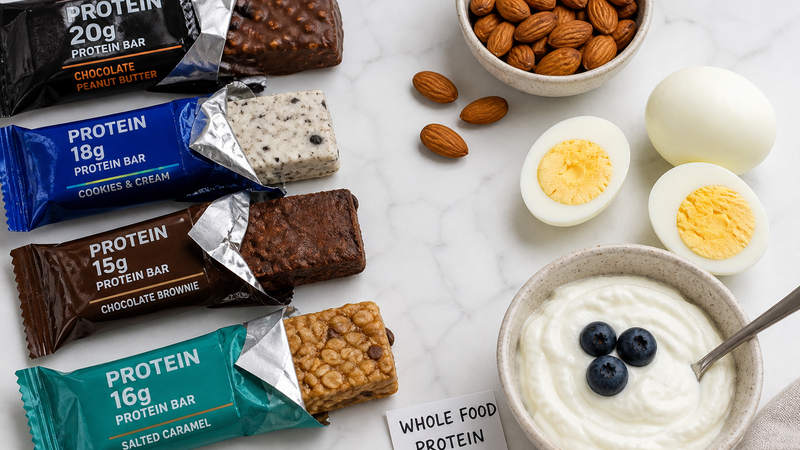
Protein Bars: Smart Snack or Ultra-Processed Junk in Disguise?
They're marketed as health food, but your protein bar might have more in common with a candy bar than you think.
You grab a protein bar on the way out the door and feel good about it. It has 20 grams of protein, right? It must be healthy. But flip that wrapper over and take a closer look at the ingredient list. What you find might surprise you.
What Does "Ultra-Processed" Actually Mean?
The term ultra-processed food comes from the NOVA classification system, developed by researchers at the University of São Paulo in Brazil. It describes foods that go far beyond basic cooking and contain industrial ingredients most people don't keep in their kitchens: things like protein isolates, hydrogenated oils, artificial sweeteners, emulsifiers, and synthetic flavor compounds.
Many popular protein bars check several of those boxes. That doesn't automatically make them dangerous, but it does put them in the same broad category as packaged snack cakes, fast food, and sugary cereals — which researchers have increasingly linked to health concerns over the long term.
What the Research Says About Ultra-Processed Foods
The evidence against ultra-processed foods as a category has been building. Large observational studies — including research published in journals such as The BMJ and JAMA Internal Medicine — have found associations between high ultra-processed food consumption and increased risk of obesity, heart disease, type 2 diabetes, and certain cancers.
It's important to note that most of this research is observational, meaning it shows associations but cannot prove that ultra-processed foods directly cause these conditions. People who eat more ultra-processed foods may also have other lifestyle factors at play. Still, the pattern across multiple large studies is consistent enough that many nutrition researchers take it seriously.
Whether a protein bar specifically drives the same risks as, say, a bag of chips is not yet well established. The science is ongoing.
Not All Protein Bars Are Created Equal
Here's where it gets nuanced. A protein bar made from a short list of recognizable ingredients — like oats, nuts, seeds, dried fruit, and a simple protein source like egg whites — is a very different product from one that lists maltitol syrup, soy protein isolate, palm kernel oil, carrageenan, and sucralose in the first several ingredients.
Some bars are closer to a compressed handful of whole foods. Others are engineered in a lab. Reading the ingredient list is the most reliable way to tell the difference. As a general rule, the shorter and more recognizable the ingredient list, the better.
The Protein Question: Is Bar Protein as Good as Real Food Protein?
Protein itself is not in question — it's one of the most important nutrients for muscle maintenance, metabolism, and satiety, especially as we age. The question is where you're getting it.
Whole food protein sources like eggs, chicken, fish, Greek yogurt, cottage cheese, legumes, and nuts come packaged with other nutrients — vitamins, minerals, fiber, and healthy fats — that bars often can't replicate. When you get your protein from a bar, you may be getting the macronutrient without the broader nutritional benefit of a real food meal or snack.
That said, if a bar is genuinely helping you hit your protein goals on a busy day and the alternative is skipping nutrition entirely, it can serve a practical purpose.
What to Watch for on the Label
If you use protein bars regularly, knowing what to look for can help you make a smarter choice.
- Protein source: Look for whole food-based proteins like egg whites, nuts, or seeds rather than multiple types of protein isolates stacked together.
- Sugar content: Many bars contain as much sugar as a candy bar. Aim for less than 10 grams per serving, and check whether sugar alcohols are being used to keep the number artificially low.
- Fiber: At least 3 to 5 grams of fiber per bar helps slow digestion and keeps you feeling full longer.
- Ingredient list length: If the list runs 20 or 30 ingredients deep with names you can't pronounce, that's a signal the bar is heavily processed.
- Added sweeteners: Artificial sweeteners like sucralose, acesulfame potassium, or sugar alcohols like maltitol may cause digestive discomfort in some people.
Better Grab-and-Go Alternatives Worth Knowing
If you rely on protein bars for convenience, a few whole food options can fit the same role with less processing involved.
- Hard-boiled eggs (prep a batch on Sunday)
- Single-serve Greek yogurt or cottage cheese cups
- A small handful of mixed nuts with a piece of fruit
- String cheese and a few whole grain crackers
- Nut butter packets with apple slices
None of these require much prep, and all of them deliver real food nutrition without a lab's worth of additives.
The Bottom Line
Protein bars are not all the same, and they're not automatically healthy just because the label says "protein." Some bars are closer to whole foods and can fit into a balanced diet without concern. Others are highly processed products dressed up in health-food marketing. The smartest move is to read the ingredient list, not just the front of the package. When whole food options are available, they'll almost always serve you better. And if you're unsure which bars or snacks make sense for your health goals, your doctor or a registered dietitian can give you guidance tailored to you.
