

Period Pain Is Not Normal: What Your Body May Be Telling You
Cramps that sideline you every month are a signal worth taking seriously — here's what the science says.
Too many women have been told that severe period pain is just part of being a woman. It is not. While some discomfort during menstruation is common, pain that stops you from working, exercising, or living your normal life may be pointing to something more. And the sooner it gets taken seriously, the better.
What Is "Normal" Period Pain, Really?
Mild cramping in the first day or two of your period is considered typical. It happens because your uterus contracts to shed its lining, triggered by hormone-like chemicals called prostaglandins.
But pain that requires you to miss work, stay in bed, or rely on strong pain relievers every single month is not something you should just push through. According to the American College of Obstetricians and Gynecologists, severe or debilitating menstrual pain warrants a conversation with your doctor.
The Condition Most Often Behind the Pain: Endometriosis
Endometriosis is one of the most common — and most underdiagnosed — gynecologic conditions. It occurs when tissue similar to the uterine lining grows outside the uterus, often on the ovaries, fallopian tubes, or pelvic tissue. That tissue still responds to your monthly hormonal cycle, causing inflammation, scarring, and significant pain.
The Endometriosis Foundation of America estimates that the condition affects roughly 1 in 10 women of reproductive age, yet it takes an average of seven to ten years to receive a diagnosis. Women are frequently told their pain is normal or psychological — which is why awareness matters so much.
Symptoms beyond cramping can include pain during or after sex, pain with bowel movements or urination around your period, heavy bleeding, and fatigue. If several of these sound familiar, bring them up with your gynecologist.
Other Conditions That Can Cause Painful Periods
Endometriosis is not the only culprit. Several other conditions can make menstruation genuinely painful.
- Uterine fibroids — noncancerous growths in or on the uterus that can cause heavy bleeding and pelvic pressure
- Adenomyosis — similar to endometriosis, but the tissue grows into the muscular wall of the uterus itself, often causing severe cramping and heavy periods
- Pelvic inflammatory disease (PID) — an infection of the reproductive organs that can cause chronic pelvic pain
- Ovarian cysts — fluid-filled sacs on the ovaries that can cause sharp or persistent pelvic pain
A gynecologist can help sort out which, if any, of these may be involved through a physical exam, ultrasound, or other testing.
Why Women's Pain Gets Dismissed — and What to Do About It
Research published in the Journal of Women's Health and other peer-reviewed sources has documented a troubling pattern: women's pain is more likely to be undertreated or dismissed compared to men's, even in clinical settings. For conditions like endometriosis that are invisible on standard imaging, this problem is especially pronounced.
If you feel your concerns have not been heard, you have every right to push back. Keep a symptom diary tracking when your pain occurs, how severe it is on a scale of one to ten, and how it affects your daily activities. That record gives your doctor concrete information to work with and makes it harder to brush off your experience as routine.
Ask specifically: Could this be endometriosis? Could this be adenomyosis or fibroids? What testing makes sense for me?
Treatment Options: From Lifestyle to Medical Care
The good news is that painful periods — whatever the cause — are often very treatable once properly diagnosed.
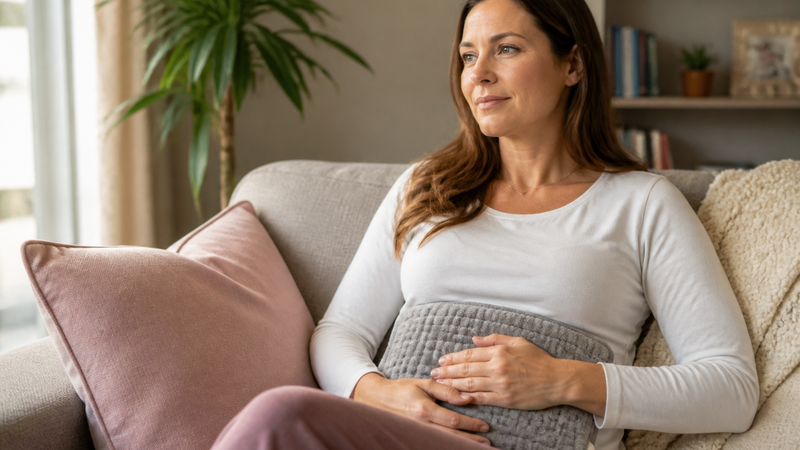
For milder pain, some women find relief with anti-inflammatory medications like ibuprofen, which work by blocking prostaglandins. Heat therapy, gentle movement, and dietary changes that reduce overall inflammation may also help ease symptoms, though these approaches are better studied as complements to medical care than as standalone treatments.
For conditions like endometriosis or fibroids, a gynecologist may discuss hormonal therapies, minimally invasive procedures, or in some cases surgery. The right path depends entirely on your individual situation, your symptoms, and your goals — including whether you want to preserve fertility.
Never start, stop, or change any medication or treatment without talking to your doctor first.
The Bottom Line
Painful periods are common. Debilitating periods are not something you have to accept. If your cramps are regularly disrupting your life, that is your body asking you to pay attention. Track your symptoms, talk to your gynecologist, and ask the specific questions. Conditions like endometriosis, fibroids, and adenomyosis are real, diagnosable, and treatable — but only if someone takes the pain seriously. Start by taking it seriously yourself.
