

The Fat You Can't See Is the Fat That Matters Most
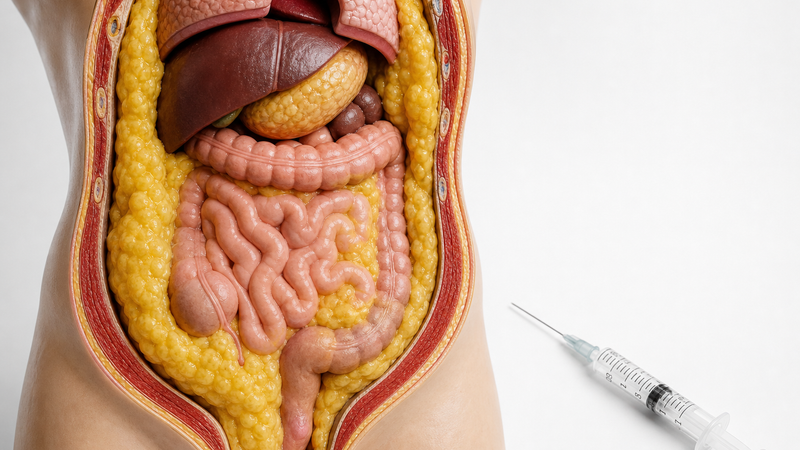
You might feel fine about what you see in the mirror, but visceral fat — the fat that accumulates deep in the abdomen around organs like the liver, pancreas, and intestines — is a different concern entirely. Unlike the subcutaneous fat just beneath your skin, visceral fat is metabolically active and has been linked to higher risks of heart disease, type 2 diabetes, inflammation, and metabolic syndrome.
It doesn't always show up as a noticeably large belly. Slim people can carry dangerous levels of it, too.
What the Early Trial Found
Researchers tested an experimental injectable therapy specifically designed to reduce visceral fat deposits in the body. In this early-phase trial, participants who received the injection showed an average reduction of approximately 12% in visceral fat, as measured by imaging scans.
It's important to be clear about what kind of study this is: early-phase clinical trials are designed primarily to test safety and get an initial read on whether something works. They typically involve small numbers of participants and are not designed to prove that a treatment is effective. Results at this stage can look promising and still not hold up in larger trials.
The specific details of the therapy — including how it works mechanically and who manufactured or developed it — should be discussed with your physician rather than acted on based on early headlines alone.
Why 12% May Matter More Than It Sounds
A 12% reduction in visceral fat might not sound dramatic, but researchers consider even modest reductions in this type of fat clinically meaningful. Because visceral fat is so metabolically active, small decreases have been associated with improvements in blood sugar regulation, blood pressure, and inflammatory markers in other research contexts.
That said, this early trial has not yet demonstrated those downstream health benefits directly. Connecting a reduction in fat volume to actual improvements in disease risk will require longer and larger studies.
What We Don't Know Yet
Early-phase trials leave many questions unanswered. Researchers still need to determine how long the fat reduction lasts, whether repeated injections are needed, what the side effect profile looks like over time, and which patients would benefit most.
There are also questions about how this approach compares to existing options, including lifestyle changes and medications like GLP-1 receptor agonists, which have already shown significant effects on visceral fat in larger, well-established trials.
What Already Works Against Visceral Fat
While this research develops, there are well-supported strategies for reducing visceral fat that don't require waiting for a new drug to reach market.
- Aerobic exercise — Regular cardio, even moderate-intensity walking, has consistently been shown in research to reduce visceral fat more effectively than dieting alone.
- Strength training — Building muscle helps your body use blood sugar more efficiently, which over time can reduce visceral fat accumulation.
- Reducing added sugars and refined carbohydrates — These are among the strongest dietary drivers of visceral fat storage.
- Prioritizing sleep — Poor sleep is independently linked to increased visceral fat, regardless of what you eat.
- Managing chronic stress — Elevated cortisol from ongoing stress is a known driver of fat storage in the abdominal region.
These aren't substitutes for a conversation with your doctor if you're concerned about metabolic health — but they are evidence-based steps you can take today.
Should You Be Talking to Your Doctor?
If you're concerned about visceral fat, the first step is a conversation with your physician. While visceral fat can't be measured on a standard scale or by BMI alone, your doctor can assess your risk using waist circumference, blood markers like fasting glucose and triglycerides, and in some cases imaging.
As for the experimental injection, it is not available as a standard treatment. If this area of research continues to advance through larger trials, your doctor will be the right person to assess whether it's ever appropriate for you.
The Bottom Line
An early-phase trial of an experimental injection showed a 12% reduction in visceral fat — the dangerous deep abdominal fat linked to heart disease, diabetes, and metabolic problems. That's a noteworthy early signal, but this is not a proven treatment, and much larger studies are needed before drawing firm conclusions. In the meantime, the most reliable tools for managing visceral fat are the ones already in your hands: regular movement, smarter food choices, better sleep, and stress management. Talk to your doctor if you have concerns about your metabolic health.
