
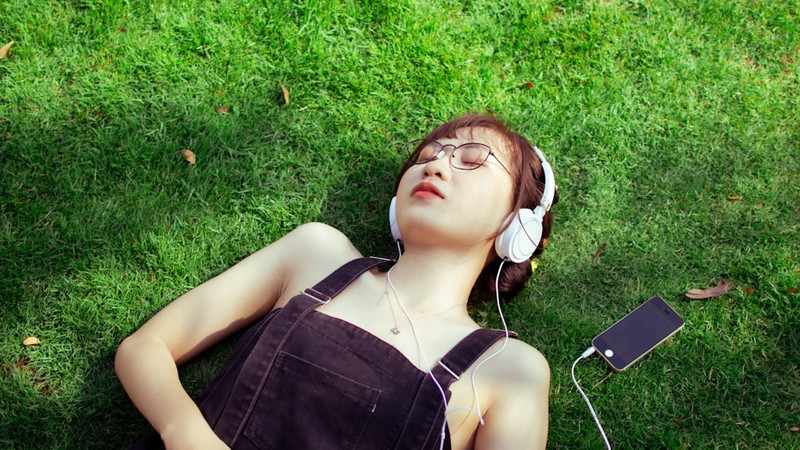
Music for anxiety might be one of the fastest, lowest‑effort ways to get your brain out of panic mode and back into something that feels calm. And a new study suggests there really is a “sweet spot” for how long to listen.
The new science: not just any playlist
Lots of people already use music for anxiety, but this new research tested something more precise than “throw on a chill playlist.”
Scientists looked at a special kind of meditative music that has two layers:
- The music itself is designed to start where your nervous system is and then slowly calm it down.
- A hidden layer called auditory beat stimulation, or ABS, which uses gentle sound pulses to nudge your brain’s rhythms away from “fight or flight” and toward “rest and digest.”
To see if this actually did anything, the researchers took adults with moderate anxiety who were already on anxiety meds and split them into four groups:
- One group listened to 24 minutes of pink noise, the neutral “background rain” sound that a lot of people use to relax.
- Three groups listened to the special music plus ABS for 12, 24, or 36 minutes.
Everyone took standard anxiety and mood questionnaires before and after listening, so the team could see what changed right away.
So does music for anxiety actually work?
Short answer, yes, at least in the short term — and pink noise alone did not do as much.
Here is what stood out:
- All three music plus ABS groups felt less anxious than the pink noise group.
- Around 24 minutes gave the biggest overall benefit.
- Thirty-six minutes helped, too, but it did not beat 24 minutes.
- Twelve minutes helped, but not as much as the longer sessions.
People did not just report less anxiety. They also described feeling less jittery, less irritable, and more emotionally steady overall. That matters because these were not people who were just “stressed” after a busy day. They had already been diagnosed with anxiety and were taking medication.
Think of this as a fast, drug-free add-on, not a replacement for treatment. It can give your brain a break when anxiety spikes, while you and your clinician work on the deeper drivers.
What makes this different from “relaxing music” on YouTube?
Most of the time, when you use music for anxiety, you are picking tracks you like. That hits your brain’s reward system, lights up memories, and can absolutely help you feel better. But it is driven by preference and emotion.
This study’s approach is different in a few ways:
- The music starts out closer to your stressed state, then gradually slows and softens. That “meets you where you are” and then guides you toward calm.
- The ABS pulses are designed to gently pull your brainwaves into slower, more relaxed patterns in the background.
- The “dose” is controlled. You are not just hoping your playlist helps; you are giving your brain a specific 24-minute session that has been tested.
You can think of casual music listening as a great top‑down tool; your conscious mind is engaged. This ABS‑based music is more bottom‑up; it tries to change your body chemistry and brain rhythms first, then your thoughts follow.
Is it really changing your brain, or just distracting you?
Distraction is not a bad thing. If a song gets your mind off your worries for 20 minutes, your nervous system gets a break. But the experts behind this work are aiming for more than that.
The difference looks like this:
- If it is “just” a distraction, you feel better only while the music is playing.
- If it is true calming, your body's signs of anxiety — tight muscles, racing heart, that weird feeling — stay lower for a while after the session.
Early studies are starting to track things like heart rate variability, stress hormones, and brainwave patterns to see whether these sessions really shift people into that calmer “rest and digest” mode. The initial results are promising, but these are still early days.
What this research can’t tell us (yet)
There are some big caveats you cannot ignore:
- The study only looked at immediate effects, before and after one session. We do not know how long the calm lasted, or what happens if you do this daily for weeks.
- Everyone in the study had moderate anxiety and was already taking medication. That is a pretty specific group. The results may look different in people with milder anxiety, more severe anxiety, or no meds at all.
- There was no group that listened to ABS without music, so we cannot say exactly how much of the effect comes from the beats versus the music.
So this is not a “press play and cure your anxiety” story. It is an “interesting and hopeful tool” story.
How to use music for anxiety in real life
Even without a lab‑grade soundtrack, you can use these ideas right now.
A simple structure your readers can use:
- Pick your window. Aim for about 24 minutes when anxiety is high — long enough to matter, short enough to be realistic.
- Use headphones if you can. That helps block outside noise and lets your brain lock onto the sound.
- Start where you are. If you feel wired, it is often easier to start with something slightly more energetic and then move to slower, softer tracks than to jump straight into ultra‑slow ambient music.
- Stay “single task” while you listen. Instead of scrolling, close your eyes or look at something neutral, and let the music be the main event.
If you have access to music specifically designed with auditory beats for anxiety, you can treat it like a 24-minute “intervention” when symptoms spike. If not, you can still build your own “music for anxiety” routine by paying attention to which songs actually help your body feel calmer, not just entertained.
Where this fits with therapy and medication
The most important message for readers is that music for anxiety is a tool, not a cure.
- It is not a replacement for therapy, medication, or other evidence-based treatments if those are needed.
- It may be a great complement — a way to get through intense moments while you work on the deeper causes of anxiety with a professional.
- It is also low risk for most people, as long as volume levels are safe and they are not using music to avoid real-life problems.
A useful way to frame it, think of 24 minutes of carefully chosen music as a “reset” button you can press when your nervous system is overloaded. It will not fix everything, but if it lets you breathe, think more clearly, and take the next healthy step, that is a win.
Medical Disclaimer: This article is for educational purposes only and is not medical advice. Anyone experiencing significant anxiety, panic attacks, depression, or other mental health symptoms should consult a qualified healthcare professional for diagnosis and treatment.

