

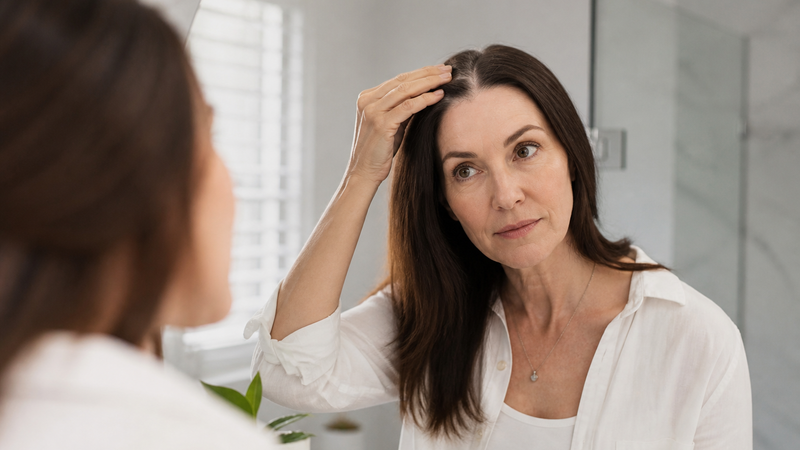
Is Your Hair Thinning? Your Hormones May Be to Blame
Hair thinning in women is rarely just a cosmetic issue — and the root cause is often hiding in your hormones.
You notice more hair in the shower drain. Your part looks wider than it used to. You tell yourself it's stress, or aging, or just bad luck. But what if your hair is actually trying to tell you something important about what's happening inside your body?
Hair Loss Is More Common in Women Than Most People Realize
Many people assume significant hair loss is mostly a men's problem. It isn't. According to the American Academy of Dermatology, hair loss affects roughly 40 percent of women by age 50. And yet it remains one of the most under-discussed health concerns in women's healthcare.
The most common form in women is called female pattern hair loss, also known as androgenetic alopecia. Unlike the receding hairline seen in men, women typically notice a widening part, overall thinning at the crown, or a reduction in ponytail thickness. The hairline usually stays intact.
The Hormone Connection: What's Actually Going On
Here's where it gets interesting. Hair follicles are exquisitely sensitive to hormonal signals. When those signals change — as they often do during perimenopause, menopause, after pregnancy, or with thyroid dysfunction — hair growth cycles can get thrown off.
One key player is dihydrotestosterone, or DHT, a potent form of testosterone that can shrink hair follicles over time. Women naturally have lower levels of androgens (male hormones) than men, but when estrogen levels drop — as they do during menopause — the relative influence of androgens increases. That shift can trigger or accelerate hair thinning.
Thyroid disorders are another major culprit. Both an underactive thyroid (hypothyroidism) and an overactive thyroid (hyperthyroidism) are well-documented causes of hair loss in women, according to the Endocrine Society. Hair often becomes thin, dry, or brittle before other thyroid symptoms are even noticed.
Polycystic ovary syndrome, or PCOS, is a third hormonal condition strongly linked to hair thinning. PCOS involves elevated androgen levels and affects an estimated 6 to 12 percent of women of reproductive age in the United States, according to the Centers for Disease Control and Prevention.
Other Triggers Worth Knowing About
Hormones aren't the only factor. Nutritional deficiencies — particularly low iron, low ferritin (stored iron), and low vitamin D — are frequently found in women experiencing hair loss, according to research published in the Journal of the American Academy of Dermatology. Crash diets or sudden caloric restriction can also trigger a temporary but significant shedding called telogen effluvium, where a large number of follicles shift into a resting phase at the same time.
Chronic stress raises cortisol levels, and elevated cortisol has been associated with disrupted hair growth cycles as well. This is one reason many women notice increased shedding during or after a particularly stressful period in their lives.
Why You Shouldn't Just Wait It Out
One of the most important things to understand about hair loss is that earlier attention generally leads to better outcomes. Hair follicles don't disappear overnight — they miniaturize gradually. Catching a hormonal imbalance or nutritional gap early gives you more options.
If you've noticed increased shedding or thinning that's been going on for more than a few months, it's worth raising with your doctor. A basic blood panel can check thyroid function, iron levels, ferritin, vitamin D, and relevant hormone levels. That information can point toward whether there's an underlying issue driving the change.
What Can Actually Help
Treatment depends heavily on the cause, which is exactly why a diagnosis matters. Some options your doctor may discuss include:
- Minoxidil (Rogaine): The only FDA-approved topical treatment for female pattern hair loss. It's available over the counter and has been shown in clinical studies to slow loss and stimulate regrowth in some women. It requires consistent, long-term use to maintain results.
- Treating the underlying condition: When thyroid disease, PCOS, or iron deficiency is identified and treated, hair growth often improves on its own.
- Hormonal therapy: For women in perimenopause or menopause, hormone-related hair loss may be one factor considered when discussing options with a doctor. This is a highly individual decision with benefits and risks that vary by person.
- Nutritional support: If deficiencies are confirmed by bloodwork, correcting them through diet or supplementation may help. Biotin is heavily marketed for hair health, but the evidence supporting it is largely limited to people who have an actual biotin deficiency, which is uncommon.
- Scalp care and low-level laser therapy: Some dermatologists also discuss devices cleared by the FDA for stimulating hair follicles, though results vary and more research is ongoing.
It's also worth noting that some medications — including certain blood pressure drugs, antidepressants, and cholesterol-lowering medications — list hair loss as a possible side effect. If you suspect a medication may be involved, talk with your prescribing doctor before making any changes.
The Bottom Line
Hair thinning in women is common, but it's not something you simply have to accept without answers. In many cases, the real issue is a hormonal imbalance, a nutritional gap, or another treatable condition hiding beneath the surface. If your hair has been changing and you've been brushing it off, consider making an appointment with your doctor and asking for a full workup. Your hair may be giving you an early signal that's worth listening to.
