

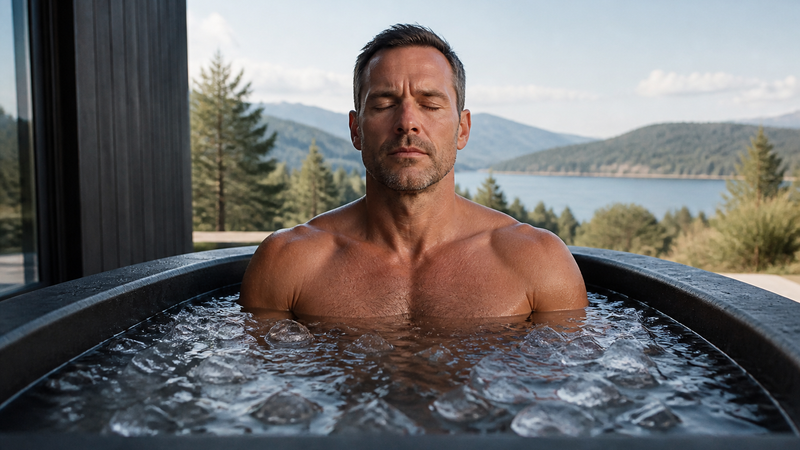
Ice Baths and Men's Health: What the Science Actually Shows
Cold plunges are all over social media, but does the science back up the buzz—or is this just another wellness trend?
Every guy at the gym seems to be talking about ice baths. Some swear they speed up recovery, boost testosterone, and sharpen the mind. But before you fill your bathtub with ice, it's worth asking: what does the research actually say—and what's still just hype?
What a Cold Plunge Actually Does to Your Body
When you submerge yourself in cold water—typically between 50 and 59 degrees Fahrenheit—your body responds fast. Blood vessels near the skin constrict, your heart rate spikes, and your nervous system shifts into high alert.
That jolt triggers a flood of norepinephrine, a hormone and neurotransmitter linked to alertness and mood. Research published in the International Journal of Circumpolar Health found that repeated cold-water immersion was associated with significant increases in norepinephrine—up to 300 percent in some cases. That's a real physiological response, not a placebo.
The Recovery Claim: Promising, But Not the Whole Story
The most common reason men use ice baths is to recover faster after hard training. The idea is that cold reduces inflammation and muscle soreness. And there's some support for that—up to a point.
A review published in the Journal of Physiology found that cold water immersion did reduce perceived muscle soreness and helped athletes feel ready to train again sooner. Here's the catch: there's growing evidence that suppressing post-exercise inflammation may also blunt some of the muscle-building signals your body is trying to send. For men trying to get stronger or build muscle, using ice baths after every strength session may actually work against those goals.
The research suggests cold plunges may be better timed around cardio or competition recovery than after heavy resistance training—but talk to a sports medicine professional before building this into your routine.
What About Testosterone?
This one gets a lot of attention online. The claim is that cold water raises testosterone. The honest answer: the evidence is thin.
Some small studies have shown a short-term rise in certain hormones after cold exposure, but these studies are limited in size and design. No large, controlled trial has demonstrated that regular cold plunges meaningfully raise testosterone levels in healthy men. If testosterone is a concern for you, that's a conversation worth having with your doctor—not something to try to fix with a tub of ice.
The Mental Edge: More Solid Ground
Here's where the research gets more interesting. Beyond the norepinephrine surge, regular cold-water exposure has been associated with improved mood and reduced symptoms of anxiety and depression in several small studies.
A study out of the University of Portsmouth explored cold water swimming and found participants reported meaningful mood improvements. Researchers have also noted that the practice of voluntarily doing something uncomfortable may build psychological resilience over time—though larger studies are needed to confirm these effects.
For men who struggle with low energy or sluggish mornings, the alertness boost from a cold shower or brief plunge is real and fast-acting, even if it's temporary.
Who Should Be Careful
Cold plunges aren't for everyone. Sudden cold-water immersion puts real stress on the cardiovascular system. Men with heart disease, high blood pressure, Raynaud's disease, or circulatory conditions should not try cold plunges without first talking to their doctor.
Hypothermia is also a genuine risk if you stay in too long or if the water is too cold. Most protocols used in studies cap immersion at 10 to 15 minutes, and many researchers use temperatures no lower than 50 to 55 degrees Fahrenheit. Never plunge alone, and never ignore your body's signals.
How to Start Safely If You're Curious
- Start with a cold shower, not full immersion—end your normal shower with 30 to 60 seconds of cold water and work up from there
- If you move to a plunge, aim for water around 55 to 60 degrees Fahrenheit and limit your time to 5 to 10 minutes
- Never plunge immediately after intense exercise without cooling down first
- Avoid cold plunges right after heavy strength training if muscle growth is your primary goal
- Always check with your doctor first if you have any cardiovascular or circulatory conditions
The Bottom Line
Cold plunges aren't snake oil, but they're not miracle medicine either. The strongest evidence supports their use for short-term recovery from high-intensity cardio and for a real, fast boost in alertness and mood. The testosterone claims are overstated, and the muscle-building benefits are more complicated than the headlines suggest. If you're healthy and curious, starting with a cold shower is a low-risk way to test the waters—literally. Just go in with accurate expectations, not internet hype.
