

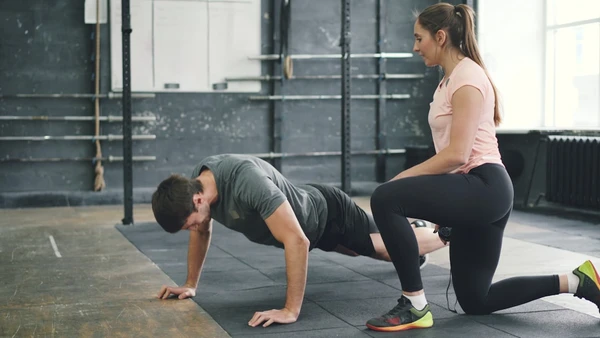
Americans love talking fitness… but hate being tested by it. And there may be no test more humbling than the classic push-up.
More than half the country can’t make it past 10 in a row, and over a third can’t even hit five — yet this single movement offers a surprisingly sharp snapshot of your overall health.
Researchers at Harvard found that middle-aged men who were able to complete at least 20 push-ups had a far lower risk of dying from any cause over the following decade. It wasn’t just about arm strength — it was a marker of muscular endurance, metabolic health, and long-term resilience.
And most people don’t even realize how revealing it is.
Why Push-Ups Matter More Than You Think
Push-ups demand strength from your chest, shoulders, triceps, back, and core — all at once. That level of muscle coordination offers insight into:
- overall physical conditioning
- the aging of your musculoskeletal system
- cardiovascular fitness
- stability and fall risk as you get older
They’re also a quick way to gauge how well your body handles strain. People who struggle with even a handful of reps often show early signs of age-related muscle loss, reduced cardiovascular conditioning, or prolonged periods of sedentary living.
This is why fitness coaches consider push-up performance a longevity checkpoint — not just a gym flex.
The Real Push-Up Targets by Age
The numbers below are realistic minimums—not elite-athlete goals—based on physical-fitness benchmarks used in large training populations. They reflect what a reasonably healthy adult should be able to do with consistent practice.
20s: 15–30
30s: 12–25
40s: 10–20
50s: 8–15
60s: 6–12
70s: 5–10 (knee push-ups recommended)
80s: 3–7 (knee push-ups)
90s: 2–5 (knee push-ups)
Hit the high end? Great. Hit the low end? Still meaningful.
Fall below it? Your body might be signaling that strength, endurance, or overall conditioning needs attention.
And for the rare unicorns cracking triple digits? Any effort counts — but longevity doesn’t require heroics.
Why Push-Ups Get Harder as You Age
Aging brings predictable shifts: less muscle mass, slower recovery, reduced flexibility, and more joint stiffness—even people who feel active start to notice that the move becomes tougher.
That doesn’t mean you stop — it means you modify.
- Push-ups on knees
- Incline push-ups against a bench or countertop
- Wall push-ups for beginners or those with shoulder limitations
Modifications keep you training the same muscle groups with far less joint strain. They’re not a sign of weakness; they’re smart biomechanics.
Push-Ups Aren’t Just About Strength — They Predict Health
Falling under your decade’s benchmark can hint at:
- reduced upper-body strength
- lower cardiovascular fitness
- higher risk for age-related muscle loss
- poor core stability
- increased fall risk after age 60
But the encouraging part: push-up capacity improves quickly with even small amounts of consistent training.
That means you can reclaim the numbers tied to better long-term outcomes — sometimes within weeks.
Why You Should Work on Push-Ups Now
Push-ups strengthen muscle groups that protect your shoulders, wrists, spine, and rib cage. They stabilize joints, build core integrity, support posture, and improve bone density.
They also mildly elevate your heart rate — making them a sneaky way to support cardiovascular health without cardio equipment.
And, yes, they improve the way you look. Push-ups create fast definition across the arms, chest, upper back, and shoulders. They’re an instant confidence booster, and they cost nothing.
If You’re Starting at Zero
Here’s the safest on-ramp:
- Begin with wall push-ups (3 sets of 10).
- Move to countertop or bench incline push-ups.
- Shift to knee push-ups when the incline feels easy.
- Add 1–2 standard push-ups at the end of each set.
- Build until most reps are full push-ups.
The goal is progression, not perfection. Form matters more than numbers.
The Bottom Line
Push-ups are more than a fitness challenge — they’re an early warning system for how well your muscles, joints, heart, and metabolism are aging.
Find the version that works for you, build gradually, and track your progress by decade benchmarks. Even small weekly improvements can mean better long-term strength, better stability, and far better odds of staying mobile and indepe

