

GLP-1 Drugs and Muscle Loss in Women: The Science May Surprise You
New research suggests women on GLP-1 medications may be holding onto more muscle than we thought — but the full picture is more nuanced.
If you've heard that weight-loss drugs like semaglutide and tirzepatide cause you to lose dangerous amounts of muscle, you're not alone. That concern has been everywhere — social media, health podcasts, even mainstream news. But emerging research is starting to complicate that story, especially for women.
Where the Muscle-Loss Worry Comes From
When people lose weight quickly — by any method — they typically lose some lean mass along with fat. That's not unique to GLP-1 receptor agonists like Ozempic or Wegovy. Crash dieting, bariatric surgery, and even aggressive calorie restriction can all reduce muscle mass.
Early concerns about GLP-1 drugs pointed to studies showing that a meaningful percentage of total weight lost on these medications came from lean mass, not just fat. Those findings were real, and they raised legitimate questions.
What Newer Research Is Finding
More recent analyses are suggesting the picture may be more favorable — particularly for women. Research published in journals including Obesity has examined body composition changes in people on GLP-1 medications and found that when loss of lean mass is calculated as a proportion of total body weight, it often falls within the normal range seen with other weight-loss approaches.
Some researchers have also noted that women, who tend to start with a higher percentage of body fat than men, may show a different lean-mass loss profile during GLP-1 treatment. This is an active area of investigation, and it's important to note that many studies in this space are still relatively small or short in duration. The science is not settled.
Why Muscle Mass Matters So Much After 40
This conversation matters more as you age. Muscle is not just about strength and appearance. It plays a central role in metabolism, blood sugar regulation, balance, and bone health. Losing too much of it during weight loss can raise the risk of what researchers call "sarcopenic obesity" — carrying too little muscle alongside excess fat — which is linked to worse long-term health outcomes.
For women especially, the years around and after menopause bring a natural decline in muscle mass. Any weight-loss strategy that accelerates that loss deserves a hard look.
What the Experts Say You Can Do About It
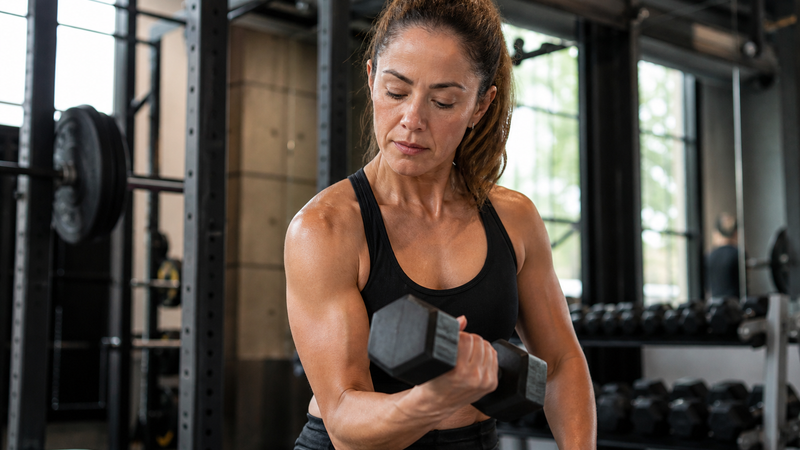
The good news is that research consistently points to one powerful tool for protecting muscle during weight loss: resistance training. Studies suggest that combining GLP-1 medication with regular strength training — think lifting weights, resistance bands, or bodyweight exercises — can help preserve lean mass better than medication alone.
Protein intake also matters. Many clinicians and researchers in the field recommend that people on GLP-1 medications pay close attention to getting enough protein, since these drugs can significantly reduce appetite and overall food intake, making it easy to fall short. How much protein is right for you is a conversation worth having with your doctor or a registered dietitian.
What This Doesn't Mean
None of this is a reason to dismiss the muscle-loss question entirely, or to assume GLP-1 drugs are risk-free from a body-composition standpoint. Longer-term studies with larger and more diverse groups of women are still needed. Researchers are also working to understand whether the muscle that is lost on these medications is metabolically active muscle or other forms of lean tissue, which would change the health implications significantly.
If you are taking a GLP-1 medication or considering one, this is exactly the kind of question to raise with your doctor. Ask about monitoring your body composition, not just the number on the scale.
The Bottom Line
The fear that GLP-1 drugs cause dramatic, unavoidable muscle loss — especially in women — may be overstated based on what the current research shows. But "less than feared" is not the same as "no concern." The smartest approach is to pair any weight-loss medication with regular strength training and adequate protein, and to work with your healthcare provider to track more than just your weight. The goal isn't just a smaller number on the scale — it's a stronger, healthier body for the long run.
