

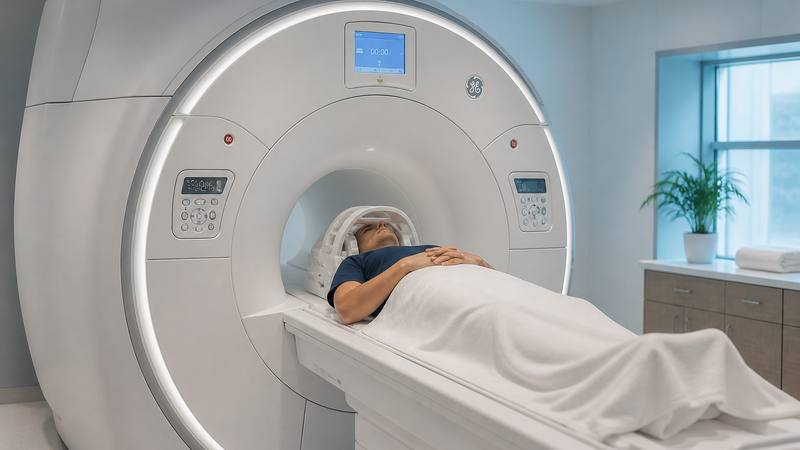
Full-Body MRI Scans Are Going Mainstream—But Should You Get One?
Silicon Valley celebrities are lining up for full-body MRI scans. But what does the medical community actually say about them?
You've probably heard the buzz. Athletes, tech executives, and longevity enthusiasts are paying $1,000 to $2,500 or more out of pocket for a full-body MRI scan at concierge health clinics, hoping to find cancer, heart disease, or other hidden threats before symptoms appear. The appeal makes sense. Who wouldn't want a complete look inside their body?
But the medical community has real concerns—and they're worth understanding before you reach for your credit card.
What a Full-Body MRI Actually Does
A full-body MRI uses powerful magnets and radio waves to produce detailed images of your organs, blood vessels, and tissues from head to toe. Unlike CT scans, MRI does not use ionizing radiation, which is one reason these scans are being marketed as a safe, proactive tool for healthy people.
Companies like Prenuvo, which has gained high-profile celebrity attention, market these scans as a way to detect early-stage cancers, aneurysms, and other conditions that might otherwise go unnoticed for years. Scans typically take 45 to 90 minutes and are not covered by most insurance plans.
The Case for Catching Things Early
The strongest argument for full-body MRI is the potential to detect serious disease before it becomes harder to treat. Some patients have reported that scans caught early-stage cancers or other findings that led to timely treatment.
For people with a strong family history of cancer, genetic risk factors, or certain hereditary conditions, targeted screening is already a standard part of medical care. In those cases, a doctor-ordered scan makes clear clinical sense.
What Medical Experts Are Concerned About
Here's where it gets complicated. Major medical organizations, including the American College of Radiology and the U.S. Preventive Services Task Force, do not recommend routine full-body MRI screening for healthy adults without symptoms or known risk factors. Their concerns center on several issues.
False positives. Full-body scans frequently turn up findings that look unusual but turn out to be harmless—what doctors call incidental findings. These can trigger anxiety, additional testing, biopsies, and even unnecessary procedures, all of which carry their own risks and costs.
Unproven survival benefit. Despite the intuitive appeal of early detection, there is currently no large-scale clinical trial evidence proving that routine full-body MRI screening in low-risk, healthy adults reduces overall mortality or leads to better outcomes compared to standard preventive care.
Not a replacement for your doctor. A full-body MRI does not evaluate everything. It can miss certain types of cancer, does not assess heart function in the same way a cardiologist would, and cannot replace a thorough physical exam or established screening guidelines like mammograms, colonoscopies, or cholesterol checks.
Who Might Benefit Most
The picture isn't entirely one-sided. There are situations where comprehensive imaging can be genuinely valuable. People with a family history of certain cancers, those with known genetic mutations like BRCA1 or BRCA2, or individuals with conditions that put them at elevated risk for specific diseases may have legitimate reasons to discuss advanced imaging with their physician.
The key word there is discuss. The decision to pursue any scan should happen in conversation with a doctor who knows your full health history—not on the basis of a celebrity endorsement or a wellness company's marketing materials.
The Cost and Coverage Reality
Most health insurance plans, including Medicare, do not cover full-body MRI scans for asymptomatic adults because they are not considered medically necessary under current guidelines. That means you would be paying entirely out of pocket—often $1,000 to $2,500 or more depending on the provider and location.
That's money that might go further toward well-established preventive care: staying current on recommended screenings, managing blood pressure and cholesterol, eating well, exercising regularly, and not smoking. These interventions have decades of evidence behind them.
The Bottom Line
Full-body MRI scans are a genuinely fascinating technology, and the idea of catching hidden disease early is hard to argue with in principle. But right now, the medical evidence does not support routine scanning for healthy adults without specific risk factors, and the risk of false positives leading to unnecessary worry and procedures is real. If you're curious about whether a full-body scan makes sense for you—especially if you have a family history of cancer or other risk factors—the right first step is a conversation with your doctor, not a credit card transaction. In the meantime, the most powerful tools for a long, healthy life are still the ones that cost far less: regular checkups, proven screenings, and the everyday habits that keep your body strong.
