

What Are Phthalates, and Where Are They Hiding?
Phthalates (pronounced THAL-ates) are a group of synthetic chemicals that manufacturers use to make plastics more flexible and durable. They also show up in fragrances, helping scents stick to skin and clothing longer.
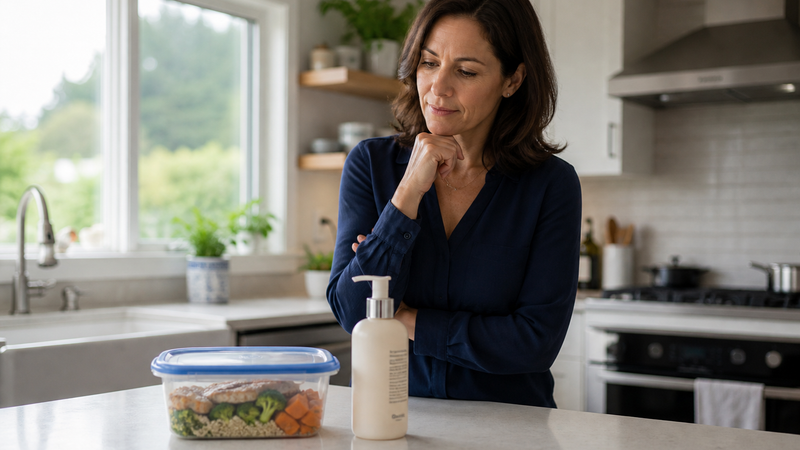
The list of products that can contain phthalates is long: plastic food containers and wrap, vinyl flooring, personal care products like shampoo, lotion, and nail polish, synthetic fragrances in perfumes and air fresheners, and some medications and medical devices. Because they are not chemically bound to the materials they are added to, phthalates can leach out — into food, into the air, and onto skin.
What the New Research Found
A study published in the Journal of Clinical Endocrinology and Metabolism examined the relationship between phthalate exposure and ovarian reserve in women. Researchers measured phthalate metabolites — the byproducts the body produces after breaking down these chemicals — in participants' urine samples, then looked at two key markers of ovarian reserve: anti-Müllerian hormone (AMH) and antral follicle count (AFC).
AMH is a hormone produced by cells in the ovarian follicles. Higher AMH levels generally indicate a larger remaining egg supply. AFC is an ultrasound-based count of small follicles, each of which contains an immature egg. Both are standard tools that reproductive specialists use to assess fertility potential.
The researchers found that women with higher urinary levels of certain phthalate metabolites — particularly those associated with DEHP, one of the most commonly used phthalates — had lower AMH levels and lower antral follicle counts. In plain terms, the data suggested an association between greater phthalate exposure and a reduced ovarian reserve.
Important Limits of the Research
Before drawing firm conclusions, it's worth understanding what this study can and cannot tell us. Observational studies like this one can identify associations — meaning two things appear to move together — but they cannot prove that phthalates directly cause a decline in ovarian reserve. Other factors in a woman's lifestyle, environment, or health history could also play a role.
It is also worth noting that urine phthalate levels reflect recent exposure and can fluctuate from day to day, which means a single measurement may not capture a woman's typical long-term exposure. Researchers in this field acknowledge that more longitudinal studies — ones that follow women over time — are needed to better understand the relationship.
This is promising and important research, but it is not a final verdict. Think of it as a signal worth paying attention to, not a cause for panic.
Why Ovarian Reserve Matters Beyond Fertility
Most conversations about ovarian reserve focus on fertility, but the ovaries do much more than produce eggs. They are a primary source of estrogen and other hormones that support bone density, cardiovascular health, brain function, and mood — especially in the years leading up to and following menopause.
Research has increasingly shown that the rate at which ovarian reserve declines may be connected to broader health outcomes in midlife and beyond. That is one reason scientists are paying closer attention to environmental exposures that might affect ovarian function, not just in women trying to conceive, but in women at every stage of life.
Practical Steps Worth Considering
You cannot eliminate phthalate exposure entirely — these chemicals are genuinely widespread in modern life. But there are reasonable, evidence-informed steps you can take to reduce your exposure without upending your routine.
- Choose fragrance-free personal care products when possible. "Fragrance" on an ingredient label can be a catch-all term that includes phthalates.
- Avoid heating food in plastic containers. Heat can increase the rate at which chemicals leach into food. Use glass, ceramic, or stainless steel when microwaving or storing hot foods.
- Look for "phthalate-free" labels on products like nail polish, hair sprays, and lotions. Some brands now specifically formulate without these chemicals.
- Reduce plastic food wrap contact with fatty foods. Phthalates tend to migrate more readily into high-fat foods like cheese and meat.
- Ventilate your home. Phthalates can off-gas from vinyl flooring and other building materials, so fresh air and good ventilation help.
These are not guaranteed to protect ovarian health — the research does not support that kind of specific claim. But they represent a reasonable, low-risk approach to reducing exposure to chemicals that are worth watching.
Should You Talk to Your Doctor?
If you have concerns about your ovarian reserve or reproductive health, a conversation with your OB-GYN or a reproductive endocrinologist is the right starting point. AMH testing is widely available and can give you a clearer picture of where you stand.
If you are concerned about your overall chemical exposure — phthalates or otherwise — bring it up at your next appointment. Your doctor can help you weigh the evidence and make choices that make sense for your individual situation. Do not start or stop any medication or supplement based on this research alone.
The Bottom Line
Research published in the Journal of Clinical Endocrinology and Metabolism suggests a link between higher phthalate exposure and lower ovarian reserve in women — but this is an association, not proof of cause and effect. Phthalates are common in plastics, fragrances, and personal care products, making them nearly impossible to avoid entirely. What you can do is make practical, informed choices to reduce unnecessary exposure: go fragrance-free when you can, skip the plastic in the microwave, and read ingredient labels. And if you have questions about your reproductive or hormonal health, talk with your doctor.
