

CGMs Without Diabetes: Smart Health Hack or High-Tech Worry Machine?
Wearable glucose trackers are showing up on the arms of athletes, biohackers, and everyday adults who don't have diabetes — but are they actually worth it?
You don't have to have diabetes to strap on a continuous glucose monitor these days. CGMs — tiny sensors worn on the arm that track blood sugar in real time — have jumped from hospital settings to wellness culture at lightning speed. But before you add one to your cart, it's worth asking: what does the science actually say about using these devices if your blood sugar is already healthy?
What a CGM Actually Does
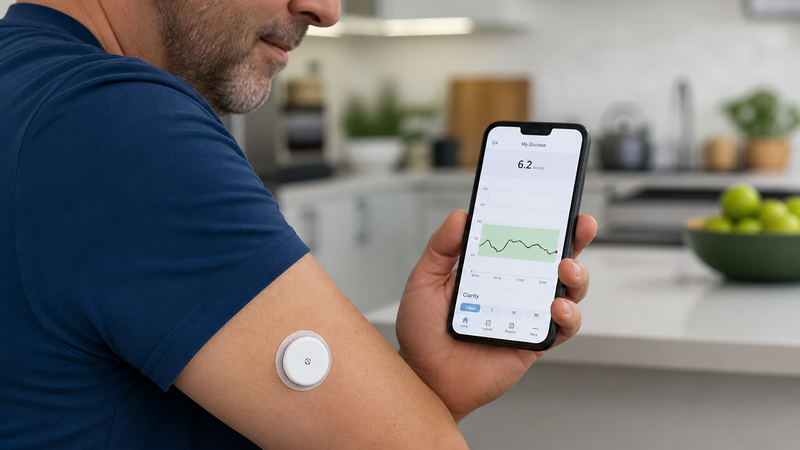
A continuous glucose monitor is a small wearable sensor, typically placed on the back of the upper arm, that measures glucose levels in the fluid just under your skin every few minutes. It sends that data to a smartphone app, giving you a running graph of how your blood sugar rises and falls throughout the day.
Originally developed for people with type 1 and type 2 diabetes, CGMs help those patients avoid dangerous highs and lows without constant finger-stick testing. Several models — including the Dexcom Stelo and the Abbott Lingo — are now FDA-cleared for adults without diabetes and are available over the counter without a prescription.
Why Healthy People Are Interested
The appeal makes intuitive sense. Blood sugar spikes and crashes are linked to energy slumps, hunger, weight gain, and — over many years — a higher risk of type 2 diabetes and cardiovascular disease. If you could see exactly which foods, meals, and habits send your glucose soaring, you might be able to make smarter choices before a problem ever develops.
Fitness enthusiasts have embraced CGMs to fine-tune fueling around workouts. Others use them hoping to understand afternoon energy crashes or persistent cravings. The devices have also found a following among people who have been told they are prediabetic and want to take action early.
What the Research Actually Shows
Here's where things get more complicated. The evidence for CGM use in people without diabetes is still early and limited. Most of the large, long-term studies on CGMs involve people who have diabetes, where the benefit is well established.
Smaller studies in metabolically healthy adults suggest that CGMs can reveal meaningful variability in blood sugar responses — and that different people can respond very differently to the same foods. A notable Stanford University study published in the journal Cell found that individuals varied widely in their glucose responses to identical meals, which suggests personalized dietary guidance could be valuable. However, that study was conducted in a relatively small group, and researchers noted that glucose alone is just one piece of a much larger metabolic picture.
A 2023 commentary in JAMA Internal Medicine raised a pointed concern: for people without diabetes whose blood sugar is already in a normal range, the clinical benefit of continuous monitoring is not yet proven. The authors cautioned that the devices may generate worry over glucose fluctuations that are entirely normal and not harmful.
The Case for Trying One
That said, there are reasonable arguments for short-term use — even if the long-term evidence isn't locked in yet. Seeing your blood sugar response to a specific meal, a poor night of sleep, or a stressful workday in real time can be genuinely motivating. For some people, that visual feedback is a powerful nudge toward better habits.
If you are prediabetic, your doctor may find CGM data particularly useful. And if you have struggled to understand why you feel sluggish or hungry at certain times of day, a few weeks of data could offer useful clues — as long as you discuss what you find with a healthcare provider rather than self-diagnosing.
The Legitimate Downsides
Cost is real. Over-the-counter CGMs for non-diabetic users typically run between $50 and $100 per month, and insurance generally does not cover them for people without diabetes. That adds up fast for a device whose benefit in healthy adults is still being studied.
There is also the anxiety factor. Blood sugar naturally rises after eating and dips between meals — that's normal physiology. Without proper context, watching those numbers move on a graph can feel alarming even when everything is working exactly as it should. Some nutrition and metabolic health experts have noted that CGMs could fuel unnecessary food fear or orthorexic tendencies in people who are prone to health anxiety.
Accuracy is another consideration. CGMs measure glucose in interstitial fluid, not directly in the blood, and readings can lag behind actual blood glucose levels. Factors like pressure on the sensor, temperature, and certain medications can affect accuracy.
Questions to Ask Before You Buy
- Do you have prediabetes, a family history of type 2 diabetes, or another specific metabolic concern your doctor has flagged?
- Are you prepared to discuss the data with a registered dietitian or your physician rather than acting on it alone?
- Can you afford the ongoing cost without financial stress?
- Are you someone who tends toward health anxiety? If so, a device that alerts you to every glucose fluctuation may do more harm than good.
The Bottom Line
Continuous glucose monitors are genuine medical tools with a strong track record in diabetes care. For healthy adults without diabetes, they may offer useful insights — especially around food choices and lifestyle habits — but the science on long-term benefit is still catching up to the hype. If you're curious, talk to your doctor first, particularly if you have prediabetes or metabolic concerns. Used thoughtfully and interpreted with professional guidance, a short-term CGM trial could be informative. Used as a source of daily worry over normal blood sugar swings, it may cost you more than the price tag suggests.
