

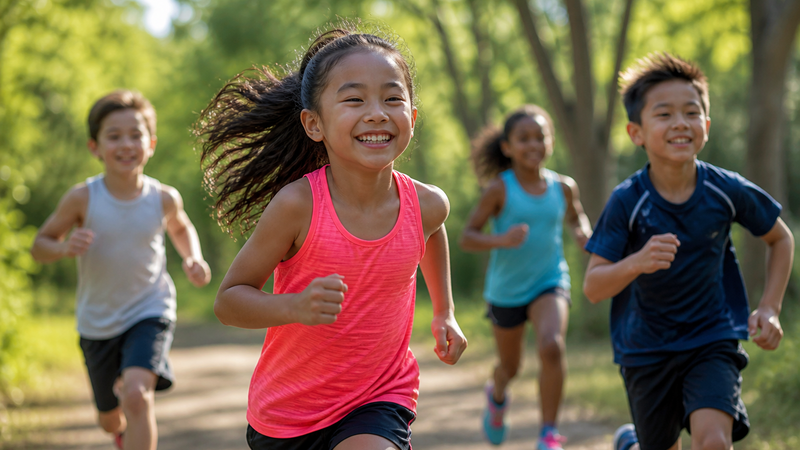
Active Kids Become Active Adults: What the Science Says
Getting kids moving early may do more than build strong bones — it could literally rewire the brain to love exercise for life.
Most adults who struggle to stay active blame willpower, a busy schedule, or just not being "the athletic type." But what if the real window of opportunity opened decades earlier — back when you were on a playground? Emerging research suggests that physical activity habits formed in childhood may make it easier — biologically and behaviorally — to stay active as an adult.
The Early-Life Habit Loop
Habits formed young tend to stick. That's true for diet, sleep, and it appears to be true for physical activity as well. Researchers studying exercise behavior across the lifespan have found that children who are regularly active are significantly more likely to remain active into adulthood compared to their sedentary peers.
This isn't just about discipline. Scientists believe early movement may shape the brain's reward pathways — making exercise feel more natural and enjoyable later in life, rather than something you have to force yourself to do.
What Animal Research Is Telling Us
Some of the most intriguing clues come from animal studies, so it's important to note these findings cannot be directly applied to humans yet. Research published in journals focused on neuroscience and exercise physiology has found that young animals given access to running wheels showed lasting changes in brain chemistry — specifically in dopamine pathways linked to motivation and reward — compared to animals that were sedentary during their early development.
These early-life changes appeared to make physical activity more rewarding over the long term. Again, animal studies suggest possibilities; they don't prove outcomes in people. But they point scientists in a meaningful direction.
What the Human Research Shows
Longer-term human studies — including longitudinal research tracking individuals from childhood through adulthood — have consistently found a link between childhood activity levels and adult exercise habits. One area of research published in the Journal of Science and Medicine in Sport followed activity patterns over time and found that physical activity in youth was a meaningful predictor of activity in later decades.
Importantly, the research also suggests that the type of activity matters less than the consistency. Whether it was organized sports, free play, walking, or swimming, regular movement during childhood was the key common factor.
Why This Matters for Adults Right Now
If you're reading this as an adult who wasn't particularly active as a kid, don't tune out. This research is not a verdict — it's a window into how habits and biology interact. Many adults successfully build lasting exercise routines later in life, even without an active childhood.
What the science does underscore is that the effort may feel harder at first if movement wasn't part of your early life. That's worth knowing, not as a reason to give up, but as a reason to be patient with yourself and consistent in building the habit now.
What Parents Can Do Today
If you have children or grandchildren in your life, the research offers a clear and practical message: give them opportunities to move, and make it fun. The goal isn't elite athletic performance — it's building a positive relationship with physical activity early.
- Prioritize unstructured outdoor play, not just organized sports
- Walk or bike as a family instead of always driving
- Limit screen time and replace it with active alternatives
- Let kids choose activities they enjoy — variety is fine
- Model the behavior yourself; children mirror what they see
The American Academy of Pediatrics recommends that children and adolescents get at least 60 minutes of moderate to vigorous physical activity most days of the week.
The Bottom Line
Childhood may be one of the most powerful windows for building a lifelong exercise habit — and the science suggests this is about more than just willpower. Early movement may shape the brain in ways that make staying active easier across a lifetime. If you have kids or grandkids in your life, helping them move more today could be one of the greatest long-term health gifts you give them. And if your own childhood wasn't particularly active, know that it's never too late to start — talk with your doctor about the best way to build a routine that works for you.
