

A Brain Inflammation Discovery Could Change How We Fight Alzheimer's and Parkinson's
Scientists may have found a way to quiet a key driver of brain inflammation — and it could point toward new treatments for two of the most feared diseases of aging.
Most people assume Alzheimer's and Parkinson's are purely about plaques, tangles, or dying neurons. But a growing body of research points to something else fueling the fire: chronic inflammation deep inside the brain. A new study suggests that blocking a specific inflammation-linked receptor in the brain may help slow the kind of damage seen in both diseases — opening a door researchers have been trying to find for years.
What the New Research Found
The study, published in the journal Nature Immunology, focused on a receptor called NLRP3 — part of a molecular complex known as the inflammasome. Think of the inflammasome as an alarm system inside immune cells in the brain. When it gets triggered, it sets off a wave of inflammation. In the short term, that response is protective. When it stays stuck in the "on" position, it can damage brain tissue over time.
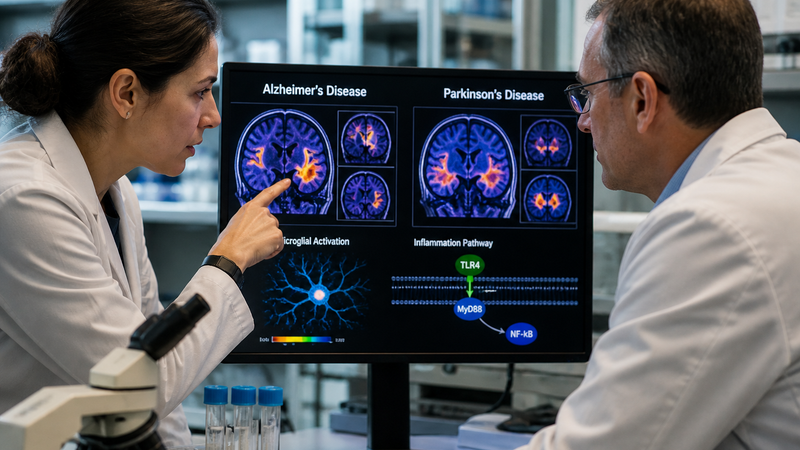
Researchers found that blocking the NLRP3 receptor reduced inflammatory signaling in brain immune cells called microglia. In laboratory models, this appeared to limit the kind of neurological damage associated with both Alzheimer's disease and Parkinson's disease.
Why Microglia Matter So Much
Microglia are the brain's resident immune cells — its first line of defense against infection and injury. Under normal conditions, they patrol the brain, clear out debris, and respond to threats.
In neurodegenerative diseases like Alzheimer's and Parkinson's, microglia can become chronically overactivated. Instead of protecting neurons, they begin releasing inflammatory signals that contribute to cell death. Targeting the NLRP3 pathway is one way researchers are trying to put the brakes on that process.
Important Caveats to Keep in Mind
This research is early-stage. Much of the work was conducted in laboratory and animal models, which means it has not yet been tested in humans at scale. What works in a lab does not always translate directly to the clinic, and it can take years of additional research before any potential treatment reaches patients.
The findings are promising, but they should be understood as a scientific step forward — not a breakthrough cure. Researchers will need to study whether NLRP3 inhibitors are safe and effective in people before drawing firm conclusions.
The Bigger Picture: Inflammation as a Target
This study fits into a larger and rapidly growing field focused on neuroinflammation — the idea that runaway immune activity in the brain plays a central role in diseases long thought to be purely about protein buildup or neuron loss.
Several research teams around the world are now exploring NLRP3 inhibitors and related targets as potential therapies. Some early-phase human trials are already underway for inflammatory conditions in other parts of the body, which could eventually accelerate research into brain diseases as well.
What You Can Do Right Now
While scientists work toward new treatments, there is already solid evidence that lifestyle habits can help reduce chronic inflammation throughout the body — including in the brain. These are not cures, but they are steps worth taking.
- Move regularly. Physical activity is one of the most consistently studied ways to lower inflammatory markers and support brain health.
- Eat an anti-inflammatory diet. Research supports patterns like the Mediterranean diet, rich in vegetables, fish, olive oil, and whole grains, for reducing systemic inflammation.
- Protect your sleep. Poor sleep has been linked to increased amyloid buildup in the brain and elevated inflammatory signals. Aim for seven to nine hours.
- Manage chronic stress. Prolonged stress activates inflammatory pathways. Mindfulness, exercise, and social connection can help.
- Talk to your doctor. If you have a family history of Alzheimer's or Parkinson's, or concerns about your brain health, your doctor can help you understand your personal risk and options.
The Bottom Line
A new study published in Nature Immunology suggests that blocking a brain inflammation receptor called NLRP3 may help limit the kind of damage linked to Alzheimer's and Parkinson's disease. The research is early-stage and has not yet been tested in large human trials, so it is not a treatment yet — but it adds meaningful momentum to one of the most important areas of neuroscience today. In the meantime, the lifestyle habits that support a healthy brain are the same ones that help fight inflammation throughout the body. That is something you can act on today.
