

You lie down exhausted, and your mind suddenly decides it’s time to replay every conversation you had in the last 10 years.
Your body wants sleep. Your brain wants a staff meeting.
That nightly tug‑of‑war is one of the most common patterns we see in people who say, “I’m tired all day and wide awake all night.”
In this article, we’ll look at what’s actually happening in your brain and body when you can’t fall or stay asleep, and how simple changes to your environment and routine—along with a thoughtfully formulated sleep supplement and a better pillow—may help you finally get some rest. This isn’t a cure or a guarantee, and it isn’t medical advice. It’s a practical framework you can discuss with your own clinician if you have questions about supplements or ongoing sleep problems.
What’s Really Going Wrong When You Can’t Sleep
Sleep trouble usually isn’t caused by one thing. It’s a stack of small stresses on your nervous system:
- You carry unprocessed worries into bed (work, family, finances).
- Your brain is still lit up by screens, late‑night emails, or social media.
- Your bedroom isn’t truly comfortable—wrong pillow, wrong temperature, wrong lighting.
- Your internal “sleep chemistry” is out of rhythm (caffeine timing, irregular schedule, inadequate wind‑down time).
When those factors pile up, your brain keeps sending “stay alert” signals even when you’re physically exhausted. Over time, that can affect mood, focus, immune function, and your sense of resilience during the day.
The good news: you don’t have to fix everything at once. You can start by changing the cues your brain gets at bedtime.
Build a Realistic Sleep Routine (No Perfection Required)
You do not need a perfectly clean lifestyle to sleep better. You need a consistent, repeatable pattern that tells your brain, “We’re safe now. It’s okay to power down.”
Three areas matter most:
Timing
Aim for roughly the same bedtime and wake time every day, including weekends.
Give yourself at least 30–60 minutes of “wind‑down” before you want to fall asleep.
Light and screens
Dim lights in the last hour before bed.
If you must use screens, lower brightness and avoid emotionally charged content (bad news, heated arguments online).
Environment and comfort
Cool, dark, and quiet still win.
Make your bed feel like a place your body looks forward to—not a battlefield.
Your brain learns from repetition. The more consistently you send the same signals at night, the easier it becomes for your nervous system to shift out of “fight or flight” and into “rest and repair.”
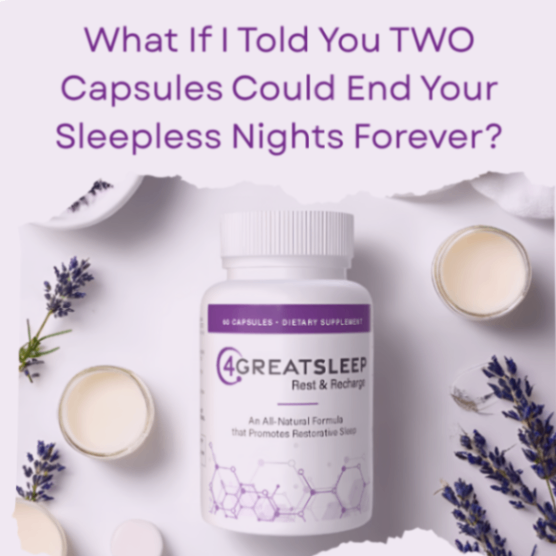
A Supplement Option: 4GreatSleep
Some people, even with good routines, still feel as if their internal “off switch” is stuck. That’s where a targeted sleep supplement—used thoughtfully—may help.
4GreatSleep is a sleep‑support supplement marketed by 4VitaHealth that was developed to be used as part of a broader routine, not as a stand‑alone “magic bullet.” It is designed to help support the body’s natural sleep processes and make it easier to wind down at night. It is not intended to diagnose, treat, cure, or prevent any disease, and results can vary from person to person.
If you’re curious about how 4GreatSleep fits into a comprehensive approach to better rest, you can learn more about the formula and how it’s meant to be used at www.4greatsleep.com.
Before adding any supplement to your routine, especially if you take medications, are pregnant or breastfeeding, or have ongoing medical conditions, talk with your healthcare provider.
Why Your Pillow Matters More Than You Think
We often think of sleep as a “brain” problem and forget one simple fact: if your neck and shoulders are under constant micro‑strain all night, your nervous system never gets to fully relax.
The wrong pillow can:
- Put your neck in a twisted or flexed position.
- Compress the shoulders if you sleep on your side.
- It leads to subtle discomfort that keeps nudging your brain toward wakefulness, even if you don’t fully notice it.
A supportive pillow that matches your sleep style (side, back, or combination) can reduce that low‑grade strain, which may make it easier to stay asleep and wake up feeling less stiff.
One pillow we think is worth considering is this supportive option available on Amazon:
Check out this pillow on Amazon: https://amzn.to/4sJ6aVt
When you evaluate any pillow, pay attention to your usual sleep position, any neck or back issues you may have, and how well the pillow keeps your head and spine aligned. If you have significant or persistent pain, that’s the time to bring your clinician into the conversation.
Putting It All Together Tonight
A realistic “tonight plan” might look like this:
- Decide on a target bedtime and stick to it within 30 minutes.
- One hour before bed, dim the lights and step away from emotionally charged content.
- Spend a few minutes doing something predictable and calming (light reading, stretching, or journaling).
- Make your bed a place of comfort: a supportive pillow, a comfortable temperature, and as much darkness and quiet as possible.
- If you and your clinician decide a sleep supplement is appropriate for you, use something like 4GreatSleep as directed and give your body time to respond as part of this routine—not as a stand‑alone fix.
You won’t turn decades of poor sleep around in one night, but most people can make meaningful progress by stacking small, realistic changes. The goal isn’t perfection. It’s creating an environment and rhythm that gives your brain permission to rest.
About the Authors & Disclosures
Keith Ablow, MD, and Kathryn Munoz, PhD, MPH, are co‑founders of 4VitaHealth, a company that markets and promotes dietary supplements, including 4GreatSleep, 4BetterMood, 4BrainFog, and MyMobilityMD. They have a financial interest in the success of these products and may mention them in this content. This article is for educational purposes only and is not a substitute for professional medical advice, diagnosis, or treatment. Always talk with your healthcare provider before starting or changing any supplement, medication, or health regimen.
These statements about dietary supplements have not been evaluated by the Food and Drug Administration. Dietary supplements are not intended to diagnose, treat, cure or prevent any disease.
Some of the links in this content are affiliate links, which means we may earn a commission if you make a purchase through them, at no additional cost to you. As an Amazon Associate, we earn from qualifying purchases.

